
Discovering the World of QSFP56-DD: All You Need to Know
The Quad Small Form-factor Pluggable Double Density (QSFP56-DD) is a pivotal evolution in the realm of high-speed digital communication, marking a significant advancement in the field of data center connectivity solutions. This cutting-edge technology is designed to cater to the intensifying demand for higher bandwidth capabilities, offering data rates ranging from 200G to 400G. The QSFP56-DD interface enhances the existing QSFP form factors by doubling the number of high-speed electrical interfaces, thereby facilitating higher port densities and bandwidth per port while maintaining backward compatibility with existing QSFP form factors. This allows for a seamless transition for data centers aiming to upgrade their infrastructure to accommodate the exponential growth in data traffic driven by advancements in cloud computing, artificial intelligence, and big data analytics.
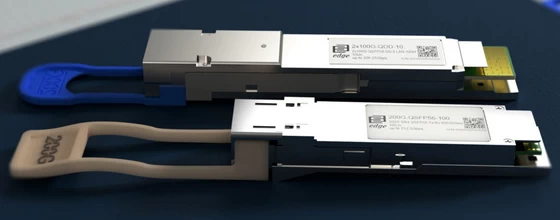
What is QSFP56-DD and How Does it Compare to Other Transceiver Modules?
Understanding the QSFP56-DD Form Factor Differences
When identifying the nuances between various transceiver models, particularly the QSFP56-DD versus other iterations like the QSFP-DD and QSFP56, it’s crucial to focus on their form factor differences and compatibility features. The QSFP56-DD, or Quad Small Form-factor Pluggable Double Density, distinguishes itself by doubling the number of high-speed electrical interfaces compared to its QSFP counterparts. This fundamental modification enables significantly higher data rates and bandwidth capacities, catering to 200G and 400G networking needs without forsaking the compact QSFP form factor appreciated for its efficiency and space-saving attributes.
Between QSFP56-DD and QSFP-DD
The QSFP-DD (Double Density) and QSFP56-DD share a similar ambition for elevating bandwidth capabilities; however, they diverge in their supported data rates and electrical interface designs. While both support 400G operations, the QSFP56-DD incorporates enhanced signaling technology to accommodate the heightened speeds. It maintains backward compatibility, a pivotal feature for data centers undergoing gradual upgrades, ensuring a seamless transition from existing QSFP configurations.
Comparing QSFP56-DD to QSFP56
The transition from QSFP56 to QSFP56-DD represents a significant leap in the transmission capabilities of data networks. The QSFP56, serving the 200G network segment, set the groundwork for high-density, high-speed data transmission. The evolution to QSFP56-DD was driven by the escalating demand for bandwidth, with the latter’s architecture supporting double the data rate of its predecessor. This advancement underscores the industry’s commitment to developing scalable, future-proof networking solutions that can adapt to the burgeoning needs of modern data centers and computational technologies. These discernible differences underscore the importance of selecting the right transceiver based on specific network requirements and scalability plans, ensuring that the infrastructure is not only equipped to handle current workloads but is also poised for future advancements.
Recommend reading: QSFP-DD vs OSFP vs QSFP56 vs QSFP: Advantages and Challenges
Key Features and Specifications of QSFP56-DD
400G Data Rate and Beyond: Power Consumption Considerations for QSFP56-DD
The surge in data transmission rates, notably the leap to 400G and beyond, presents considerable challenges in power consumption for networking equipment, especially in QSFP56-DD modules. Efficient power management is critical to maintaining operational integrity and environmental sustainability in data centers. QSFP56-DD modules, designed to support 400G operations, utilize advanced electrical interface technology that increases power efficiency. Despite the significant augmentation in data rate capabilities, these modules are engineered to optimize power usage, adhering to strict energy efficiency standards. The reduced power consumption per gigabit of data transmitted not only lowers operational costs but also minimizes the environmental impact, aligning with global efforts towards energy conservation in technological advancements.
Optical Connectivity and Connector Types
In the realm of QSFP56-DD modules, optical connectivity plays a pivotal role in achieving high data throughput over extended distances with minimal signal loss. The QSFP56-DD utilizes a range of connector types, including the MPO (Multi-fiber Push On) and LC (Lucent Connector), to accommodate various networking requirements and configurations. The MPO connector, in particular, is favored for its ability to support multiple fibers, making it ideal for high-density applications inherent to 400G transmissions. These connectors ensure a robust and reliable physical interface for optical fibers, facilitating seamless data transmission across the network infrastructure. Understanding the compatibility and performance implications of different connector types is essential for optimizing network design and functionality, especially in high-speed, high-density data center environments.
Advantages of Using QSFP56-DD in Networking Applications
PAM4 Modulation for Higher Data Throughput
The advancement in modulation techniques, particularly the adoption of Pulse Amplitude Modulation 4-level (PAM4), significantly contributes to the QSFP56-DD module’s ability to support 400G operations with enhanced efficiency. Unlike traditional non-return to zero (NRZ) modulation, which employs two levels of signal amplitude, PAM4 doubles the data rate by utilizing four levels of signal amplitude, thus enabling the transmission of two bits of information per unit time. This increase in the bit rate per symbol allows QSFP56-DD modules to achieve higher data throughput within the same bandwidth, effectively quadrupling the data capacity of their predecessors utilizing NRZ modulation. Leveraging PAM4 modulation, QSFP56-DD modules offer unparalleled bandwidth and scalability, meeting the burgeoning demands of modern data centers and high-performance computing environments. The ability to transmit more data over existing fiber infrastructure without significant modifications, coupled with backward compatibility features, positions QSFP56-DD as a formidable solution for next-generation networking applications. PAM4’s integration underscores the ongoing evolution in networking technology, emphasizing efficiency, scalability, and the capacity to handle substantial volumes of data, essential for the development and deployment of future-centric network architectures.
Deployment and Compatibility Aspects of QSFP56-DD
Interoperability with QSFP28 and 400G QSFP-DD Modules
The QSFP56-DD modules are engineered with a cogent focus on seamless interoperability with existing network infrastructures, including QSFP28 and QSFP-DD modules, to ensure a smooth transition as networks evolve towards 400G capabilities. This backward compatibility feature is crucial for data centers aiming to upgrade their system’s performance without the need for comprehensive hardware overhauls. Utilizing high-density QSFP56-DD modules, which support both 400G operations via PAM4 modulation and lower data rates through NRZ modulation, allows for flexible deployment strategies. This ensures that data centers can efficiently manage bandwidth requirements with a mix of 100G, 200G, and 400G operations, optimizing both the cost and performance of network upgrades.
QSFP56-DD in Data Centers: Performance and Efficiency
In modern data centers, the deployment of QSFP56-DD modules brings about a significant leap in network efficiency and performance. With their capacity to handle increased data throughputs while maintaining compatibility with pre-existing fiber infrastructure, QSFP56-DD modules dramatically enhance the operational capabilities of data centers. Furthermore, the modules’ design includes power efficiency considerations, vital for reducing operational costs and minimizing the environmental impact of high-speed data transmission. By advancing data transmission technology without necessitating extensive infrastructure changes, QSFP56-DD modules offer a pragmatic and efficient solution for data centers striving to meet the escalating demands of network performance and sustainability.
Future Trends and Innovations in QSFP Transceiver Technology
Exploring QSFP-DD Modules for Higher-Speed Applications: Adoption of QSFP56-DD in Next-Generation Ethernet Networks
The move towards higher-speed Ethernet networks necessitates the exploration and implementation of advanced transceiver technologies capable of supporting these increased data rates. QSFP-DD (Quad Small Form Factor Pluggable – Double Density) modules represent a significant advancement in this area, offering a solution tailored to meet the demands of next-generation Ethernet networks. These modules are designed to deliver data rates of 400 Gbps and beyond, a critical requirement as networks transition to 400G Ethernet standards.The QSFP-DD modules enhance the scalability of network infrastructure by providing an evolutionary path from previous QSFP form factors. This compatibility is essential for ensuring that network upgrades can be carried out efficiently, without extensive overhauls. In practical terms, the introduction of QSFP-DD modules into next-generation Ethernet networks enables a doubling of the data capacity over the same number of lanes used by the prior QSFP form factors, significantly improving the efficiency of data centers and enterprise networks. Furthermore, the adoption of QSFP56-DD in next-generation Ethernet networks is characterized by its support for various modulation schemes, including PAM4 (Pulse Amplitude Modulation 4-Level), which is integral to achieving higher data rates. By facilitating a more sophisticated form of modulation, QSFP-DD modules effectively quadruple the amount of data that can be transmitted over traditional infrastructures, ensuring that existing cabling can support the next wave of network speed requirements.
In conclusion, the exploration and adoption of QSFP56-DD modules for higher-speed applications are pivotal in addressing the burgeoning demands on Ethernet networks. By offering advanced technical capabilities, such as support for higher data rates and efficient modulation techniques, QSFP-DD modules stand at the forefront of facilitating the transition to faster, more efficient, and scalable network architectures, thus playing a critical role in the evolution of global data communication systems.
Did this article help you? If so, please tell me in a comment what do you think about it.
Don’t miss any of our future video tutorials, follow us on Youtube. Like us on Facebook. Join our Best Deals Telegram Channel. Join our Android TV Box Firmware Updates Telegram Channel. Subscribe now to our newsletter. If you need Tech Reviewer or Youtube Influencer read this. Donate now here to support CGR Team!















