Best Deal Alert! You can now buy Meross MS220 Smart Multi-Function Door Sensor from Shop.meross.com for only $43.99 (regular price: $51.99). Use Code: Welcome to get 5% off on your first order. Hurry up, limited time offer!
Meet Meross MS220 Smart Multi-Function Door Sensor – More Than Just a Door and Window Sensor
The Meross MS220 Smart Multi-Function Door Sensor takes the familiar concept of a magnetic door sensor and expands it with several practical features designed to improve home security and everyday convenience. Alongside monitoring whether a door or window is open or closed, it integrates a physical button, doorbell functionality, vibration detection, a built-in night light, and an audible alarm, making it considerably more versatile than a conventional contact sensor. I tested the MS220 with the Meross Android application, exploring its device settings, notification options, configurable button functions, doorbell sounds, and security-related features. The device requires a compatible Meross Bluetooth Hub to access its connected smart-home functions, so it is important to consider the additional hardware when evaluating the overall cost and capabilities of this product.
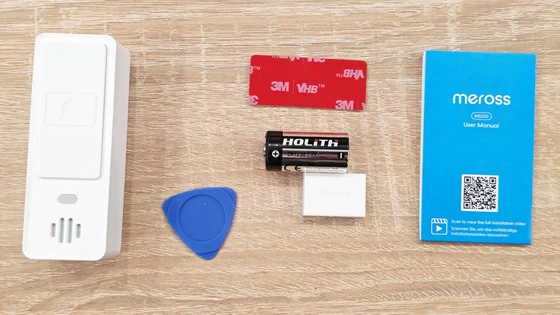
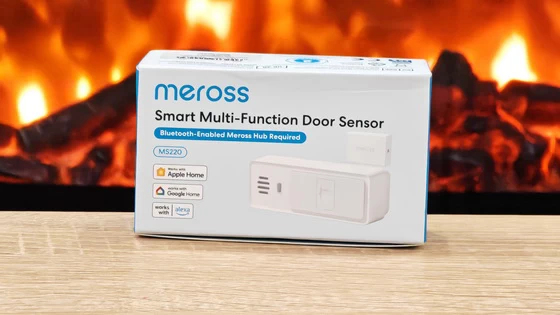
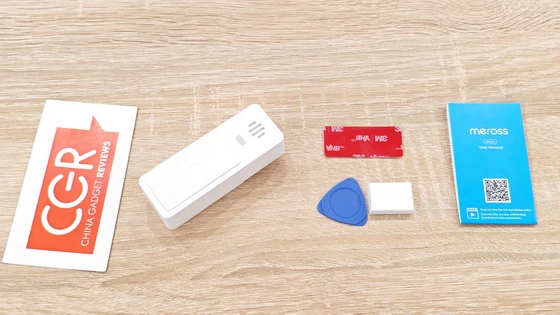
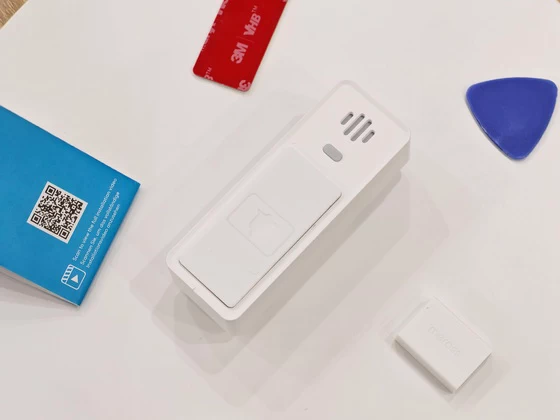
The Meross MS220 arrives in a compact white retail box with blue branding, product illustrations, and clearly presented compatibility information. The packaging identifies the device as a Smart Multi-Function Door Sensor and highlights the requirement for a Bluetooth-enabled Meross Hub. Compatibility information for Apple Home, Google Home, and Alexa is also displayed on the box, although the availability of specific integrations depends on the hub and the configured smart-home platform. Inside the package, I found the main sensor, a separate magnetic contact, a CR123A battery, a user manual, and a small tool for opening the battery compartment. The supplied adhesive mounting accessories make installation straightforward without requiring permanent modifications to the door or window frame. The included battery is particularly convenient because the sensor can be installed and configured without purchasing additional power accessories. The small battery-compartment opener is also a useful inclusion, allowing access to the replaceable battery without relying on improvised tools that could damage the enclosure. My initial impression was that Meross had designed the MS220 around a more ambitious idea than simply reporting the opening and closing of a door. The prominent physical button and integrated sound openings suggest that it is intended to function as an interactive security and automation device, rather than remaining a passive component hidden on a door frame.
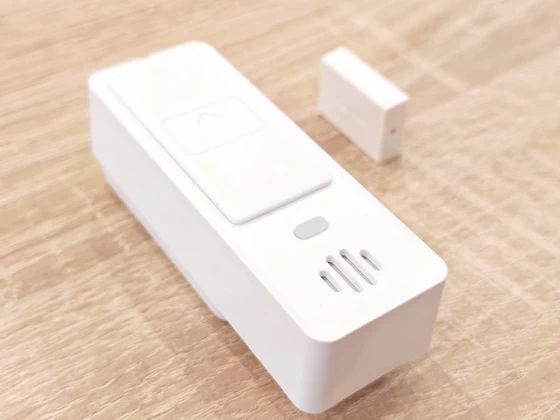
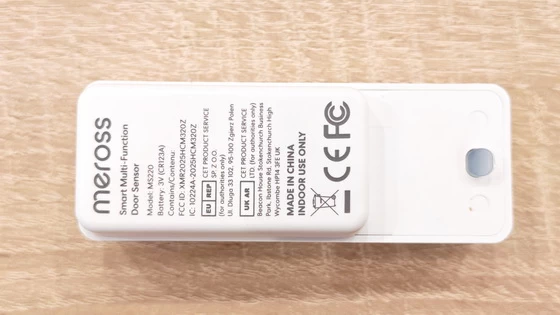
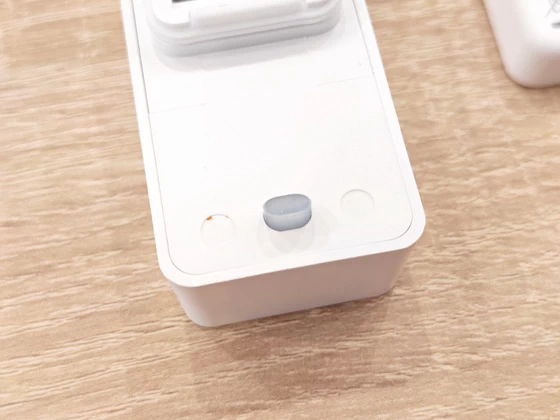
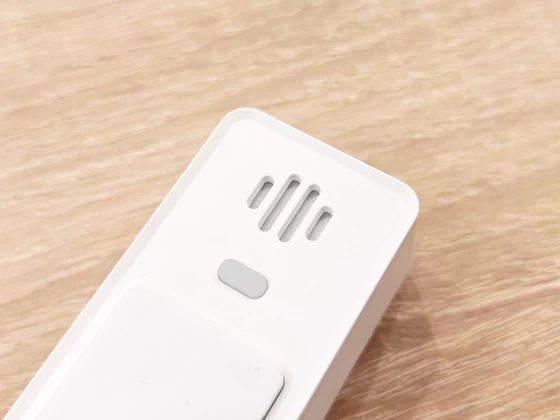
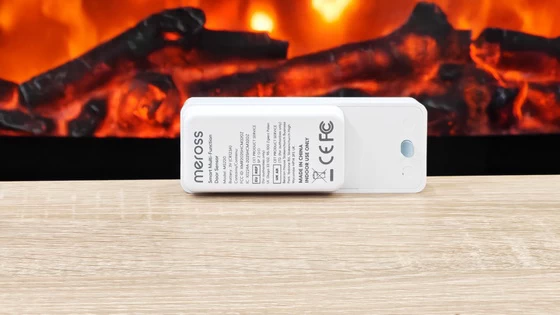
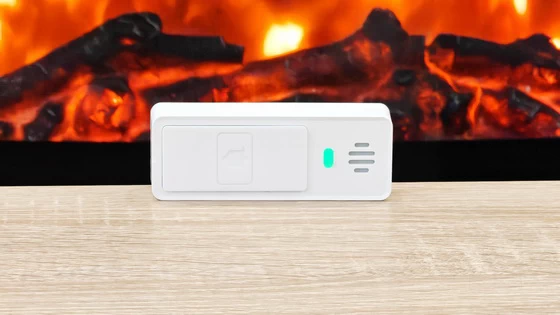
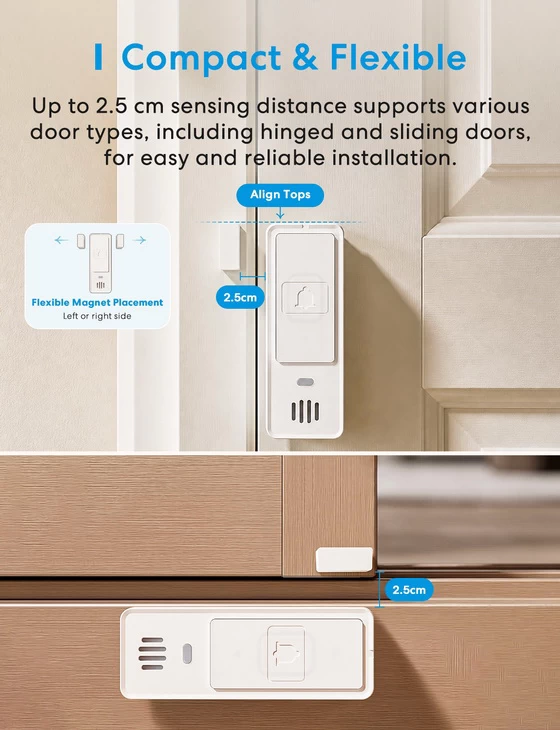
The MS220 has a compact, elongated enclosure measuring 85 × 31.5 × 29.5 mm, making it easy to position on a door frame, window frame, or other suitable mounting surface. Its white finish and restrained styling allow it to blend into most residential interiors, while the integrated button provides a convenient point of interaction when the sensor is installed near an entrance. Unlike conventional contact sensors that consist of two relatively small magnetic components, the MS220 combines the main sensing unit with several additional functions. The front panel incorporates the physical button, an LED indicator, and openings for the built-in buzzer. The separate magnet completes the contact-sensing arrangement and can be positioned on either side of the main unit, depending on the installation requirements. I appreciate the flexibility offered by this layout because doors and windows do not all provide the same mounting conditions. Meross specifies a sensing distance of up to 2.5 cm, which accommodates a range of installation configurations, including suitable hinged and sliding doors. Correct alignment remains important, and I would recommend checking the contact position before securing the adhesive mounts permanently. One of the most interesting aspects of the construction is its IP66-rated protection. According to the manufacturer, the sensor is designed to resist dust and powerful water jets, with an operating temperature range extending from -20°C to 60°C. These specifications make it suitable for more demanding environments than many indoor-only contact sensors, provided that the installation follows the manufacturer’s requirements and the device is not exposed to conditions outside its rating. The IP66 rating should not be interpreted as permission to submerge the sensor, and environmental protection does not eliminate the need for sensible placement. Nevertheless, the combination of dust resistance, water resistance, and a broad operating temperature range significantly expands its potential applications around a home or property.
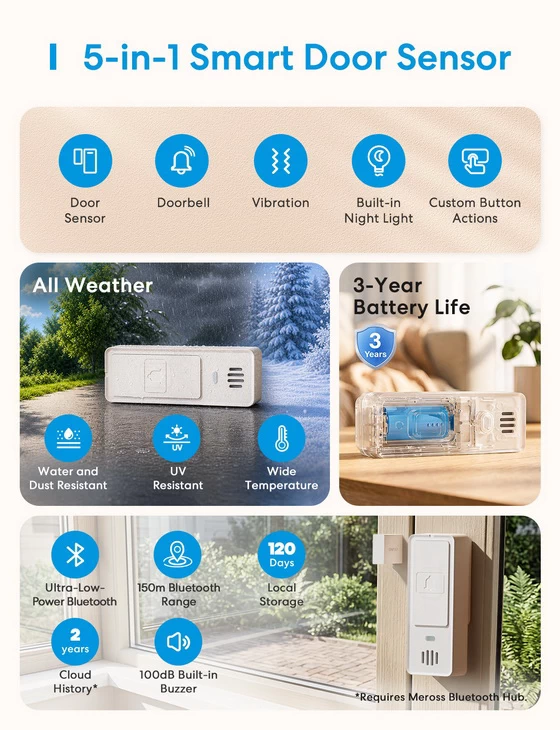
The defining characteristic of the Meross MS220 is its combination of contact monitoring, vibration detection, a configurable physical button, doorbell functionality, and local audible alerts. These features can operate together to provide a more comprehensive approach to entrance monitoring than a basic open-and-close notification system. At its core, the MS220 detects changes in the state of a door or window using the supplied magnetic contact. The Meross application can notify me when the sensor changes from closed to open or from open to closed, making it possible to monitor frequently used entrances, accessible windows, storage areas, or other locations where movement needs to be recorded. The application also provides an option for low-battery notifications, which is particularly important for a security accessory that may be installed somewhere out of immediate sight. Being informed before the battery is depleted helps reduce the likelihood of an unnoticed interruption in monitoring. The ability to distinguish between opening and closing events makes the sensor useful for more than intrusion detection. For example, a smart-home routine could use an opening event to switch off heating or cooling when a window is opened, activate lighting when someone enters a room, or update the state of connected devices according to the way a household uses a particular entrance.
The addition of vibration detection is one of the MS220’s more useful security features. A conventional magnetic contact sensor generally reports a change in the distance between its two components, meaning that an attempted intrusion may not trigger a contact event until the door or window actually moves far enough to separate the magnet from the main unit. The MS220 adds adjustable vibration sensitivity, allowing it to detect abnormal impacts or movement before a conventional opening event necessarily occurs. In the Meross application, the sensitivity can be adjusted between lower and higher levels to suit the installation environment. This adjustment matters because not every vibration indicates a security problem. Doors exposed to wind, nearby traffic, heavy footsteps, or routine household activity may generate unwanted alerts if sensitivity is set too aggressively. I would start with a moderate setting and increase it gradually after observing how the sensor behaves in its intended location. The application also provides configurable alert conditions, including a duration for certain door-state events and a separate vibration-detection option. These settings allow the monitoring behaviour to be adapted to the installation instead of relying entirely on a single default configuration. It is worth distinguishing vibration alerts from a guaranteed forced-entry detection system. The MS220 can identify vibrations that meet its configured detection criteria, but it cannot independently establish whether an impact represents a genuine intrusion. Appropriate sensitivity settings and a well-positioned installation are therefore essential.
The integrated buzzer gives the MS220 an advantage over simple sensors that depend entirely on a smartphone notification. Meross specifies an alarm volume of up to 100 dB, providing a potentially noticeable local warning when the relevant alert conditions are triggered. The device can also use its LED indicator alongside audible alerts, offering a visual indication of activity. Within the Android application, I can enable or disable notification categories and configure the device’s alert behaviour, including whether vibration detection should generate notifications. The ability to select among seven sounds or disable the sound altogether is useful because different installations have different requirements. A sensor positioned near a frequently used entrance may benefit from a distinctive audible warning, while one installed in a bedroom or shared living space may need a less intrusive configuration. The built-in buzzer also makes the MS220 potentially useful as a portable supplementary security accessory in temporary accommodation, such as a hotel room. However, this should be regarded as an additional deterrent rather than a substitute for a dedicated security system, and connected smart-home features still depend on the required hub and configuration.
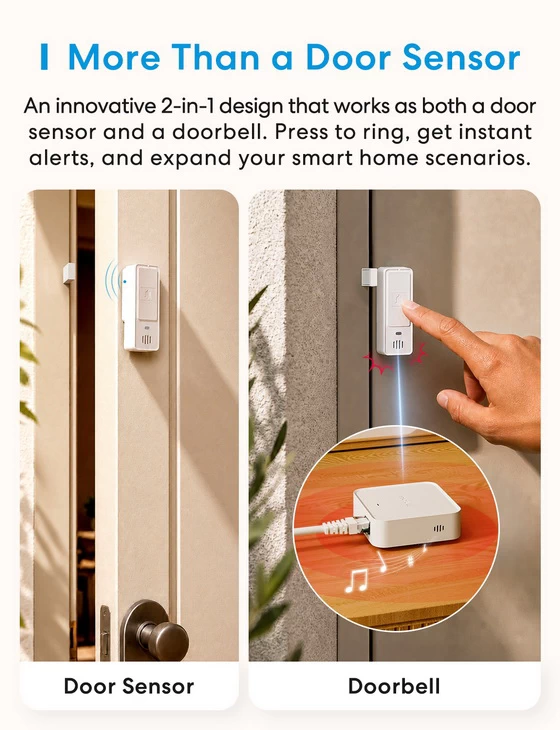
Another interesting feature is the ability to switch between Door Sensor and Doorbell modes. In Doorbell Mode, pressing the physical button can trigger the configured chime and associated notifications through the compatible Meross system. This provides an alternative use for the same hardware without installing a separate conventional doorbell button at the entrance. Depending on the configuration, the hub and connected devices can provide additional alerts, making it easier to notice visitors even when the sound from the entrance itself is not immediately audible. The application offers seven selectable sound options, together with a test function that allows me to preview the selected sound before saving the setting. This is a straightforward but useful detail because it removes the guesswork involved in choosing a chime. The MS220 is not simply a contact sensor with a button added as an afterthought. Doorbell functionality gives that button a clear everyday purpose, while the option to use it for automation extends its usefulness further.
The physical button is arguably the feature that most clearly differentiates the MS220 from a standard door and window sensor. Meross allows the button to be incorporated into automations through a compatible hub, making it possible to trigger selected actions without opening the smartphone application. For example, a button near the front door could initiate an Away routine that switches off selected lights, adjusts connected curtains, and activates configured security devices. A different routine could prepare the home for arrival by switching on entrance lighting or activating other compatible equipment. The application also exposes separate settings for single-press and double-press behaviour, including sound and LED options. The available settings shown during my testing indicate that some functions are configured directly on the device, while more advanced actions require an automation created through a hub. This distinction is important: the physical button does not automatically control every smart-home device simply because it is installed. The desired actions must first be configured, and the relevant devices must be supported by the connected Meross system. The result, when properly configured, is a convenient physical control point for everyday routines. Instead of unlocking a phone, opening an application, and navigating to a scene, I can use a single press to initiate a predefined sequence of actions.
The integrated night light adds another practical function to the MS220, particularly when the sensor is installed near an entrance, hallway, or other area that receives little natural light. In an appropriate installation, the lighting function can help make the button easier to locate and provide a small amount of illumination when entering or leaving the home. Its usefulness will naturally depend on the installation position and the amount of light required, but combining it with the other features helps justify the MS220’s larger enclosure compared with a conventional magnetic sensor.
The MS220 communicates using Bluetooth Low Energy (BLE) and requires a compatible Meross Bluetooth Hub to access its connected smart-home capabilities. The manufacturer identifies the MSH450 Pro Hub as the required accessory for the advertised expanded functionality, and the hub is sold separately. This is an important consideration for anyone building a new smart-home installation. The sensor itself provides the physical detection and local interaction features, but the hub acts as the bridge to the broader connected system, enabling remote notifications, automation, and integration with supported platforms. The upgraded hub is designed to support both newer Bluetooth sensors and existing 433 MHz devices, helping users expand an existing installation without necessarily replacing every compatible accessory. Meross also highlights voice alerts, local alarms, and Matter integration as part of its broader hub ecosystem. For example, an automation could switch off a thermostat when a window opens, turn on a hallway light when an entrance is opened, or activate selected security devices when the household switches to Away Mode. The exact actions depend on the connected devices, supported integrations, and the automation rules available in the application. The hub requirement does add cost and another component to the installation, but it also establishes the foundation for a more expandable system. For users who already own compatible Meross equipment, the MS220 may fit naturally into an existing setup. For newcomers, the price of the hub should be included when comparing the total cost against simpler contact sensors.
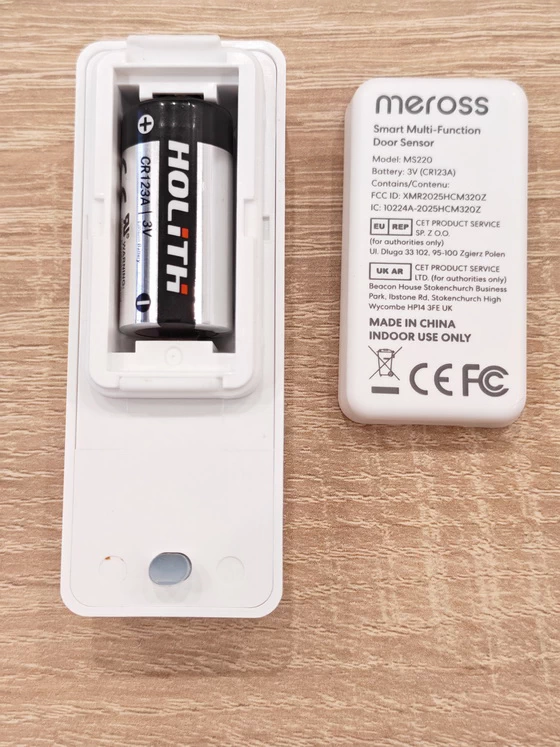
The Meross MS220 uses one replaceable CR123A lithium battery rated at 3 V, with a capacity of 1700 mAh according to the manufacturer’s product information. A battery is included in the package, so the sensor is ready for installation without requiring a separate purchase. Meross advertises a battery life of up to three years. This is an attractive specification for a security accessory because frequent battery replacement can be inconvenient when sensors are installed on windows, exterior doors, or other less accessible locations. However, the three-year figure should be treated as a manufacturer estimate rather than a guaranteed result. Actual battery life depends on usage patterns, wireless communication, alert frequency, environmental conditions, and how often the device’s buzzer and other functions are activated. The replaceable battery is a positive design choice because it allows the sensor to remain in service without discarding the entire unit when its original battery reaches the end of its useful life. The low-battery notification is equally important, providing a practical way to plan replacement before monitoring is interrupted. The specified operating temperature range of -20°C to 60°C also makes the MS220 more versatile than many indoor-focused accessories, although battery performance can vary with temperature. Anyone planning to install it outdoors should account for local conditions and follow Meross’s installation guidance.
The Meross MS220 Smart Multi-Function Door Sensor is an interesting example of how a familiar smart-home accessory can become more useful through a combination of practical hardware features and software configuration. Its ability to monitor doors and windows is only the starting point; the integrated button, doorbell mode, vibration detection, night light, and 100 dB buzzer give it several additional roles around the home. What I particularly appreciate is the flexibility of the Android application. The separate notification controls make it possible to customise which events deserve attention, while adjustable vibration sensitivity helps adapt the device to its environment. The selectable doorbell sounds and configurable button behaviour further improve its everyday usability, especially when the sensor is positioned near a frequently used entrance. The IP66 rating and broad operating temperature range are also meaningful advantages for installations that require greater environmental resistance. Combined with the replaceable CR123A battery and advertised battery life of up to three years, these specifications suggest a device designed for long-term monitoring rather than frequent maintenance. There are, however, two considerations worth keeping in mind. First, the MS220 requires a compatible Meross Hub to unlock its broader smart-home capabilities, which increases the total cost if you do not already own one. Second, vibration detection is a supplementary security feature rather than a guarantee of intrusion detection, so correct installation and sensible sensitivity settings remain important. For existing Meross users, the MS220 offers a compelling way to add contact monitoring, local alerts, and physical automation control to a connected home. For new users, it is worth evaluating the sensor together with the required hub and the other devices they intend to automate. My conclusion is that the Meross MS220 is considerably more versatile than a basic door and window sensor. Its strongest selling point is the combination of conventional contact monitoring with a physical button, doorbell functionality, vibration detection, and a loud local alarm. If you want a single compact device that can contribute to both home security and everyday smart-home automation, the MS220 deserves consideration.
Meross MS220 Smart Multi-Function Door Sensor Main Features
– Smart Automation with the Upgraded Meross Hub: The MS220 requires the MSH450 Pro Hub (sold separately) to unlock its smart features. The upgraded Hub supports both new Bluetooth sensors and existing 433MHz devices, offering voice alerts, local alarms, and Matter integration for a more connected and expandable smart home.
– Home Assistant Integration: Connect directly to Home Assistant without a Meross Hub. Requires Home Assistant with HACS installed and a Bluetooth adapter or ESPHome Bluetooth Proxy configured.
More Than a Door Sensor: Switch between Door Sensor and Doorbell modes to fit your needs. In Doorbell Mode, a single press triggers alerts through the Hub, app, and other connected devices, so you never miss an important visitor.
– One Button, More Possibilities: Use the customizable button to trigger lights, scenes, and automations. Place it by the door to easily switch between Home and Away Modes with one press—turning lights on or off, activating security, adjusting curtains, and triggering other smart devices as you come and go.
– All-Weather Protection, Long-Lasting Power: With IP66-rated protection, a wide operating temperature range of -20°C to 60°C, and a high-capacity 1700mAh CR123A battery, the sensor delivers up to 3 years of battery life for reliable monitoring indoors and outdoors.
– Instant Alerts for Suspicious Activity: Detects abnormal door or window opening and closing, with adjustable vibration sensitivity to identify forced entry and unusual movement. Connect to the Hub, App, and other smart devices for timely alerts. The built-in buzzer delivers up to 100dB of sound and works with the LED indicator. Choose from multiple alert sounds or mute the buzzer for flexible local alerts.
– Portable Protection, Wherever You Go: Compact and easy to carry, it can be used in motels, hotels, and other temporary accommodations. When unusual activity is detected, the built-in buzzer delivers a loud 100dB alarm, adding an extra layer of protection for doors, luggage, and valuables.
– Smart Automation at Your Door: Turn everyday door activity into powerful automations. Turn off the thermostat when a window opens, or trigger whole-home actions when you leave. One sensor, more ways to automate your home.
Meross MS220 Smart Multi-Function Door Sensor Highlights
Multifunctional 6-in-1 Smart Door and Window Sensor
Dual Operating Modes: Door Sensor and Smart Doorbell
Real-Time Door and Window Open/Close Detection
Adjustable Vibration Detection Sensitivity
Built-in Loud Security Alarm Up to 100 dB
Seven Selectable Alarm and Doorbell Sounds
Customizable Physical Button for Smart Home Automation
Single-Press and Double-Press Button Configuration
Integrated Night Light and LED Status Indicator
Instant Smartphone Alerts and Notifications
Configurable Door and Window Security Alerts
Smart Home and Away Mode Automation
Bluetooth Low Energy (BLE) Connectivity
Compatible with Meross MSH450 Pro Hub (Sold Separately)
Matter Integration Through Compatible Meross Hub
Apple Home, Google Home, and Amazon Alexa Compatibility via Supported Hub
Home Assistant Integration via Bluetooth with Additional Configuration
IP66 Dustproof and Water-Resistant Design
Suitable for Indoor and Outdoor Installations
Wide Operating Temperature Range: -20°C to 60°C
Magnetic Contact Detection Distance Up to 2.5 cm
Replaceable 1700 mAh CR123A Lithium Battery
Up to 3 Years of Battery Life (Manufacturer Estimate)
Low-Battery Notifications
Compact Dimensions: 85 × 31.5 × 29.5 mm
Easy Installation with Adhesive Mounting Accessories
Portable Security Solution for Hotels and Temporary Accommodation
Compatible with Meross Smart Home Automation Ecosystem.
Meross MS220 Smart Multi-Function Door Sensor Best-Uses Scenarios
– Front Door Security Monitoring – Monitor your home’s main entrance and receive real-time notifications whenever the door opens or closes, helping you stay informed whether you’re home or away.
– Window Intrusion Detection – Install the sensor on accessible windows to detect unexpected openings and suspicious vibrations, adding an extra layer of protection against potential break-ins.
– Smart Doorbell for Visitors – Switch to Doorbell Mode and use the integrated physical button to notify household members when someone arrives, with seven selectable chime sounds.
– Hotel Room and Vacation Security – Take the compact sensor when travelling and use its built-in alarm of up to 100 dB as an additional security measure for hotel rooms, holiday rentals, or other temporary accommodation.
– Automatic Lighting When Entering a Room – Configure a smart-home automation to turn on compatible hallway, entrance, or living-room lights whenever a connected door opens.
– One-Touch Home and Away Modes – Use the customizable physical button to activate predefined smart-home routines, such as switching off lights, adjusting curtains, and activating compatible security devices before leaving.
– Energy-Saving Window Automation – Automatically turn off compatible heating or air conditioning when a window is opened, helping reduce unnecessary energy consumption.
– Garage, Shed, and Storage Room Protection – Monitor doors in garages, garden sheds, workshops, or storage areas, using the IP66-rated enclosure and configurable security alerts for suitable installations.
– Nighttime Entrance Convenience – Take advantage of the integrated night light to help locate the sensor’s button near an entrance or hallway in low-light conditions.
– Suspicious Impact and Tampering Alerts – Use adjustable vibration sensitivity to detect unusual impacts or movement affecting a door or window, potentially providing an alert before the magnetic contact is separated.
– Children’s Room and Household Access Monitoring – Receive notifications when selected doors or windows are opened, helping parents monitor access to balconies, storage rooms, or other areas requiring additional supervision.
– Smart Home Automation with Meross and Home Assistant – Integrate the sensor into compatible smart-home systems to trigger lighting, notifications, security routines, and connected devices based on door activity or configured button actions.
Meross Android application
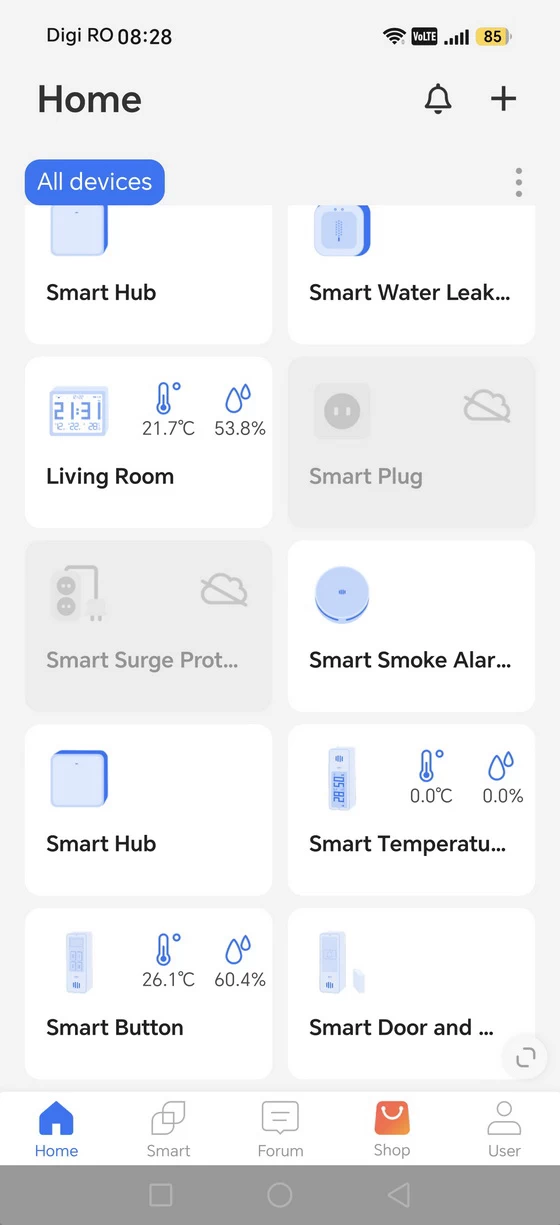
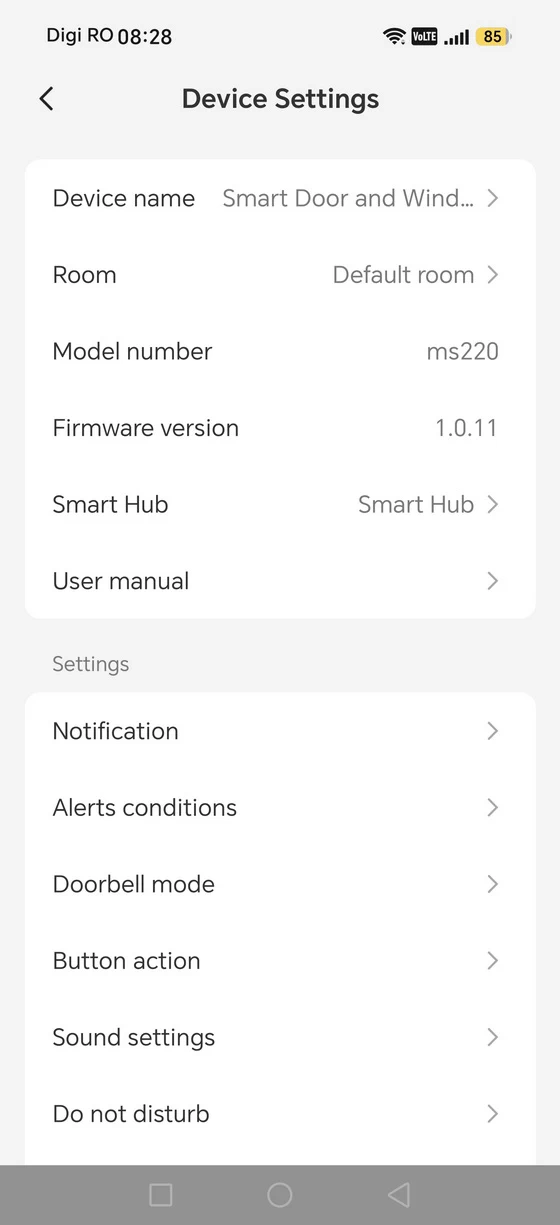
I used the Meross Android application to add the MS220, inspect its settings, and explore the available notification and button configuration options. The device appears in the home dashboard alongside other connected accessories, making it possible to access its dedicated interface without navigating through an unnecessarily complicated menu structure. The initial device-selection screen identifies the product as a Smart Door and Window Sensor. After selecting the appropriate device type and completing the setup process, the sensor becomes available through the application’s device-management interface. The device settings page provides access to its name, room assignment, model number, firmware version, hub information, and user manual. During my testing, the displayed model number was MS220 and the firmware version was 1.0.11. These details are useful when managing several accessories or checking which device is installed in a particular room. The notification settings are particularly relevant because the MS220 supports several distinct types of events. I can enable system notifications and configure alerts for low battery, transitions from closed to open, transitions from open to closed, and vibration detection. This level of control makes it easier to focus on the events that matter instead of receiving every possible notification regardless of context. The configurable alert conditions provide another layer of flexibility. Vibration detection can be enabled or disabled, and its sensitivity can be adjusted to suit the installation. Depending on the selected event, duration settings can also help determine when an alert should be generated. I also explored the Doorbell mode and sound settings. The application presents seven sound options, a test button, and a save control, allowing me to select and preview a preferred chime. The separate button configuration interface exposes settings for single and double presses, including sound behaviour, LED operation, and an option labelled “Skip next event (1 min).” The latter can be used to configure a short interval during which the next event is skipped, where supported by the selected action. The small-button settings provide options for silencing an active alert. I can choose to silence the current alert instance until its condition clears or silence it temporarily for a set duration, after which the alert can resume if the condition persists. This is a useful distinction for a device that may need to produce a loud warning without forcing the user to disable the entire alert system. One limitation is that the interface separates basic device settings from more advanced automation. While the physical button’s local behaviour can be configured directly, other actions require an automation created through a compatible hub. This is logical from a system-design perspective, but users should understand the distinction before expecting the button to control lights, curtains, or security devices immediately after pairing. Overall, my experience with the Android application was positive. The main settings are easy to identify, the alert categories are clearly separated, and the sound-selection process is simple. The interface could benefit from more explanatory guidance for first-time smart-home users, particularly when distinguishing local functions from hub-dependent automation, but the available controls provide a useful level of customisation.
Download Meross Android application latest version for free from Google Play Store or from App Store.
Meross MS220 Smart Multi-Function Door Sensor Specs
Brand: Meross
Model: MS220
Battery: 1 x CR123A Batteries(included), replaceable
Alarm Volume: 100 dB
Dimensions (W x D x H): 31.5 x 29.5 x 85 mm & 1.24 x 1.16 x 3.35 in
Wireless Standard: Bluetooth Low Energy (BLE)
System Requirements: Smart phone running iOS 13 or later, Android 8.0 or later & Existing Wi-Fi network
Certifications: US: FCC / EU: CE, RoHS, WEEE
Dust & Water Proof: IP66
Operating Temperature: -20°C ~ 60°C (-4°F to 140°F)
Operating Humidity: 10% ~ 90% non-condensing
Color: White
Package Content
1 x Meross MS220 Smart Multi-Function Door Sensor
1 × Magnet
1 × User Manual
1 × CR123A Battery
1 × Battery Compartment Opener
1 x Packaging Box
Photo gallery full album here. Official webpage here. Read more here about Meross products.
About Meross. Creativity is thinking up new things; innovation is doing new things. Meross, founded in 2016 by a group of experts from leading companies such as Microsoft, Cisco, MediaTek, and TP-Link, is replete with both first-class creativity and cutting-edge innovation. At Meross, we create products that empower people’s lives. We believe in making homes smarter and people’s lives easier. We believe everyone deserves a smart life, and it should be simple, smart, and stable. Meross has strong research and development capabilities, excellent operating experiences and solid partnerships with pertinent players in the industry, resulting in bountiful financial support and escalated profit growth. Today, the company has expanded with its tentacles spread across millions of customers from over 20 countries and regions. The company has an assortment of top-tier gadgets, including smart plugs, smart bulbs, smart switches, smart surge protectors, smart garage door openers, and smart radiator thermostats. Meross products are compatible with Apple HomeKit, Amazon Alexa, Google Assistant, SmartThings.
Did this article help you? If so, please tell me in a comment what do you think about it.
Don’t miss any of our future video tutorials, follow us on Youtube. Like us on Facebook. Join our Best Deals Telegram Channel. Join our Android TV Box Firmware Updates Telegram Channel. Subscribe now to our newsletter. If you need Tech Reviewer or Youtube Influencer read this. Donate now here to support CGR Team!