Best Deal Alert! You can now buy Auto-Vox Solar3A Plus Max Wireless Backup Camera from Auto-Vox.com for a very good price. Hurry up, limited time offer!
Meet Auto-Vox Solar3A Plus Max Wireless Backup Camera – Bringing Modern Visibility and Practical Safety Technology to Larger Vehicles
When it comes to automotive accessories, I have always considered visibility and situational awareness among the most important factors influencing everyday driving confidence, particularly when operating larger vehicles, pickup trucks, SUVs, recreational vehicles, or vehicles towing trailers, where conventional rearview mirrors cannot always provide a complete picture of the surrounding environment. Although modern vehicles increasingly incorporate factory-installed reversing cameras and advanced parking assistance technologies, many older models and specialized vehicles still lack these conveniences, making aftermarket camera systems an interesting and potentially valuable upgrade for drivers who want improved visibility without investing in complicated modifications to their existing automotive electrical systems.
Today, I am taking a closer look at the AUTO-VOX Solar3A Plus Max Wireless Backup Camera System, a dual-camera monitoring solution that combines a large 7.2-inch Full HD display, two independent solar-powered wireless cameras, split-screen viewing capabilities, DVR loop recording, infrared night vision, and a long-range wireless transmission system designed to accommodate vehicles of different dimensions and configurations. What immediately caught my attention about this particular system was its emphasis on practical installation and independent power management, since the two exterior cameras incorporate their own rechargeable batteries and solar charging panels, reducing the need to route power cables through the vehicle body or connect directly to the reversing light circuit, an approach that could make the system especially attractive to drivers who prefer a relatively straightforward installation process. The Solar3A Plus Max is also more than a conventional reversing camera, because its dual-channel architecture allows the driver to monitor two different viewpoints, an especially useful arrangement when towing a caravan, maneuvering a trailer, or simply wanting additional visual coverage around a large vehicle.
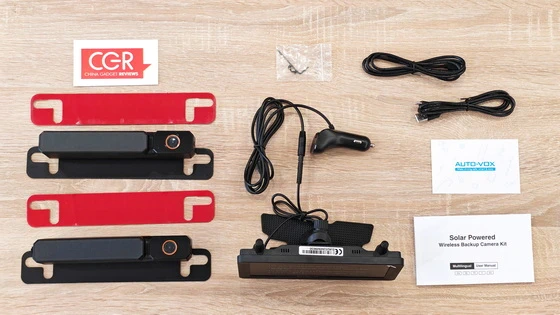
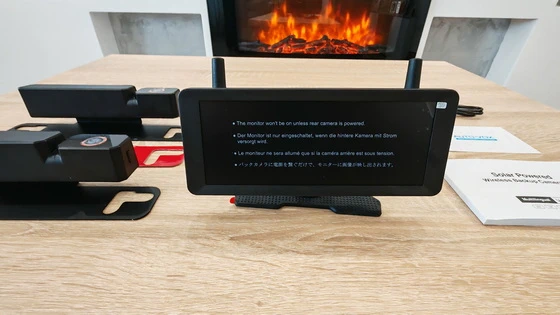
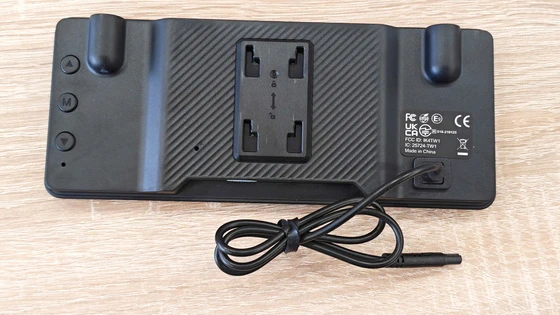
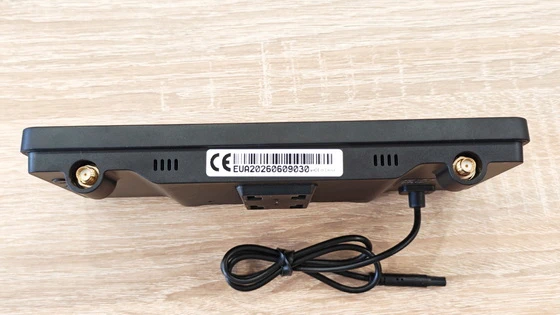
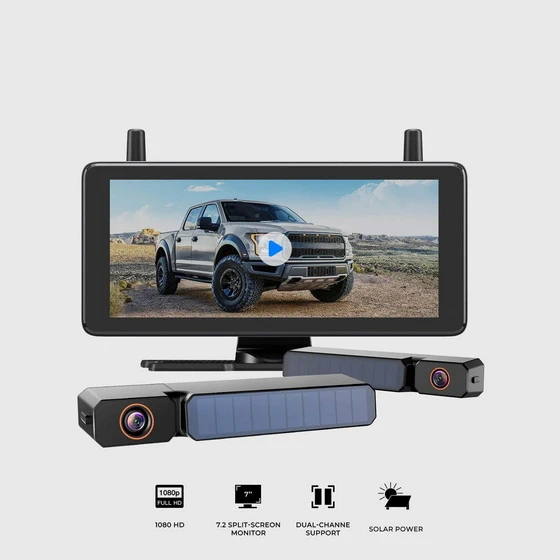
The unboxing experience begins with an interesting collection of components that clearly reflects the modular nature of the AUTO-VOX Solar3A Plus Max system, with the package bringing together the main dashboard monitor, two independent wireless camera modules, their integrated solar charging assemblies, and the accessories required to prepare the system for installation. At the center of the package is the 7.2-inch monitor, a relatively wide display with a rectangular black enclosure, generously proportioned viewing area, and two compact antennas positioned along its upper edge, giving the device a purposeful appearance that is more reminiscent of a dedicated automotive monitoring terminal than a conventional portable multimedia screen. The monitor is accompanied by a dashboard mounting stand, which provides a practical way to position the display within the driver’s field of view, while the included power cable is designed to connect the monitor to the vehicle’s accessory power outlet, allowing the screen to operate without requiring permanent modifications to the dashboard wiring. The two wireless camera modules represent the most distinctive elements of the package, as each combines a compact camera housing with a long solar panel section, resulting in an elongated design that is intended to be installed around the vehicle’s rear license plate or another compatible mounting position.
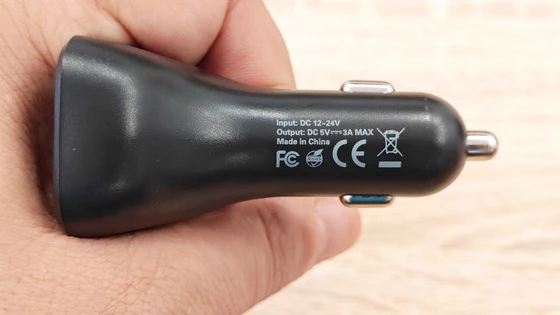
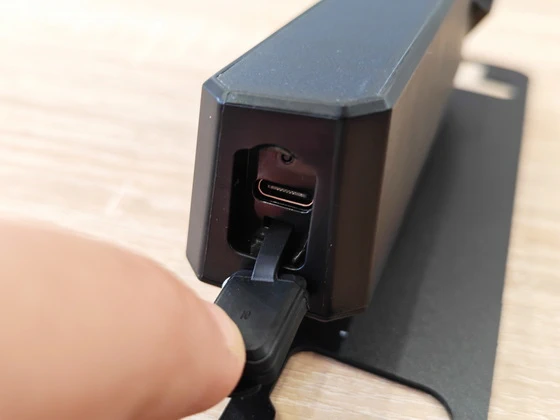
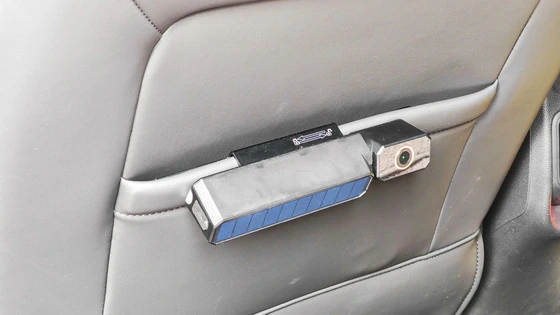
Looking more closely at the camera assemblies, I appreciate the way AUTO-VOX has integrated the optical module, solar charging surface, and internal rechargeable battery into a single unit, because this approach avoids the need for separate external battery packs or solar panels that would otherwise complicate the installation process and introduce additional mounting considerations. The supplied accessories also include a charging cable, a car charger cable, and the user manual, while the mounting hardware and installation arrangement are intended to support the positioning of the cameras around the license plate area. From a packaging and equipment perspective, the most important consideration is that this configuration includes one monitor and two cameras, rather than the single-camera arrangement found in many entry-level reversing systems, giving the user the necessary hardware to create a dual-view monitoring setup from the beginning. I also find the modular design appealing because the monitor and cameras remain physically independent, allowing the driver to consider different camera positions according to the vehicle’s dimensions, rear visibility limitations, and specific monitoring requirements.
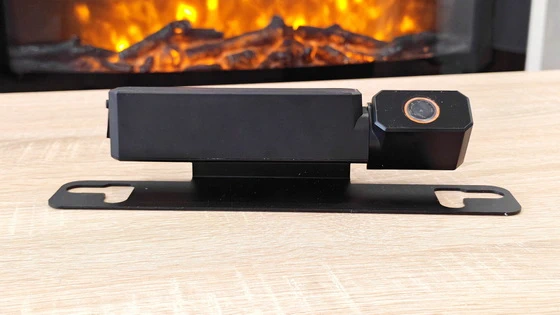
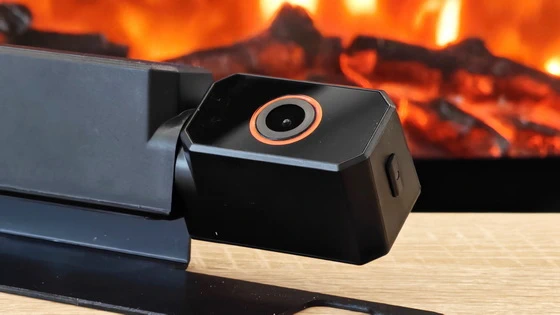
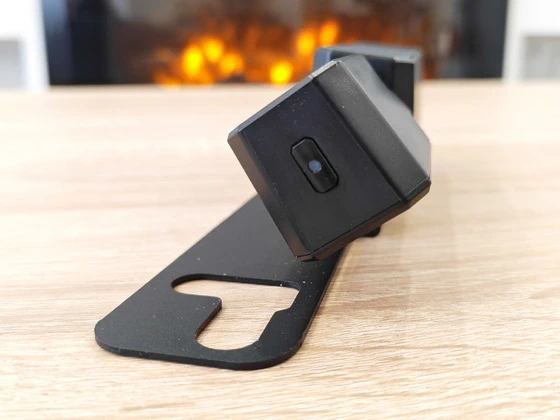
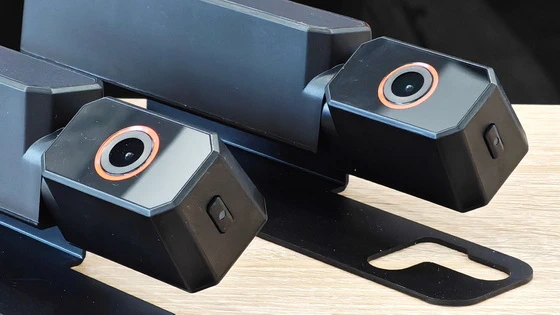
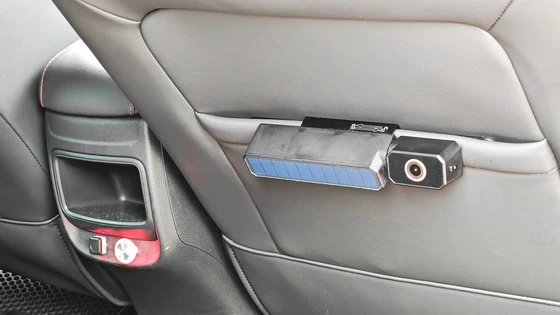
Moving on to the physical design, the AUTO-VOX Solar3A Plus Max follows a functional automotive aesthetic, using predominantly black enclosures, angular surfaces, and compact optical modules highlighted by distinctive orange rings around the camera lenses, which provide a subtle visual contrast without making the equipment unnecessarily conspicuous. Each camera assembly measures approximately 7.11 inches in length and 1.23 inches in height, dimensions that translate to roughly 180.6 × 31.2 mm, making the modules sufficiently compact for installation around many conventional license plate locations while still providing enough surface area to accommodate the integrated solar charging panel. The camera lens is positioned at one end of the elongated housing, with the solar panel occupying most of the remaining front surface, a layout that makes efficient use of the available dimensions and creates a relatively streamlined appearance once the camera is mounted on the vehicle. An interesting aspect of this design is that the two camera assemblies can be oriented differently according to the installation requirements, allowing the user to consider camera placement in relation to the desired viewing direction, the available mounting space, and the orientation of the solar panel toward natural daylight.
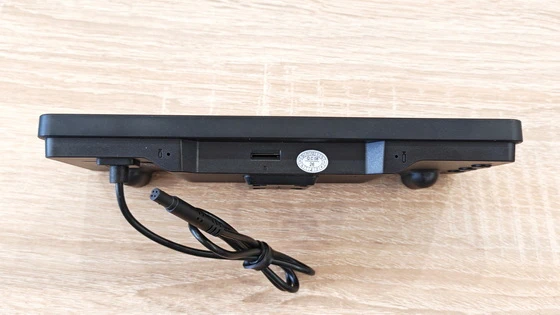
The exterior construction is advertised with an IP69K waterproof rating, which indicates a high level of resistance to dust ingress and high-pressure, high-temperature water exposure under the applicable test conditions, an important characteristic for equipment that may remain installed outdoors throughout the year and encounter rain, road spray, mud, dust, and frequent vehicle washing. Of course, an ingress-protection rating does not eliminate the need for careful installation, particularly around charging ports, seals, mounting points, and exposed connectors, but it does suggest that AUTO-VOX has designed the camera modules with demanding exterior automotive environments in mind. The monitor itself measures approximately 7.42 inches across and 3.10 inches in height, or about 188.5 × 78.7 mm, making it considerably wider than many compact aftermarket reversing displays while retaining a relatively low-profile form factor that should help it fit on a suitable dashboard without occupying an excessive amount of vertical space. Its two external antennas are particularly noticeable, although they serve a practical purpose by supporting the wireless communication system, and I consider their inclusion understandable given that the Solar3A Plus Max is designed not only for ordinary passenger vehicles but also for longer combinations involving trailers, caravans, and recreational vehicles. Overall, the design prioritizes installation convenience, functional durability, and everyday usability rather than decorative elements, which is precisely the direction I would expect from an automotive accessory intended to improve visibility during real driving situations.
One of the most appealing aspects of the AUTO-VOX Solar3A Plus Max is the installation philosophy, because traditional aftermarket reversing cameras often require a relatively time-consuming process involving the removal of interior trim panels, routing video cables through the vehicle, identifying appropriate power connections, and occasionally drilling holes or modifying existing wiring. With this system, AUTO-VOX has attempted to eliminate much of that complexity by using independent wireless camera modules powered by internal rechargeable batteries, while the monitor receives its operating power through the vehicle’s accessory socket. The advertised installation process takes approximately two minutes, although I would regard that figure as an idealized estimate for a straightforward vehicle configuration rather than a guaranteed installation time, since the actual process depends on the available mounting points, license plate arrangement, dashboard layout, and the driver’s preferred camera positions. The rear camera can be installed around the license plate area, allowing it to capture the region immediately behind the vehicle, while the second camera can be positioned to provide another useful perspective, such as the rear of a trailer or caravan, or an additional viewpoint around a vehicle with significant blind spots.
For a pickup truck towing a travel trailer, for example, I would consider installing one camera on the truck and the second camera at the rear of the trailer, creating a monitoring arrangement that can help the driver observe different areas of the vehicle combination without relying entirely on conventional mirrors. Another possible configuration involves positioning one camera to observe the hitch or coupling area while the other monitors the road behind the trailer, although the suitability of this arrangement depends on the available mounting positions and the actual viewing geometry. The absence of a permanent wired connection between the cameras and the monitor is particularly beneficial for users who regularly attach or detach trailers, because the camera modules can remain installed on their respective vehicles while the display provides the central monitoring interface. I would nevertheless recommend carefully evaluating the mounting position before final installation, ensuring that the cameras do not obscure the registration plate, interfere with vehicle lighting, or sit in locations where they could be damaged by moving components, road debris, or contact with loading equipment. It is also important to position the solar panels where they can receive adequate sunlight, since installation under an overhang or in a permanently shaded location could reduce their ability to replenish the internal batteries.
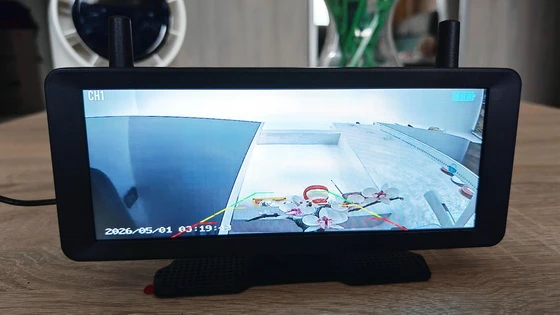
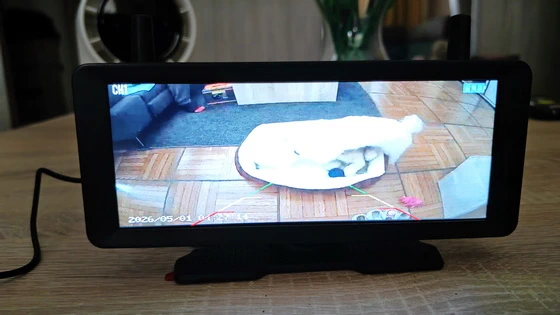
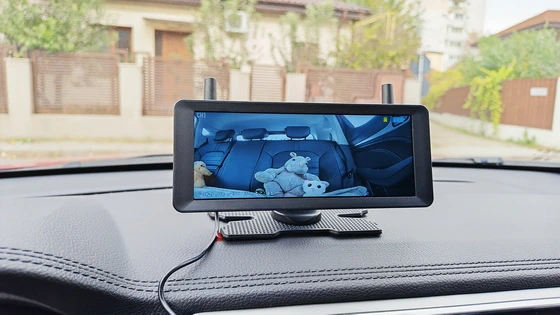
The 7.2-inch display is one of the defining features of the Solar3A Plus Max, and I consider the larger viewing area a meaningful advantage over the smaller screens frequently supplied with inexpensive reversing camera systems, particularly when the driver needs to observe fine details around obstacles or monitor two video feeds simultaneously. AUTO-VOX advertises a 1080P HD viewing experience, positioning the monitor as a high-definition solution capable of presenting camera footage with improved visual detail compared with lower-resolution alternatives, although the actual clarity perceived by the driver will also depend on camera sensor performance, wireless transmission quality, lighting conditions, and the physical resolution of the display panel. The wide display format is especially appropriate for automotive applications because it allows the driver to view the rear environment in a natural horizontal composition, making it easier to interpret the position of nearby vehicles, parking boundaries, trailer components, and other obstacles.
In practical terms, I see the most significant benefit when maneuvering in confined spaces, where having a larger image can make small visual details easier to identify without requiring the driver to lean toward the monitor or concentrate excessively on a small screen. The relatively broad bezel provides a clearly defined viewing area, while the dashboard stand allows the display to be positioned independently of the vehicle’s existing infotainment system, an important consideration for older vehicles that may not support aftermarket video input. I also appreciate the fact that AUTO-VOX has designed the system around a dedicated display rather than requiring a smartphone application for basic monitoring, since a standalone screen offers a more predictable automotive interface and avoids occupying the driver’s phone during navigation, communication, or other activities. As with any dashboard-mounted display, however, its positioning remains important, and I would recommend choosing a location that provides convenient visibility without obstructing the windshield, distracting the driver, or interfering with the deployment areas of airbags.
While the large display is certainly useful, I believe the dual-camera functionality is the feature that most clearly distinguishes the AUTO-VOX Solar3A Plus Max from simpler reversing camera systems, because it transforms the monitor from a single-purpose parking accessory into a more flexible vehicle observation platform. The system supports two independent wireless camera channels, allowing the driver to observe two different viewpoints and take advantage of the monitor’s split-screen functionality, which divides the display into separate viewing areas for simultaneous monitoring. This configuration can be particularly useful when towing a trailer, since the driver may want to observe both the area immediately behind the towing vehicle and the environment behind the trailer, two perspectives that conventional rearview mirrors cannot always provide simultaneously. For recreational vehicle owners, the dual-camera arrangement could also help monitor a rear-mounted bicycle carrier, trailer connection, or other relevant exterior area, depending on the camera positions and the driver’s specific requirements.
The supplied illustrations demonstrate how the display can present two different views side by side, making the system particularly interesting for longer vehicles where a single rear camera may not provide enough visual information to support confident maneuvering. One important consideration is that split-screen operation necessarily divides the available display area between the two channels, meaning that individual objects will appear smaller than they would in a full-screen view, although the relatively generous 7.2-inch screen helps make this compromise more manageable. I consider this flexibility one of the strongest arguments in favor of choosing the Plus Max package, especially for users who already know that their vehicle configuration requires more than one camera.
Wireless connectivity is another important component of the Solar3A Plus Max, with AUTO-VOX advertising a transmission range of up to 500 feet, equivalent to approximately 152 meters, supported by the monitor’s dual-antenna arrangement. This specification is particularly relevant for recreational vehicles, long trailers, commercial vehicles, and other extended vehicle combinations, where the physical distance between the camera and the driver’s dashboard can be considerably greater than in an ordinary passenger car. The dual antennas are designed to support a stable wireless video connection, reducing the likelihood of interruptions that could otherwise make the monitoring system less useful during reversing or low-speed maneuvering. From a technical perspective, however, I would treat the 500-foot figure as a manufacturer-stated maximum rather than a guaranteed operating distance in every environment, since wireless performance can be influenced by vehicle body materials, metallic structures, nearby electronic equipment, antenna orientation, and the number of obstacles between the transmitter and receiver. A large trailer constructed with substantial metal components, for example, can present a different radio-frequency environment from an open-air installation with an unobstructed line of sight. Nevertheless, the emphasis on extended wireless range is encouraging because it indicates that AUTO-VOX has designed the system with larger vehicle applications in mind, rather than limiting its intended use to compact cars and short-distance parking assistance. For my preferred installation approach, I would verify the video connection with both cameras in their intended positions before securing the hardware permanently, ensuring that the monitor can receive the required video feeds consistently across the actual length of the vehicle combination.
A reversing camera becomes particularly valuable after sunset, when conventional mirrors may provide limited information about poorly illuminated areas behind the vehicle, and the Solar3A Plus Max addresses this challenge with a night vision system designed to maintain useful image visibility under difficult lighting conditions. AUTO-VOX highlights its proprietary image sensor technology and infrared night vision capabilities, claiming improved clarity compared with conventional camera systems that may produce excessively dark, noisy, or blurred images in low-light environments. The practical objective is to help the driver identify obstacles, parked vehicles, nearby structures, and other relevant details when reversing at night or maneuvering through locations where street lighting is limited. I find this capability particularly relevant for camping and recreational vehicle applications, because drivers frequently arrive at campsites after dark or need to maneuver in locations where artificial lighting is inconsistent. The ability to observe the rear environment through a dedicated camera can provide valuable additional information, especially when the vehicle’s own reversing lights do not illuminate the entire area behind a long trailer. At the same time, night vision performance should always be considered in relation to the actual environmental conditions, since heavy rain, fog, dirty camera lenses, reflective surfaces, and extremely low ambient illumination can still affect the quality of the resulting image. Although the manufacturer’s promotional materials emphasize clear nighttime visibility, a definitive assessment of image noise, infrared illumination distance, dynamic range, and moving-object detail would require controlled nighttime footage captured with the installed system. For that reason, I consider night vision an important advertised advantage, while recognizing that its real-world effectiveness ultimately depends on sensor behavior and the specific installation environment.
Another feature that makes the Solar3A Plus Max interesting is its integrated DVR recording functionality, which extends the system’s purpose beyond live reversing assistance and introduces the possibility of preserving video footage from the connected cameras. According to AUTO-VOX, the DVR function can be enabled manually, allowing the system to record video while the monitoring equipment is operating, with loop recording automatically overwriting older files when the available storage capacity is exhausted. This approach is familiar from conventional dashboard cameras, where continuous cyclic recording allows the device to make efficient use of limited storage space without requiring the user to delete previous recordings manually. The system also supports locking important footage to protect selected recordings from ordinary loop overwriting, a potentially valuable function when the driver wants to retain video associated with an unusual event, a parking incident, or another situation requiring later review. For owners of pickup trucks and recreational vehicles, this functionality could be especially useful when monitoring the rear of a trailer, since the camera may capture activity occurring outside the normal field of view of the vehicle’s factory-installed cameras. I appreciate the inclusion of DVR support because it makes the product more versatile, although it is important to distinguish between a backup camera with recording capabilities and a fully featured dedicated dash camera, as the latter may offer additional functions such as impact-triggered recording, GPS information, parking surveillance, or other features that have not been established for this model. Likewise, the actual recording resolution, storage requirements, supported memory card capacity, and behavior of the recording function during camera sleep modes should be verified against the supplied documentation before relying on the system for continuous video evidence. The ability to preserve important footage nevertheless adds meaningful functionality to the package, particularly for drivers who want their camera system to serve both as a visibility aid and as a supplementary recording device.
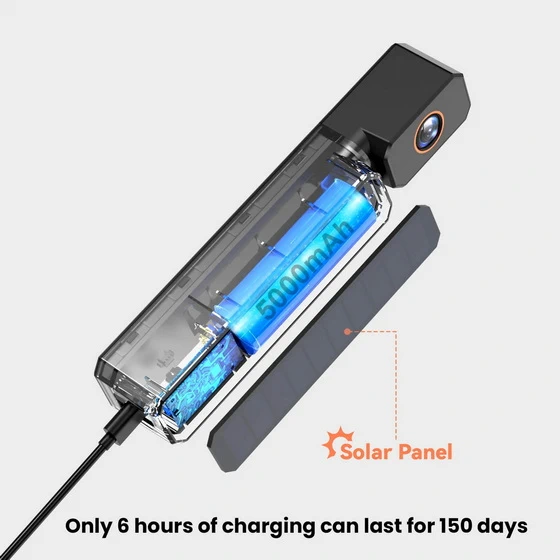
Perhaps the most distinctive engineering decision behind the AUTO-VOX Solar3A Plus Max is the combination of solar charging and a built-in 5000mAh rechargeable battery, which allows each camera module to operate without requiring a permanent electrical connection to the vehicle. The integrated solar panel is intended to replenish the internal battery whenever sufficient sunlight is available, reducing the frequency of manual charging and making the system more convenient for vehicles that spend considerable time parked outdoors. AUTO-VOX advertises up to 150 days of operation under its specified usage conditions, an ambitious endurance figure that reflects the combination of battery capacity, solar energy harvesting, and power-saving management rather than continuous, uninterrupted video transmission for that entire period. This distinction is important because actual battery endurance will depend on several variables, including how frequently the camera is activated, the duration of each monitoring session, ambient temperature, solar exposure, seasonal daylight availability, and the selected operating mode. The manufacturer also highlights three smart sleep modes designed to reduce unnecessary energy consumption, allowing the system to conserve power when active video monitoring is not required.
I consider this power-management strategy particularly relevant for backup camera applications, since the cameras do not necessarily need to transmit continuously throughout every journey, and reducing standby consumption can significantly improve the practicality of a battery-powered installation. The promotional materials also mention a charging duration of approximately six hours, although the charging method, input power, and environmental conditions associated with this claim should be confirmed before treating it as a universal charging estimate. For drivers living in regions with frequent cloud cover, short winter days, or long periods of indoor parking, I would expect manual charging to remain an occasional necessity, while vehicles regularly exposed to adequate sunlight may benefit more substantially from the integrated solar panels. The advantage of this architecture is not that the cameras become entirely independent of charging requirements, but rather that they can substantially reduce the maintenance associated with traditional rechargeable wireless camera systems.
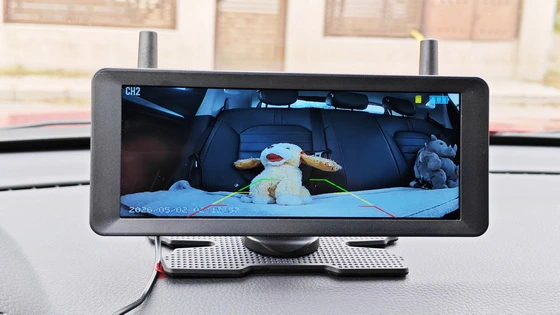
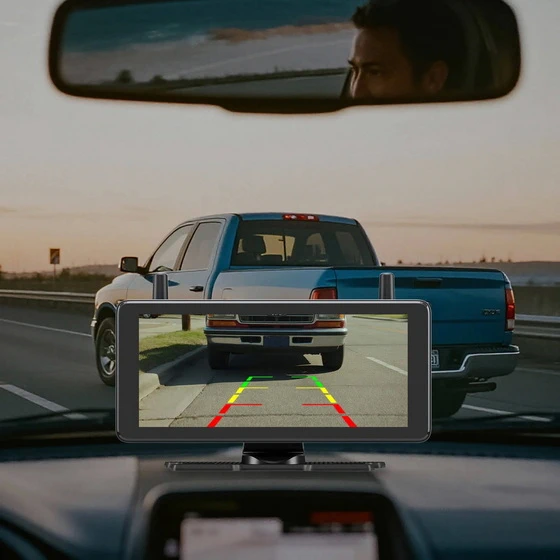
The AUTO-VOX Solar3A Plus Max is designed around the practical challenges of reversing, parking, and observing areas that remain difficult to see through conventional mirrors, and its advertised 170-degree camera viewing angle is intended to provide a broad perspective of the environment behind the vehicle. A wide field of view is especially useful when reversing out of a parking space, approaching a campsite, aligning a trailer, or maneuvering around obstacles positioned near the rear corners of a large vehicle. The monitor illustrations also demonstrate colored parking guidelines, with green, yellow, and red reference zones intended to help the driver interpret the approximate proximity of objects and understand the area behind the vehicle more easily. I consider these visual references useful as general positioning aids, although they should not be interpreted as precise distance measurements unless the system has been calibrated appropriately for the specific camera installation. Wide-angle lenses can also introduce perspective distortion, making objects near the edges of the image appear differently from objects positioned directly behind the camera, so drivers should take time to become familiar with the displayed perspective before relying on it during tight maneuvers. For trailer owners, the ability to observe the coupling area or the space behind the trailer may be especially valuable, since these are locations where conventional vehicle mirrors frequently provide incomplete information. As with all reversing assistance equipment, I would use the camera system as a supplement to direct observation, mirrors, and appropriate safety checks rather than as a replacement for them.
After examining the overall design and feature set, I believe the AUTO-VOX Solar3A Plus Max is particularly well suited to drivers whose vehicles present more complex visibility challenges than those encountered in an ordinary compact passenger car. For pickup truck owners, the system offers the possibility of monitoring the rear of the vehicle while maintaining a second camera for trailer-related activities, which can be useful when transporting equipment, towing recreational trailers, or working in locations where rear visibility is restricted. For caravan and RV users, the combination of wireless connectivity, solar-powered camera modules, and split-screen monitoring is especially attractive because it reduces the need to route long video cables through the vehicle structure and makes it possible to observe more than one exterior viewpoint from a single dashboard display. The system could also be useful for certain commercial vehicles, delivery vans, and utility trailers, provided that the camera mounting arrangement, wireless operating conditions, and local installation requirements are appropriate. I also see potential value for drivers who own older vehicles without factory-installed reversing cameras, although those who need only one rear view may find a simpler single-camera system sufficient for their requirements. The larger display, two-camera configuration, and DVR functionality make the Plus Max particularly interesting when the driver wants a more comprehensive monitoring solution rather than a basic parking accessory.
The AUTO-VOX Solar3A Plus Max Wireless Backup Camera System brings together several features that I consider genuinely relevant for modern automotive monitoring, including a spacious 7.2-inch 1080P display, two independently powered wireless cameras, split-screen viewing, long-range transmission supported by dual antennas, infrared night vision, DVR loop recording, and solar-assisted charging with substantial internal battery capacity. What I appreciate most about the concept is the way these technologies work toward a common practical objective: providing additional visibility around larger vehicles while reducing the installation complexity traditionally associated with aftermarket camera systems. The dual-camera configuration is undoubtedly one of the product’s strongest advantages, especially for drivers who tow trailers or operate recreational vehicles, because the ability to monitor two different viewpoints from a single display offers flexibility that a conventional single-camera reversing system cannot provide.
I also find the integrated solar charging arrangement particularly appealing, since the combination of a 5000mAh battery and intelligent power-saving modes has the potential to make everyday operation more convenient, especially when the cameras are installed on vehicles that receive regular sunlight. The 7.2-inch monitor provides an appropriately sized interface for split-screen viewing, while the DVR recording feature adds another layer of functionality that may prove useful beyond conventional parking assistance. There are, naturally, several specifications that deserve careful consideration, including the manufacturer’s maximum 500-foot wireless range and 150-day battery endurance claims, both of which should be interpreted in relation to actual operating conditions rather than treated as guaranteed results in every installation. Similarly, the real-world quality of nighttime footage, the consistency of wireless video transmission through substantial vehicle structures, and the long-term performance of the solar charging system are aspects that would benefit from extended practical testing.
Nevertheless, based on its design, supplied hardware, and advertised capabilities, the AUTO-VOX Solar3A Plus Max presents a compelling proposition for pickup truck owners, RV enthusiasts, caravan users, and drivers who need a flexible dual-camera visibility system without the inconvenience of extensive vehicle rewiring. For anyone looking to improve rearward visibility, simplify trailer maneuvering, and add a dedicated monitoring display to a vehicle that lacks modern factory-installed camera technology, this system offers a well-considered combination of convenience, versatility, and practical automotive functionality. My overall impression is that the AUTO-VOX Solar3A Plus Max is a promising and thoughtfully designed dual-camera monitoring solution, with its strongest appeal lying in the combination of independent solar-powered cameras, a large split-screen display, and an installation approach that makes advanced rear visibility technology accessible to a wider range of vehicles.
Auto-Vox Solar3A Plus Max Wireless Backup Camera Main Features
7.2-inch 1080P HD Display – Large 16:9 monitor for clear rearview monitoring.
Dual Wireless Camera System – Includes two independent cameras for multiple viewing angles.
Split-Screen Viewing – Monitor two camera feeds simultaneously.
Solar-Powered Cameras – Integrated solar panels extend battery life.
5000mAh Rechargeable Battery – Built-in battery in each camera.
Long Battery Endurance – Up to 150 days under specified operating conditions.
Quick 2-Minute Installation – No complicated wiring or drilling required.
Long-Range Wireless Transmission – Dual-antenna technology for improved signal stability.
Infrared Night Vision – Enhanced visibility during nighttime driving and reversing.
DVR Loop Recording – Automatically overwrites older footage when storage is full.
Video Locking Function – Protects important recordings from automatic overwriting.
Wide-Angle Camera Lens – Expands rear visibility and reduces blind spots.
IP69K Waterproof Protection – Designed to withstand demanding outdoor conditions.
Smart Power Management – Three intelligent sleep modes to conserve battery power.
Parking Assistance Guidelines – Colored reference lines for safer reversing.
Versatile Vehicle Compatibility – Suitable for SUVs, pickup trucks, RVs, caravans, trailers, and vans.
Auto-Vox Solar3A Plus Max Wireless Backup Camera Highlights
7.2″ 16:9 golden-ratio screen
DVR loop recording for automatic footage capture
Dual-antenna wireless signal—up to 52 ft range
2-minute installation—no wiring or drilling required
1080P HD + night vision for clear day & night images
Battery-powered—easy, tool-free setup
5000 mAh battery—3–4 months runtime per charge
Solar charging—eco-friendly extended power
Dual-channel split-screen for full visibility
Supports a second camera for front or side view
140° wide-angle lens reduces blind spots
IP69K waterproof-rated for all-weather durability
Auto-Vox Solar3A Plus Max Wireless Backup Camera Best-Use Scenarios
Everyday Reverse Parking – Safely maneuver into tight parking spaces with a clear rearview display and parking guidelines.
RV and Motorhome Driving – Monitor blind spots and improve rear visibility when operating large recreational vehicles.
Caravan and Travel Trailer Towing – Use dual cameras to monitor both the towing vehicle and the area behind the caravan.
Pickup Truck Maneuvering – Improve visibility behind large pickup trucks, especially when reversing or transporting bulky cargo.
Trailer Hitch Alignment – Position a camera toward the towing hitch for easier trailer coupling and alignment.
Nighttime Parking and Reversing – Benefit from infrared night vision when maneuvering in poorly illuminated areas.
Narrow Streets and Confined Spaces – Navigate tight driveways, garages, and restricted parking areas with improved situational awareness.
Commercial Vans and Delivery Vehicles – Monitor areas behind cargo vans where conventional rearview mirrors offer limited visibility.
Dual-Angle Vehicle Monitoring – Use split-screen viewing to observe rear and side or front-facing camera perspectives simultaneously.
Camping and Outdoor Adventures – Maneuver RVs, trailers, and SUVs around campsites, trees, rocks, and other obstacles.
Older Vehicle Camera Upgrades – Add modern reversing assistance to vehicles without factory-installed backup cameras, without extensive rewiring.
Rear-Mounted Cargo and Bicycle Carrier Monitoring – Keep an eye on bike racks, cargo carriers, and trailer attachments while the camera system is operating.
Auto-Vox Solar3A Plus Max Wireless Backup Camera Specs
Brand: Auto-Vox
Model: Solar3A Plus Max
Resolution: 1080P Full HD (1920 x 1080)
Screen Optics: 7.2 ” IPS Display with Anti-Glare Coating
Image Sensor: High-Sensitivity CMOS Sensor
Viewing Angle: 120° Horizontal Viewing Angle
Night Vision: Clear Night Vision for Low-Light Parking
Transmission: Stable Digital Wireless Signal
Signal Stability: Reliable Signal up to 500 ft
Power System: Built-in Rechargeable Battery + Solar Assist Charging
Mounting Type: License Plate Mount
Waterproof: IP69K Waterproof Rating
Operating Temp: -4°F to 149°F (-20°C to 65°C)
Display Sleep: 120s/240s/Never
Guidelines: Adjustable Parking Guidelines
Certifications: FCC, CE, RoHS, E-mark Certified
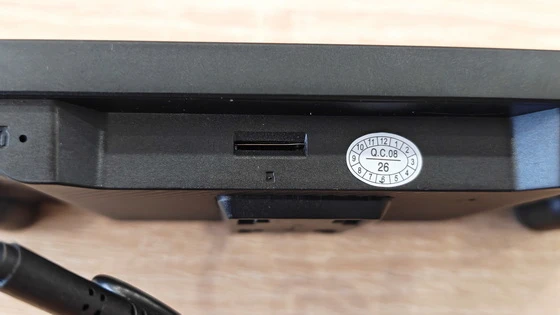
Memory Storage: Supports up to 64GB TF card for loop recording (card not included)
Working Voltage: Camera Voltage: DC 3.7VMonitor Voltage: DC 5V (USB Powered)
Display Mode: Dual Split-Screen View
Languages: English /French /Spanish / German /Italian
Color: Black
Package Content
2 × Solar-Powered Wireless Backup Cameras with Built-in Rechargeable Batteries
1 × Wireless LCD Monitor
1 × Car Charger with Camera Activation Button
1 × Monitor Power Cable
2 × USB Battery Charging Cable
2 × Camera Mounting Brackets with Double-Sided Adhesive Tape (Red and Black)
1 × Mounting Hardware Kit (Screws)
1 × AUTO-VOX Multilingual User Manual
1 × AUTO-VOX Brand Card
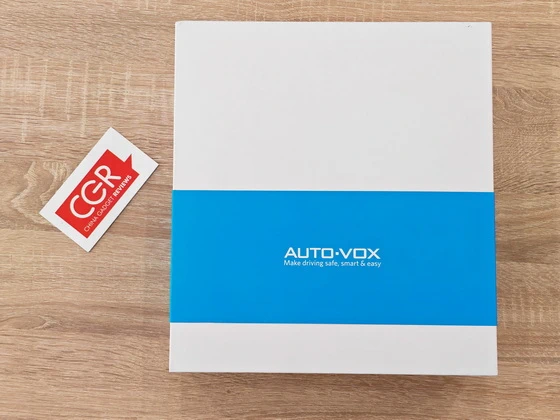
1 x Packaging Box
Photo gallery full album here. Official webpage here. Read more here about Auto-Vox products.
About Auto-Vox. At Auto-Vox, our mission is simple yet powerful: make driving safe, smart & easy. We believe safety is not a privilege but a necessity, and we are committed to creating reliable, affordable, and user-friendly backup camera solutions. Beyond protecting lives on the road, AUTO-VOX strives to protect the environment. By integrating clean energy solutions like solar power into our rear view camera products, we are reducing the carbon footprint while delivering innovative safety devices. Our goal is to empower millions of drivers worldwide with tools like our rear view mirror cameras that bring peace of mind, save lives, and contribute to a greener future. AUTO-VOX is committed to sustainability: For every order placed, we donate $1 to verified environmental organizations, supporting global green initiatives. Our packaging uses 100% biodegradable materials, and as the first brand to introduce a solar-powered wireless backup camera for car usage, we’ve made sustainability a cornerstone of our innovation. Additionally, we’ve launched a recycling program to encourage customers to trade in old products, promoting responsible disposal and reducing electronic waste for a greener future.
Did this article help you? If so, please tell me in a comment what do you think about it.
Don’t miss any of our future video tutorials, follow us on Youtube. Like us on Facebook. Join our Best Deals Telegram Channel. Join our Android TV Box Firmware Updates Telegram Channel. Subscribe now to our newsletter. If you need Tech Reviewer or Youtube Influencer read this. Donate now here to support CGR Team!