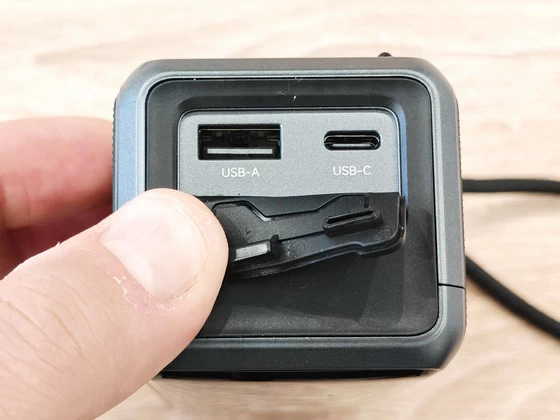
Best Deal Alert! You can now buy BabyVue BV6 Plus 7.2″ Wireless Dual Baby Car Monitor from Amazon.com for a very good price. Hurry up, limited time offer!
Meet BabyVue BV6 Plus – A Smarter, More Convenient Way to Keep an Eye on Little Passengers
Traveling with young children brings an entirely different set of priorities to every journey. Comfort, entertainment, and convenience are important, but knowing that your little passengers are safe and comfortable in their car seats is what really matters. Traditional baby car mirrors provide a simple solution, although their usefulness depends heavily on viewing angles, available light, and the position of the child. Camera-based monitoring systems offer a more sophisticated alternative, but many introduce another inconvenience: cables running throughout the vehicle. The BabyVue BV6 Plus 7.2″ Wireless Dual Baby Car Monitor takes a refreshingly practical approach to this challenge. Instead of relying on conventional wired cameras, it combines two independently battery-powered wireless cameras with a generous 7.2-inch display, allowing parents to monitor two children simultaneously without constantly switching between camera feeds. What makes this system particularly interesting to me is that BabyVue has clearly focused on solving everyday usability problems rather than simply adding features for the sake of marketing. The dual-camera configuration, split-screen viewing, automatic infrared night vision, flexible mounting accessories, and built-in camera batteries are all designed around the realities of family transportation. Another detail that immediately caught my attention is the monitor’s USB-powered operation. Unlike many comparable automotive monitoring products that depend on a dedicated 12V cigarette lighter connection, the BabyVue display can be powered directly from a suitable USB charging port in the vehicle. It might sound like a relatively small convenience, but in a modern car equipped with multiple USB outlets, it makes the entire installation considerably cleaner and more versatile. After taking a closer look at the complete package, the hardware, and the way the individual components are designed to work together, I found plenty of interesting details worth discussing.
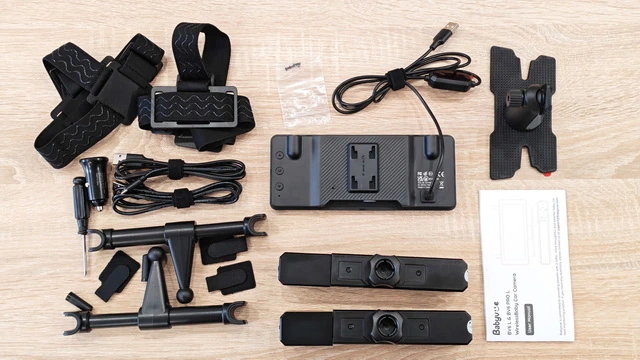
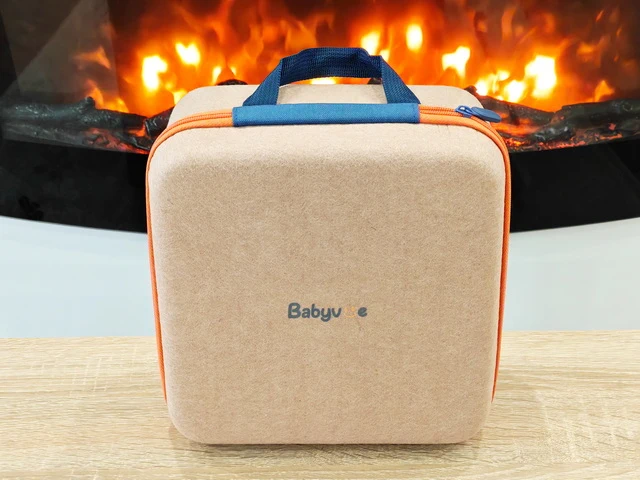
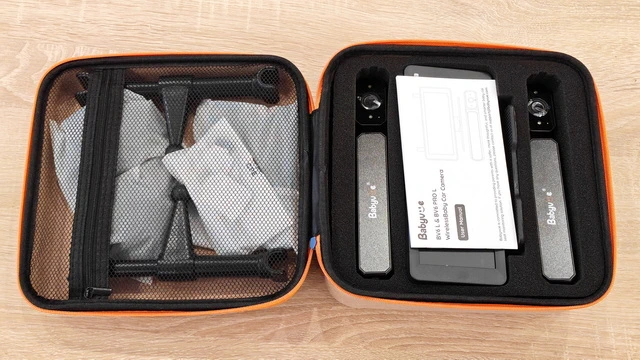
My first impression of the BabyVue BV6 Plus was that this is much more than a basic camera-and-screen combination. BabyVue has put together a surprisingly comprehensive package, supplying the accessories needed to accommodate different vehicle interiors and seating arrangements. The centerpiece is the wide 7.2-inch monitor, accompanied by two compact wireless cameras. Having both cameras included is particularly welcome because the system is ready for dual-child monitoring without requiring the purchase of an additional camera. The package also contains two adjustable headrest mounting brackets, two flexible strap mounts, charging cables, a vehicle power adapter, cable-management accessories, a small screwdriver, and the user manual. The different mounting options are especially useful because vehicle headrests are far from standardized. What works perfectly in a conventional family sedan might not be suitable for an SUV with integrated headrests or a more unconventional seating configuration. I also appreciate the inclusion of a dedicated carrying case. Rather than treating storage as an afterthought, BabyVue provides a practical way to keep the monitor, cameras, and accessories organized when the system is not installed. This becomes particularly valuable when moving the equipment between different family vehicles or taking it along on a holiday. Instead of searching through a bag for a missing mounting bracket or charging cable, everything can have its own place. The carrying case adds a premium touch to the overall presentation, while also making the BabyVue BV6 Plus an attractive gift idea for new parents. What I liked most about the unboxing experience was the sense that the product had been designed as a complete solution rather than a collection of components that would require additional purchases before becoming useful.
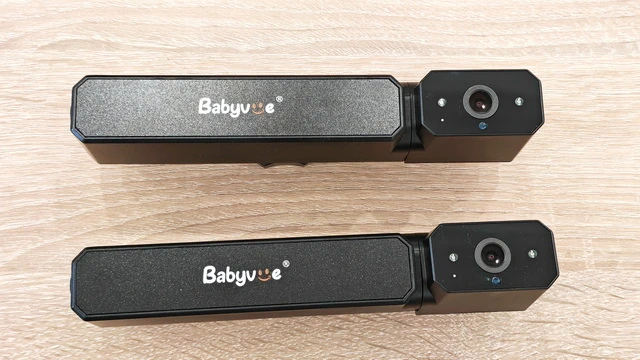
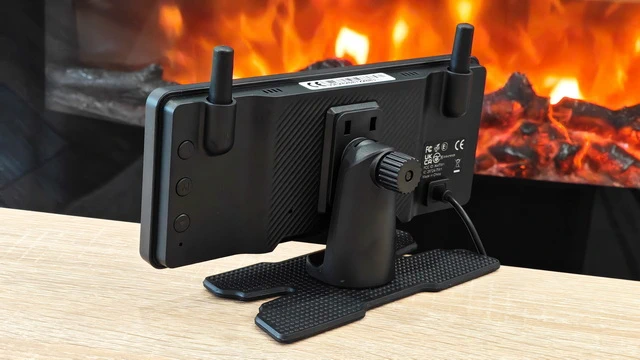
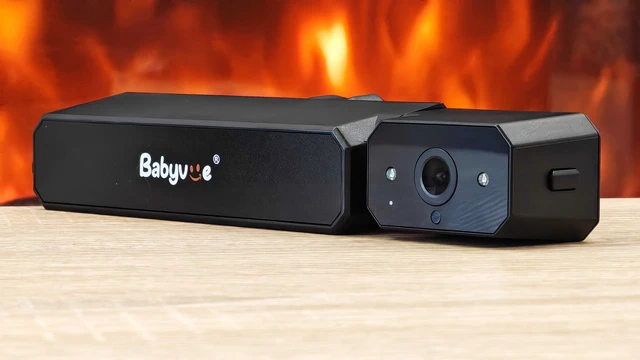
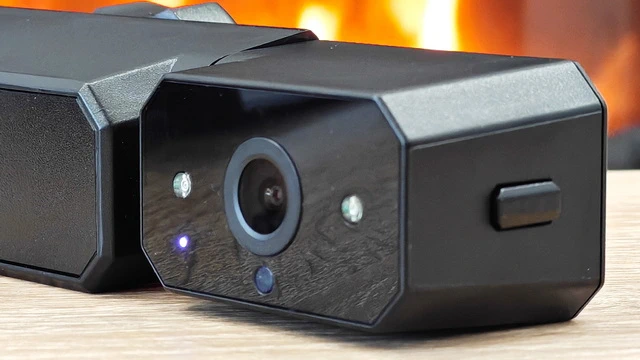
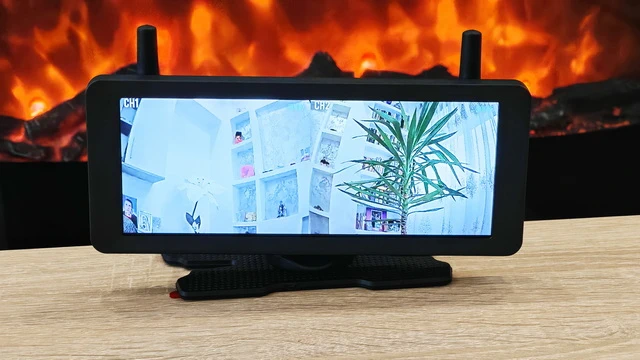
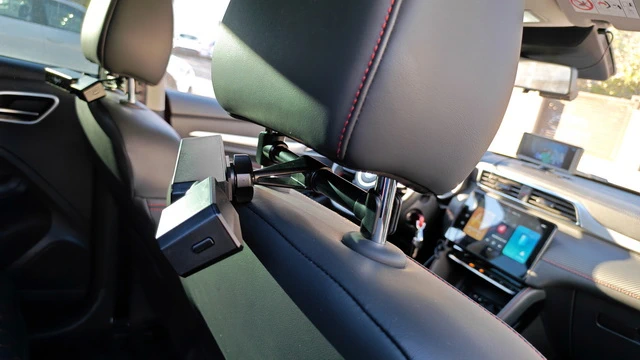
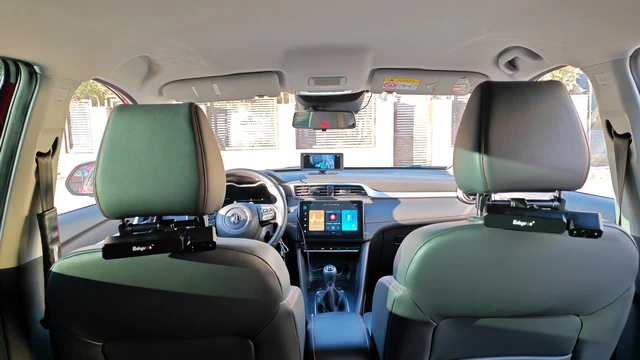
The BabyVue BV6 Plus follows a functional, understated design philosophy that I think suits an automotive accessory perfectly. The two cameras feature slim, elongated black housings, with their lenses positioned toward one end. This arrangement gives them a modern appearance while keeping their overall dimensions compact enough to fit discreetly behind the front seats. I particularly like that the cameras do not resemble traditional bulky surveillance devices. Their relatively low-profile construction helps them blend into the vehicle interior without creating unnecessary visual distractions. The integrated rechargeable batteries are another important design advantage. Because the cameras do not need to remain connected to an external power source during normal operation, there is no need to route long cables underneath seats, through upholstery gaps, or around interior trim panels. The monitor adopts a similarly straightforward design, with a wide rectangular housing and a black finish that should look appropriate in most modern interiors. Its two external antennas support wireless communication with the cameras, while the integrated mounting mechanism allows it to be positioned on the dashboard. On the back of the monitor, BabyVue has included physical controls for navigating the interface and adjusting its settings. I prefer this approach for a dedicated automotive accessory because it avoids unnecessary dependence on touchscreen controls. The display is large enough to make the dual-camera arrangement genuinely worthwhile, yet its proportions remain reasonable for dashboard installation. One aspect that deserves attention is the flexibility of the mounting system. The supplied rigid brackets accommodate conventional headrest posts positioned approximately 10–14 cm apart, while the alternative straps provide a solution for vehicles with integrated or differently shaped headrests. This versatility is important because even a well-designed camera becomes frustrating if its mounting system only works with a limited selection of vehicles. Overall, the hardware has a purpose-built appearance, with emphasis on simple operation, compact dimensions, and straightforward installation.
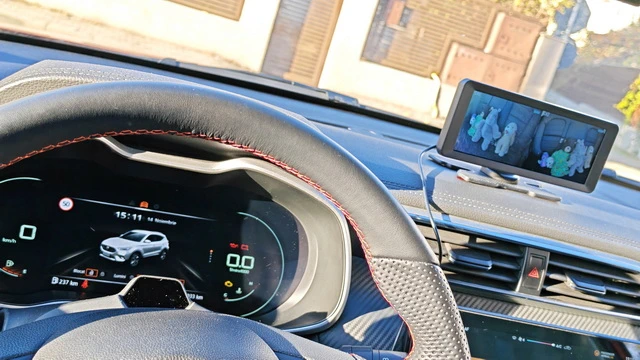
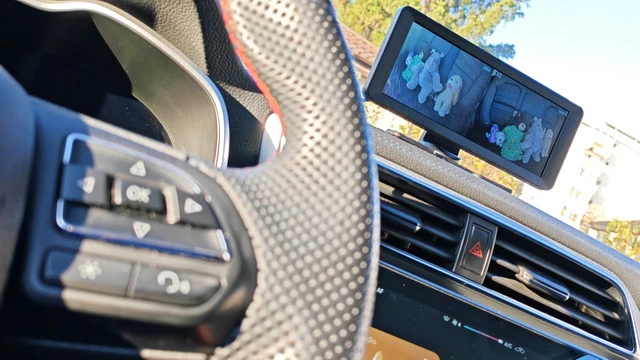
One of the strongest arguments in favor of the BabyVue BV6 Plus is the simplicity of its installation concept. Traditional wired baby monitoring systems can require considerable patience, particularly when installing cameras in the second or third row of a larger vehicle. Long cables must be concealed, secured, and routed toward the dashboard, making an otherwise simple accessory feel like a small automotive installation project. With the BabyVue BV6 Plus, the process is much more straightforward. The cameras are attached to the appropriate headrests using the supplied brackets or straps, with their positions adjusted to capture the desired view of each child. The monitor is then secured to the dashboard, connected to power, and configured to display the camera feeds. There is no requirement to run video cables from the rear seats to the front of the vehicle. I consider this one of the system’s biggest advantages, especially for families who frequently rearrange child seats or move equipment between different cars. The wireless configuration is also particularly appealing in seven-seat SUVs and MPVs. With children occupying separate rows, a conventional wired setup can become messy very quickly. Battery-powered cameras eliminate much of that inconvenience, making it easier to monitor passengers in both the second and third rows. Of course, correct positioning remains essential. The cameras should be mounted securely, with an unobstructed view of the child, while ensuring that neither the equipment nor its mounting accessories interfere with seat belts, head restraints, or the operation of the child restraint itself. The monitor should also be positioned where the driver can check it with a brief glance without obstructing visibility through the windshield. What appeals to me about this installation approach is its reversibility. The system does not require permanent modifications to the vehicle, which is a significant advantage for leased cars, rental vehicles, and families who simply prefer to leave their interiors untouched.
One of my favorite aspects of the BabyVue BV6 Plus is something that can easily be overlooked when comparing specifications: the monitor can receive power directly from a vehicle’s USB charging port. Many competing baby car monitoring systems rely on a traditional 12V cigarette lighter adapter as their primary power connection. Although this arrangement works, it is not always particularly convenient. In modern vehicles, the cigarette lighter socket may already be occupied by another accessory, positioned awkwardly inside a storage compartment, or simply less accessible than the USB ports integrated into the dashboard or center console. The BabyVue BV6 Plus offers a more convenient alternative. With a suitable 5V USB charging outlet, the display can be powered without occupying the cigarette lighter socket. This makes it easier to integrate the monitor into a modern car and helps keep the dashboard area organized. I particularly appreciate this flexibility because the cameras themselves operate wirelessly from their internal batteries. Consequently, the only component that requires a continuous power connection is the front display. The monitor is specified for 5V operation, with a maximum current consumption of 1.2A, so the USB source must be capable of supplying adequate power. It is also important to connect it to a proper USB charging outlet rather than assuming that every USB data port in a vehicle will provide sufficient power. BabyVue still includes a cigarette lighter adapter for vehicles without a suitable USB charging connection, so the traditional power option remains available. This dual approach makes considerably more sense than forcing users to rely on a single power arrangement. For me, it is a thoughtful design decision that improves the everyday usability of the system without adding unnecessary complexity.
The generous 7.2-inch display is undoubtedly one of the defining features of the BabyVue BV6 Plus. While a single-camera baby monitor can be sufficient for families with one young child, the situation changes significantly when two children are seated in different positions. Constantly switching between individual camera feeds is not particularly convenient, especially when the driver should be concentrating on the road. BabyVue addresses this problem with simultaneous split-screen monitoring. Both camera feeds can be displayed next to each other, providing a view of two separate seating positions without requiring repeated manual switching. I particularly like this arrangement because it gives the display a genuine practical purpose. The extra screen space is not simply there to make the product appear more impressive; it directly improves the amount of information available at a glance. The wide format provides room for both images without the distortion associated with stretching a camera feed to fill an unsuitable aspect ratio. The anti-glare screen is another welcome feature. Automotive displays must cope with constantly changing lighting conditions, including direct sunlight, reflections from windows, and bright dashboard surfaces. BabyVue has designed the monitor to remain more readable in these situations, including when the driver is wearing sunglasses. This is a sensible consideration for an accessory intended for daytime driving. The result is a monitoring concept that feels especially appropriate for larger family vehicles, where checking the condition of children seated farther back can otherwise be difficult. Naturally, the monitor should complement attentive driving rather than encourage prolonged screen viewing. Its real benefit is making a quick visual check easier, not replacing the driver’s responsibility to remain focused on the road.
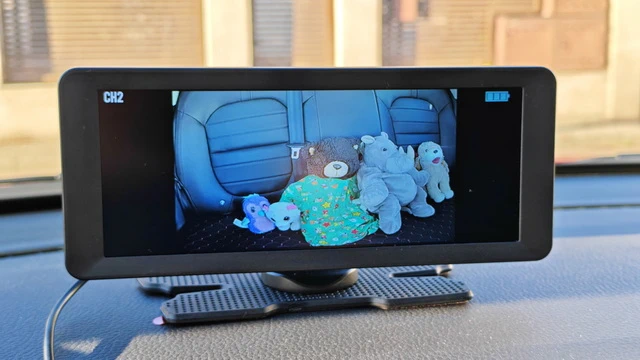
Image quality is another important part of the BabyVue BV6 Plus experience. Each camera supports 1080P video capture, giving the system the resolution needed to show useful details such as a child’s facial expressions, head position, and general movements. For a baby monitoring system, these details matter more than the kind of exaggerated sharpness or artificial image processing sometimes emphasized in conventional dashboard cameras. The purpose here is not cinematic recording. It is being able to determine, quickly and comfortably, whether a child is sleeping, awake, or needs attention. The cameras communicate with the monitor over a 2.4GHz wireless connection, removing the need for a physical video cable between the front and rear of the vehicle. This also makes the system particularly useful when conventional mirrors are poorly positioned or offer an obstructed view. The automatic night vision functionality adds another important layer of practicality. Driving conditions can change dramatically between a bright afternoon and a poorly illuminated evening journey. A conventional mirror becomes much less useful when the cabin is dark, while an ordinary camera without infrared illumination may struggle to provide a recognizable image. The BabyVue cameras incorporate infrared illumination and a light-sensitive switching system, allowing them to transition automatically from color daytime imaging to infrared night vision when ambient light becomes insufficient. According to BabyVue, the infrared system operates without a visible red glow, which is particularly desirable when monitoring sleeping children. I like the fact that this process is automatic. There is no need to manually change camera modes whenever the vehicle enters a tunnel, daylight fades, or the interior becomes darker. The system is designed to provide a consistent view throughout the journey, regardless of whether the cabin is brightly illuminated or almost completely dark.
Wireless cameras are convenient, but their usefulness depends heavily on how often they need recharging. BabyVue addresses this with a substantial 5,000mAh rechargeable battery inside each camera, combined with configurable power-management features. The manufacturer advertises up to nine days of use on a single charge, based on approximately 60 minutes of operation per day. That corresponds to roughly nine hours of cumulative daily-use sessions under the stated conditions, rather than nine days of continuous video transmission. This distinction is important, particularly for families who regularly undertake longer journeys. The actual operating time will depend on usage patterns, wireless activity, and the configured sleep settings, so I would treat the nine-day figure as a manufacturer reference rather than a guaranteed result. The cameras also incorporate automatic sleep behavior and a wake-up function, helping reduce unnecessary battery consumption when active monitoring is not required. On the monitor side, the power-management options allow the display to enter sleep mode after five or ten minutes, while a Never setting is available when continuous viewing is preferred. I appreciate having this level of control because different journeys require different approaches. A brief trip through town may not justify keeping the display constantly active, while a longer family journey could make continuous monitoring more convenient. The monitor can also follow the vehicle’s switched power supply, turning on or off according to the availability of power from the car’s charging outlet. Another useful detail is that the cameras can be recharged independently through their 5V charging connections. The overall power-management philosophy is sensible: keep the rear cameras independent of vehicle wiring while allowing the front display to operate from a reliable external power source. For families who use the system regularly, I would recommend developing a simple charging routine rather than relying exclusively on the advertised maximum battery life.
What makes the BabyVue BV6 Plus particularly appealing is how easily its features fit into different family travel scenarios. I can see the dual-camera configuration being especially useful for parents with two young children seated on opposite sides of the rear bench, or in separate rows of a seven-seat vehicle. Instead of relying on mirrors, turning around, or trying to interpret reflections in the rearview mirror, the driver has access to a dedicated display showing both seating positions. The wireless arrangement is equally valuable when switching vehicles. For example, moving the system from a family SUV to a second car does not involve disconnecting multiple hidden cables. The cameras can be removed from their mounting points, the display detached, and the equipment transferred with relatively little effort. The included carrying case reinforces this portability. I also appreciate that BabyVue has avoided making the concept unnecessarily complicated. The appeal of this product comes from its dedicated monitoring functionality, physical controls, flexible mounting system, and independent wireless cameras. It does not need to replace the vehicle’s multimedia system or compete with a smartphone for attention. Instead, it serves one clearly defined purpose: making it easier to check on young passengers. That focus is ultimately what makes the BV6 Plus more interesting than a generic camera paired with a small automotive display.
After examining the BabyVue BV6 Plus and its complete accessory package, what stands out most to me is the attention given to practical family requirements. The 7.2-inch split-screen display is an excellent starting point, offering a convenient way to monitor two children simultaneously. The two independent 1080P cameras, automatic infrared night vision, and flexible mounting options make the system suitable for a wide variety of vehicle layouts, while the integrated rechargeable batteries eliminate the biggest inconvenience associated with many traditional baby car cameras: extensive wiring. I particularly appreciate the decision to power the display through a standard USB charging connection. In a modern vehicle, this is often a cleaner and more convenient solution than having to dedicate the 12V cigarette lighter socket to another accessory. The fact that BabyVue also supplies a conventional car adapter gives the system welcome flexibility. The included carrying case, comprehensive mounting accessories, and adjustable power-saving features further strengthen its appeal. There are, naturally, a few practical considerations. The rear cameras require periodic charging, the actual battery endurance will depend on how the system is used, and the monitor still needs a reliable wired power source. The wireless camera connection also does not remove the need for careful installation and secure mounting. Nevertheless, these are reasonable compromises considering the convenience offered by the overall design. What I like most about the BabyVue BV6 Plus is that it addresses real inconveniences rather than inventing new ones. It simplifies installation, reduces visible wiring, provides simultaneous monitoring for two children, and offers a practical viewing solution for both daytime and nighttime travel. For parents with two young children, particularly those using larger SUVs, MPVs, or vehicles with multiple seating rows, the BabyVue BV6 Plus presents a compelling alternative to traditional rear-seat mirrors and conventional wired baby monitoring systems. It is a well-conceived family travel accessory that combines modern wireless technology with genuinely useful everyday functionality. And sometimes, the best technology is not the most complicated one, but the one that makes an ordinary task noticeably easier.
BabyVue BV6 Plus Main Features
– 7.2 Inch Spilt Screen for 2 Baby. See what both children are doing without changing camera feeds. This baby car monitor shows two views on a 7.2-inch anti-glare display without stretching either image. You can keep your sunglasses on and still read the display.
– Wireless Camera. Diaper bags and daily essentials take up enough space. This wireless baby car camera reduces cabin wiring with battery-powered rear cameras. They connect wirelessly to the front display, which uses wired vehicle USB or cigarette lighter power.
– 3 Step Installation. Install your wireless baby car monitor in three tool-free steps: secure the cameras, mount the display, and plug in display power. Included clips fit headrest posts spaced 3.9–5.5 inches (10–14 cm) apart. Use the straps for integrated headrests.
– 1080P & Auto Night Vision. Know whether your little one is awake or settling down. Clear, real-time 1080P video changes automatically from daytime color to IR night vision in low light. Infrared illumination produces no visible red glow, so the cabin can stay dark.
– Use Battery Power Thoughtfully. The display defaults to sleep after 5 minutes without operation. Choose 5 min/10 min/Never to match how you use it. And auto on/off follows your car’s power. So up to 9 days of camera use per charge, based on 60 minutes daily, but actual Runtime varies with sleep settings and use.
– Included Carrying Case for Travel. Switching cars for the weekend? The included carrying case keeps your dual baby car camera, display, and accessories together. Pack the kit for a rental-car vacation or move it between family vehicles with fewer loose pieces to track down.
BabyVue BV6 Plus Highlights
7.2-inch anti-glare split screen
Two 1080p wireless cameras
Automatic infrared night vision
5,000 mAh rechargeable battery in each camera
USB-powered dashboard monitor
Tool-free headrest mounts
Adjustable display sleep timer
Automatic monitor power on/off
Included carrying case
BabyVue BV6 Plus Best-Uses Scenarios
– Monitoring two children in the car. The 7.2-inch split screen shows both camera feeds side by side. Parents traveling with twins or siblings can see at a glance that one child is awake while the other is sleeping.
– Using the monitor at home. The display can run from a suitable 5V USB wall charger rated for at least 1.2A. With a camera securely positioned out of the child’s reach, a parent folding laundry in the next room can keep the play area in view.
– Checking on a rear-facing baby. A headrest-mounted camera provides a view of the baby’s face when the rearview mirror only shows the back of the car seat. The 1080p feed lets a front-seat passenger see whether the baby has settled after departure.
– Keeping two seating rows in view. In a seven-seat SUV or minivan, one camera can show a toddler in the second row while the other covers a sibling in the third. Both views appear together even when the seats block the front passenger’s view of the back row.
– Driving home after bedtime. As the cabin darkens, the cameras automatically switch to infrared night vision. A parent can check whether a child is asleep without turning on the overhead light.
– Watching two play areas at home. One battery-powered camera can face a play mat and the other a nearby reading corner. With both feeds on the same display, a parent can move between household tasks while keeping an eye on both spaces within wireless range.
– Visiting grandparents for the weekend. The same kit used on the drive can be brought indoors on arrival. A compatible USB wall charger powers the display, and the rechargeable cameras can be positioned without running power cables across the room.
– Staying in a holiday apartment or hotel suite. The carrying case keeps the cameras, display, and accessories together for travel. Once unpacked, a camera can cover a play corner while the USB-powered display sits beside a parent in the adjoining living area.
– Taking longer family road trips. Selecting the Never sleep setting keeps both feeds available to a front-seat passenger throughout the journey. This is particularly handy when one child wakes up and the family needs to decide whether to stop.
– Sharing pickups between family cars. The removable mounts make it practical to transfer the kit between parents’ vehicles. Brackets fit conventional headrest posts, while the supplied straps accommodate integrated headrests in the second car.
– Using the system in a parked campervan. At a campsite, a suitable USB charging outlet can power the display in the dining area while a camera covers the rear seating area. Because the camera runs on its own battery, its position does not depend on the nearest outlet.
– Keeping the car’s 12V socket available. If a portable cooler already occupies the cigarette-lighter socket, a suitable vehicle USB port can power the monitor independently. Both accessories can stay connected throughout the trip.
BabyVue BV6 Plus Specs
Brand: BabyVue
Model: BV6 Plus
Product type: Wireless dual-camera baby car monitor
System configuration: One USB-powered dashboard monitor and two rechargeable wireless cameras
Display: 7.2-inch anti-glare widescreen
Viewing modes: Single-camera view or simultaneous side-by-side split screen
Image settings: Adjustable brightness and mirror-image mode
Wireless reception: Two external antennas
Physical controls: Up, Down, and multifunction Menu/OK/Back buttons, plus an inline push-button switch on the power cable
Power input:5 V DC, 1.2 A maximum operating current. The monitor requires continuous wired power.
Vehicle power options: Vehicle USB charging port or 12 V accessory socket via the included adapter
Indoor power option: A 5 V USB wall charger rated for at least 1.2 A can power the monitor at home
Sleep timer: 5 minutes (default), 10 minutes, or Never for continuous viewing
Automatic power on/off: Follows the vehicle’s power when connected to a switched outlet
Card slot: SD card slot for firmware recovery
Mounting: Dashboard mounting bracket and base
Operating temperature: −20°C to +65°C (−4°F to +149°F)
Status LED: One flash at startup, flashing during pairing, steady on in standby, and off during normal video display or when powered down
Camera count: Two independently powered cameras
Video resolution: 1080p Full HD per camera
Wireless connection: Direct camera-to-monitor transmission in the 2.4 GHz ISM band
Day and night imaging: Color video in daylight. A built-in light sensor automatically switches to monochrome infrared night vision in low light.
Minimum illumination: 0 lux with infrared illumination active
Infrared lighting: Integrated IR emitters with no visible red glow
Battery capacity: 5,000 mAh rechargeable battery per camera
Rated battery life: Up to 9 days per charge at 60 minutes of use per day, depending on usage and sleep settings
Charging input: 5 V DC, 1 A per camera
Power management: Automatic sleep when inactive or disconnected, with a physical power/wake button
Operating temperature: −20°C to +65°C (−4°F to +149°F)
Status LED: One flash when switching power on or off, lit for 10 seconds after startup, flashing during pairing, steady on when connected, and off when asleep or powered down
Clasp mounts: Two adjustable brackets for exposed headrest posts spaced 10–14 cm (3.9–5.5 inches) apart
Strap mounts: Two flexible straps for conventional or integrated headrests
Headrest compatibility: the two mounting options together are compatible with approximately 95% of vehicle headrests
Installation: Three-step, tool-free setup. Attach the cameras, secure the display, and connect display power.
Power and installation accessories: Display power cable with inline switch, camera charging cables, vehicle power adapter, cable-management accessories, and a small screwdriver
Color: Black
Package Content
1 × 7.2-inch split-screen monitor with USB power cable and inline switch
2 × Rechargeable 1080p wireless cameras
1 × Dashboard mount for the monitor
2 × Adjustable headrest clasp mounts
2 × Headrest strap mounts
1 × 12V USB car charger
2 × USB camera charging cables
3 × Cable-management clips
1 × Small screwdriver
1 × Bag of mounting screws
1 × Zippered carrying case
1 × User manual
1 x Packaging Box
Photo gallery full album here. Official webpage here. Read more here about BabyVue products.
About BabyVue. Babyvue helps parents see their baby clearly in the back seat while keeping their main attention on the road ahead. From everyday drives to long family journeys, we are here to make every mile feel calmer. Every parent who has driven with a baby in the back seat knows this feeling: your eyes are on the road, but your mind keeps asking, “Are they okay back there?”. A baby car camera gives parents a clearer way to understand what is happening in the back seat—without repeatedly turning around or relying on sound alone. Shirley and David are a couple who have always loved road trips, photography, and exploring the world together. But when they became parents, driving changed. Every small sound—and every sudden silence—from the back seat felt important. On bumpy roads, reflections shook out of view. On dark mountain roads, they could barely see the outline of the rear-facing car seat. When driving alone with their baby, every turn to look back meant taking attention away from the road. Like many parents, they tried baby mirrors, improvised mounts, and different monitors. Over eight months, they tested more than fifty solutions, but none could fully balance the things that mattered most: clear night viewing, a stable signal, low latency, and simple installation. So they decided to build the solution themselves. They worked with imaging manufacturers, automotive electronics engineers, factories, laboratories, and real families across different driving environments. Through repeated prototypes and road tests, the first Babyvue baby car camera was launched in 2022. Since then, Babyvue has continued to grow around one simple purpose: Help parents see their baby and still drive calmly.
Did this article help you? If so, please tell me in a comment what do you think about it.
Don’t miss any of our future video tutorials, follow us on Youtube. Like us on Facebook. Join our Best Deals Telegram Channel. Join our Android TV Box Firmware Updates Telegram Channel. Subscribe now to our newsletter. If you need Tech Reviewer or Youtube Influencer read this. Donate now here to support CGR Team!