
A Revolutionary Chapter of Mobile Photography with the Xiaomi 17 Series
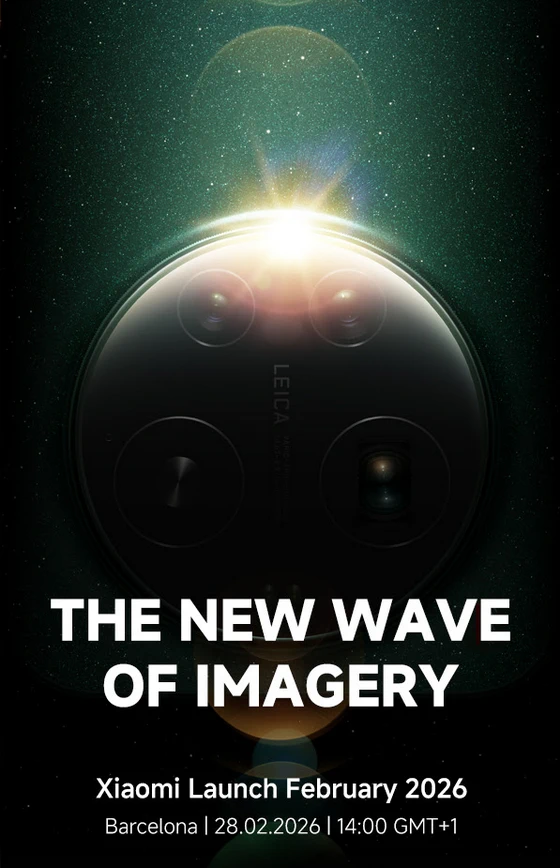
At the center of this transformation stands the continued and now strategically elevated alliance between Xiaomi and Leica, a partnership that has matured over four years from the groundbreaking debut of the Xiaomi 12S Ultra through the refinement of the Xiaomi 15 Ultra, consistently pushing toward a faithful recreation of Leica’s iconic optical character within the constraints of a smartphone form factor. In 2026, that cooperation moves into a new strategic chapter under an upgraded Global Imaging Strategic Cooperation framework, one that does not merely co-brand optics but rethinks the entire imaging pipeline, from lens construction and sensor architecture to HDR processing logic and color science calibration.
The headline act, the all-new Xiaomi 17 Ultra, earns its title as “Master of Night” through a reengineered optical system designed specifically to confront the most demanding scenario in photography: low-light capture with complex dynamic range. Its Leica UltraPure optical design integrates an APO lens architecture engineered to suppress chromatic aberration at a structural level, minimizing color dispersion and restoring accurate tonal fidelity even in scenes punctuated by neon highlights, sodium vapor street lighting, or deep shadow gradients. Rather than relying solely on computational correction after the fact, the system addresses aberrations at the glass level, enabling cleaner source data before algorithmic refinement even begins.
Complementing this approach is a Leica 200-megapixel telephoto system spanning the 75–100mm focal range, enhanced by mechanical optical zoom technology that preserves resolving power across variable focal lengths, allowing users to capture finely detailed night compositions from architectural distances without the softness or artificial texture often associated with aggressive digital interpolation. The result is telephoto imagery that retains micro-contrast, edge precision, and authentic depth rendering, characteristics traditionally reserved for dedicated large-sensor systems.
Equally pivotal is the integration of a Leica 1-inch ultra dynamic primary camera built around LOFIC HDR technology, a sensor-level innovation that manages exposure with granular precision under high-contrast nighttime environments, preventing highlight clipping while maintaining shadow detail in a single unified frame. Instead of stacking multiple exposures in a way that can introduce motion artifacts or unnatural tonal mapping, LOFIC enables controlled dynamic range capture at the hardware level, delivering images that feel cinematic rather than computationally exaggerated. Together, these elements establish a cohesive optical ecosystem where hardware engineering and color science operate in concert rather than in isolation.
Yet the Xiaomi 17 Series is not defined solely by its Ultra variant. The standard Xiaomi 17 emerges as a compact flagship with pro-grade capability, challenging the assumption that top-tier performance must come in oversized form factors. It delivers comprehensive upgrades across imaging, battery optimization, display calibration, thermal management, and chipset performance, creating a device that offers flagship power density within a more ergonomic footprint. The design language reflects Xiaomi’s continued refinement toward premium tactility and structural integrity, while its display technology and energy management systems aim to balance peak brightness, color accuracy, and sustained endurance without compromising thermal efficiency.
The February 28 launch event in Barcelona will not only showcase hardware but will also offer a global livestream experience where viewers can engage directly and even participate for a chance to win REDMI Buds 8 Pro, reinforcing Xiaomi’s strategy of blending community engagement with product storytelling. Additional launch-period perks, including service and subscription incentives, underline the brand’s broader ecosystem ambitions that extend beyond devices into user experience continuity.
With the Xiaomi 17 Series, Xiaomi is not merely iterating on megapixels or processor benchmarks; it is articulating a thesis about the future of mobile imaging, one in which optical purity, sensor intelligence, and collaborative craftsmanship converge to set a new reference point for what a flagship smartphone camera can achieve. On February 28, 2026, the next chapter begins, and if the specifications translate into real-world performance as promised, this may indeed represent a decisive new wave in imagery.
Did this article help you? If so, please tell me in a comment what do you think about it.
Don’t miss any of our future video tutorials, follow us on Youtube. Like us on Facebook. Join our Best Deals Telegram Channel. Join our Android TV Box Firmware Updates Telegram Channel. Subscribe now to our newsletter. If you need Tech Reviewer or Youtube Influencer read this. Donate now here to support CGR Team!















