Best Deal Alert! You can now buy Hollyland Lark M3 Wireless Microphone Combo 4TX&2RX from Store.hollyland.com for a very good price. Hurry up, limited time offer!
Meet Hollyland LARK M3
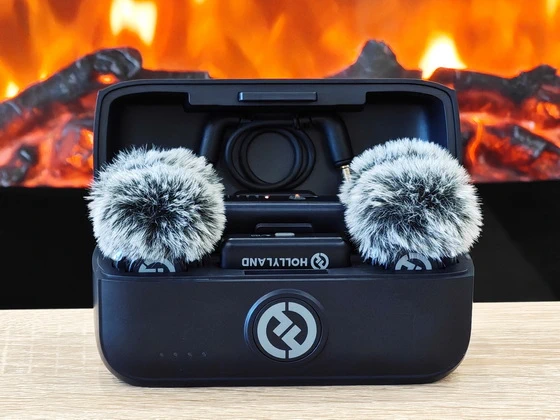
Good audio becomes considerably more complicated when a recording involves several people. A single presenter is relatively easy to accommodate, but a conversation between a host and multiple guests introduces different speaking volumes, overlapping voices and more opportunities for something to go wrong. The Hollyland LARK M3 approaches this challenge with a compact wireless system designed to support up to four transmitters and four receivers, bringing greater flexibility to interviews, podcasts, product presentations and productions involving multiple cameras. The version featured here is the Hollyland LARK M3 Combo 4TX&2RX in Space Gray, which includes four transmitters, one camera receiver and one USB-C receiver. It provides microphones for four participants and two connection options, making it particularly relevant to creators who alternate between camera and smartphone recording. What interests me most is the combination of small wearable microphones and independent audio tracks. Equipping every participant with a microphone improves the recording setup, while keeping their signals separate in a compatible capture workflow gives the editor much more freedom afterward. Add adjustable AI noise cancellation, individual voice presets and app-based management, and the M3 becomes an intriguing option for a small production team. This review examines the supplied kit, its documented capabilities and the Android interface shown during setup; sound quality, wireless range and battery endurance are not presented as independently measured results.
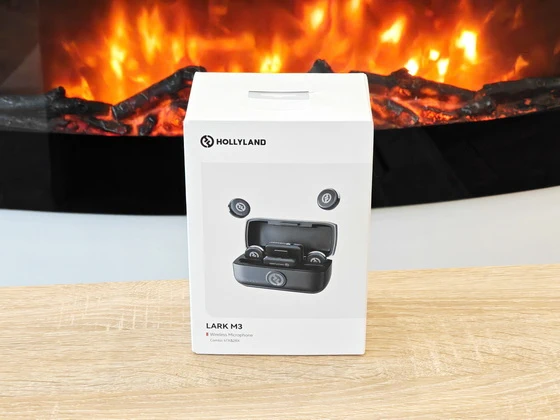
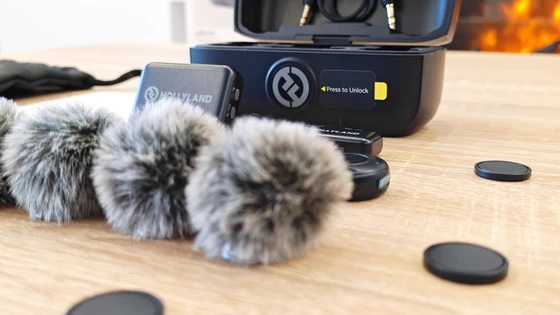
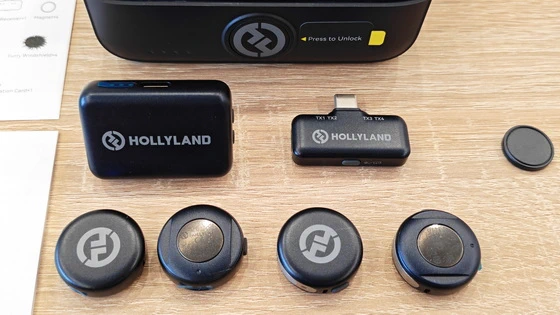
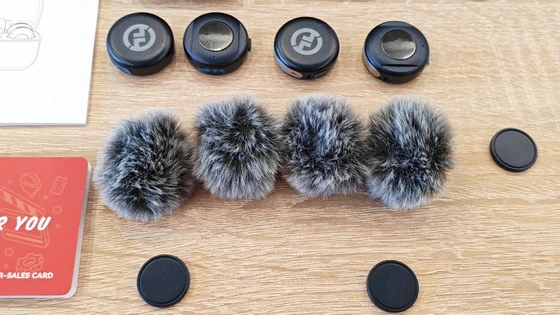
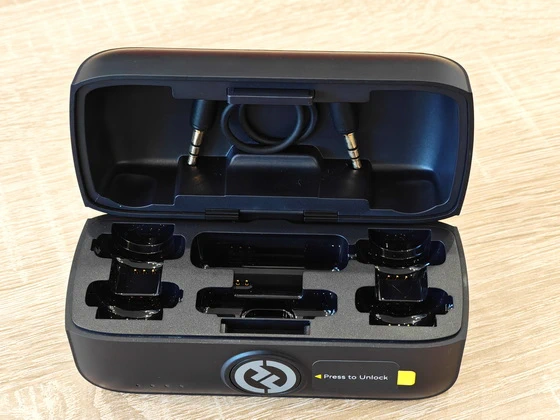
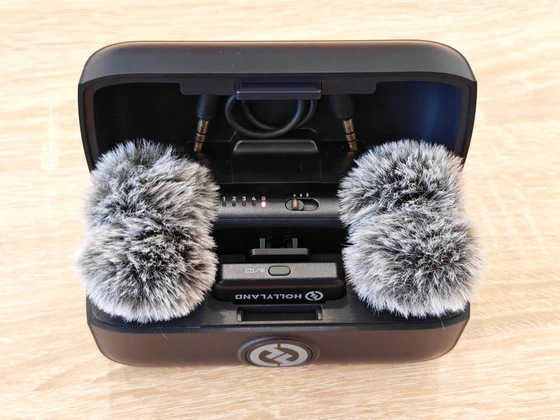
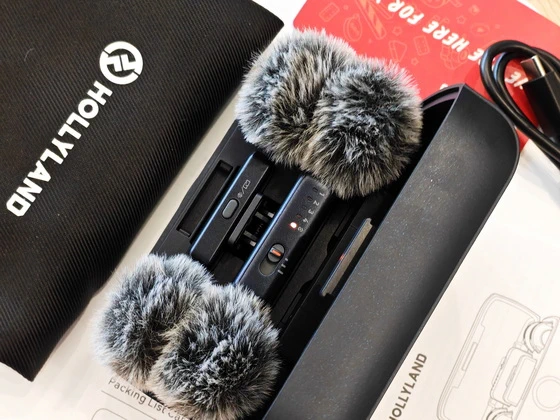
The LARK M3 arrives in a white retail box with Hollyland branding and a product image showing the microphones and charging case. The presentation is clean and informative, with the rear highlighting multi-transmitter and multi-receiver support, voice enhancement, AI noise cancellation and four independent audio tracks. Inside, the 4TX&2RX configuration provides four circular transmitters, a camera receiver, a USB-C receiver and the charging case. The packing card also lists four magnets, four furry windshields, a USB-C to USB-C cable, two 3.5mm TRS cables, a carrying bag and the accompanying documentation. I appreciate the completeness of the microphone accessories. Every speaker gets a magnet and a windshield, which makes sense for a package intended to accommodate four people. There is no need to reserve outdoor protection for only the host or the most important guest. The camera and USB-C receivers also give the package a clear practical purpose. A creator can prepare for camera-based recording and compatible mobile recording using the same microphone set, while the carrying bag keeps the additional cables and accessories together.
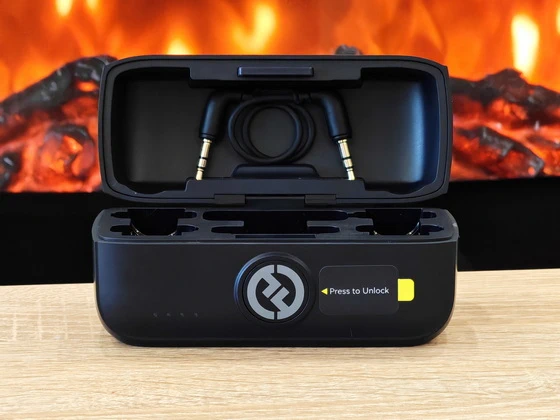
The LARK M3’s construction is centered on portability and organized storage. Its compact transmitters sit within a dedicated charging case, keeping the smallest components together between sessions. Hollyland describes the case as incorporating a safety lock to help prevent accidental opening during transport, an especially useful detail when several small microphones and accessories travel in the same kit. Each transmitter has a specified weight of just 9g. For a wearable microphone, that matters more than it might initially seem: lighter hardware places less strain on clothing and is easier to accommodate on a shirt, blouse or lightweight top. The supplied photographs show consistent styling across the microphones, receivers and case. The dark finish, rounded edges and compact proportions suit equipment intended to move frequently between indoor interviews, outdoor presentations and a creator’s everyday camera bag. My main appreciation here is practical. A four-microphone system creates more equipment to manage, and the charging case helps keep that manageable. Long-term durability would require extended use, but the storage arrangement is well aligned with the demands of a portable recording kit.
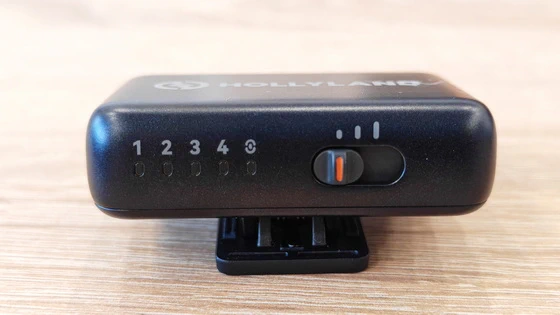
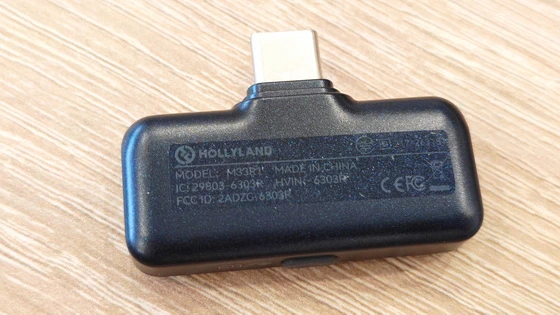
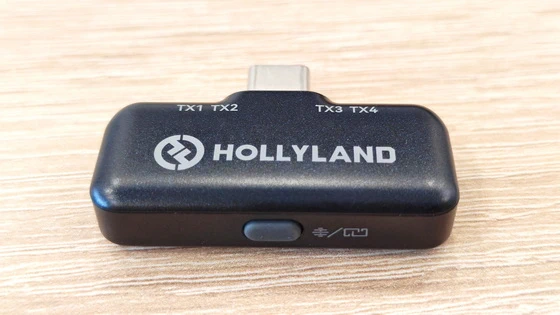
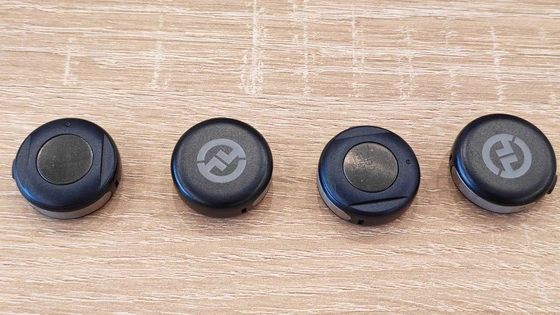
The button-shaped transmitters give the M3 a discreet appearance. Their circular faces are more visually restrained than a larger rectangular transmitter, although the contrasting Hollyland logo remains noticeable. For interviews and product demonstrations, the small dimensions help keep attention on the speaker. Magnetic attachment allows flexible positioning on clothing without a cable running to a separate bodypack. Placement still matters: the microphone needs a clear path to the voice, and fabric rubbing against it can compromise a recording regardless of the processing available. The furry windshields add visible bulk, but they are worthwhile accessories for outdoor work. I would prioritize physical wind protection whenever conditions call for it, rather than expecting electronic noise cancellation to handle everything. The two receiver designs reflect their different roles. The camera receiver accommodates compatible camera audio connections, while the USB-C receiver provides a compact route into supported mobile devices. That flexibility is particularly appealing for a workflow combining longer YouTube productions with short mobile videos.
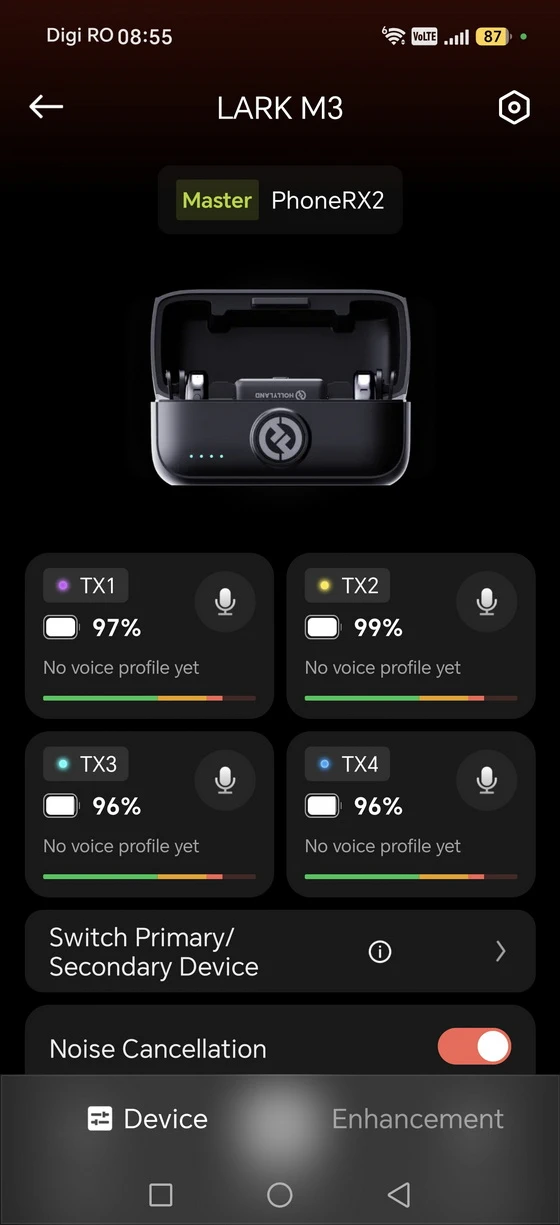
The supplied Android session shows all four transmitters connected and individually identified. Each has its own labeled tile, color marker and battery percentage, giving a useful overview before recording begins. This is the kind of interface detail I value in a multi-person setup. With four microphones in circulation, quickly identifying the units and checking their charge levels becomes an important part of preparation. A single overview is much more convenient than inspecting each microphone separately. For China Gadgets Reviews, the obvious applications extend from a solo introduction to a conversation with several participants during a product demonstration or event interview. Four transmitters provide room for that expansion without requiring people to share a microphone or remain close to the camera. According to Hollyland’s documentation, one receiver can connect to as many as four transmitters, while one transmitter can feed up to four receivers simultaneously. This makes the system relevant to productions involving several recording devices as well as several speakers. The manufacturer also describes the ability to add or remove units during shooting without interrupting ongoing audio capture. The primary and secondary receiver arrangement gives this flexibility some structure. The primary receiver controls transmitter settings, while secondary receivers monitor transmitter status without changing those settings. Hollyland also states that receiver roles are reassigned automatically if the primary unit goes offline. I like the reasoning behind this approach. When several people are working with different cameras or devices, centralized microphone control helps prevent one operator from unintentionally changing the audio configuration for everyone else.
Four-track independent recording is the LARK M3’s most significant production feature. When each microphone reaches the recording software as an isolated track, individual speakers can be adjusted separately during editing. A quieter guest can be raised, an unused microphone can be reduced, and processing can be tailored to each voice. Hollyland documents two routes for this capability: a compatible hot-shoe adapter setup, or a USB-C connection from either receiver type to a computer running compatible third-party recording software. The hot-shoe adapter is not listed among this package’s included accessories. This distinction matters because connecting a receiver to a conventional camera microphone input does not automatically create four isolated tracks. To benefit fully from the M3’s multitrack capability, the connection and recording software must preserve those channels. The manufacturer specifies 48kHz audio, a 70dB signal-to-noise ratio and a maximum sound pressure level of 125dB. It also advertises 32-bit float recording output, with an important qualification: that format is supported through compatible third-party recording applications on Apple devices. Android currently supports recording output up to 24-bit. These are output and capture capabilities, and should not be confused with an onboard backup recorder inside each transmitter. They also do not remove the need for sensible microphone placement and appropriate recording levels. AI Noise Cancellation offers three strengths, with Hollyland quoting reduction levels of 10dB, 15dB and 20dB. In the Android interface, these appear as Weak, Medium and Strong. The adjustable approach is useful because a quiet room, an air-conditioned office and a busy outdoor location require different amounts of processing. My preference would be to use the mildest setting that adequately controls the background. Stronger suppression can be helpful, but preserving the character and intelligibility of a voice remains the priority. Listening to a short test recording is the best way to decide. Voice tuning goes further than a single enhancement switch. Hollyland documents One-Tap Vocal Enhancement with de-essing, eight built-in vocal presets and additional adjustments through the app. Each transmitter can use its own preset, allowing four speakers to have different voice settings simultaneously. That individual control is particularly interesting for interviews. Voices differ in brightness, sibilance and tonal balance, so applying identical processing to everyone may not produce the most consistent result. Auto-Limit Clip Protection is another documented feature, intended to manage excessive volume peaks. It should be considered an additional safeguard rather than a guarantee against distortion anywhere in the recording chain. For wireless operation, Hollyland quotes a maximum range of 300 meters in open, unobstructed conditions without interference. This is a best-case specification; buildings, people and competing wireless activity can substantially affect the distance available in practice.
Hollyland rates each LARK M3 transmitter for up to eight hours of operation per charge. The charging case provides a convenient place to recharge and store the microphones between sessions, with USB-C charging keeping the kit compatible with common charging equipment. The individual battery percentages in the Android app are particularly useful before a longer shoot. They make it easy to identify a microphone that needs attention before handing it to a participant. The manufacturer’s “48 hours” claim requires context: its documentation calculates this for the 2TX&2RX package by alternating two transmitters, each receiving two additional charges from the case. It is not a stated runtime for four microphones operating continuously in this 4TX&2RX combo. For this package, the clearest supported figure is up to eight hours per transmitter charge, with actual endurance depending on usage and settings.
The Hollyland LARK M3 Combo 4TX&2RX is an appealing package for creators who regularly record conversations involving several people. Four lightweight transmitters, camera and USB-C receivers, individual voice settings and a clearly organized Android interface give it practical versatility beyond a basic two-person microphone kit. For me, its most compelling feature is the ability to retain independent control over each speaker in a compatible four-track workflow. That can make a meaningful difference during editing, especially when participants speak at different volumes or require different processing. Its more advanced capabilities do require attention to compatibility. Four-track capture needs a supported recording path, 32-bit float output is restricted to the documented Apple workflow, and the advertised 48-hour battery figure should not be applied to simultaneous four-microphone use. Understanding those distinctions makes it easier to choose the right setup and use the system effectively. A definitive judgment on audio fidelity and wireless reliability still depends on recorded listening tests and extended field use. Based on its supplied hardware, documented features and Android controls, however, the LARK M3 offers a thoughtfully organized approach to multi-person production. It is a kit I can readily see fitting into interviews, collaborative product videos and event coverage, where accommodating more voices without making the equipment difficult to manage has real value.
Hollyland LARK M3 Main Features
– Up to 4 TX & 4 RX support – designed for multi-person and multi-device recording setups, with one receiver able to connect to as many as four transmitters.
– 4 independent audio tracks – enables separate recording and post-production control for individual speakers when used through a compatible multitrack workflow.
– 48 kHz broadcast-quality audio with support for 32-bit float output on compatible Apple recording workflows; Android supports output up to 24-bit.
– AI Noise Cancellation with three selectable levels: Weak, Medium and Strong, corresponding to approximately 10 dB, 15 dB and 20 dB of reduction.
– Smart Voice / One-Tap Vocal Enhancement, including de-essing, eight built-in vocal presets and individual voice settings for each transmitter.
– Wireless monitoring for convenient real-time audio supervision.
– Ultra-compact 9 g transmitters with magnetic attachment for discreet placement on clothing.
– Up to 300 m wireless transmission range in open, unobstructed and interference-free conditions.
– Auto-Limit Clip Protection designed to help control excessive audio peaks.
– Up to 8 hours of operation per transmitter charge, with the charging case providing additional recharging between sessions.
– Camera and USB-C connectivity, making the Combo configuration suitable for cameras, smartphones, tablets and compatible computers.
– Mobile app control, including individual transmitter identification, battery monitoring, noise-cancellation adjustment and voice-processing settings.
– 70 dB signal-to-noise ratio and 125 dB maximum SPL.
Hollyland LARK M3 real life best using scenarios
– Multi-Person Interviews – Ideal for a host and up to three guests, with every participant wearing a dedicated microphone instead of sharing one mic.
– Podcasts and Round-Table Discussions – Four transmitters make it practical for recording conversations involving several speakers while maintaining individual control over voices.
– YouTube Product Reviews and Demonstrations – Excellent when a presenter, brand representative and additional guests all need to speak naturally during a hands-on demonstration.
– Trade Shows and Tech Events – The compact magnetic transmitters are convenient for quick interviews on exhibition floors, while adjustable AI noise cancellation can help manage busy ambient environments.
– Multi-Camera Productions – Particularly useful when several cameras or recording devices are involved, because the LARK M3 architecture supports multiple receivers and centralized transmitter management.
– Smartphone Content Creation – The USB-C receiver makes the system suitable for mobile interviews, short-form videos, social media content and compatible smartphone recording workflows.
– Corporate Presentations and Training Videos – Useful when several employees, trainers or presenters participate in the same production and each needs a discreet microphone.
– Wedding and Event Videography – The microphones can be distributed between key participants such as the couple, officiant or interviewer, while their small size helps keep the setup visually unobtrusive.
– Outdoor Interviews and Reports – The supplied furry windshields, compact transmitters and quoted long-range wireless capability make the system suitable for outdoor presentations and location-based reporting.
– Educational Videos and Classroom Discussions – A teacher and several students can each use a separate transmitter, making group discussions easier to capture clearly.
– Panel Discussions and Small Conferences – Four microphones make the M3 practical for small panels where speakers need freedom of movement without passing a handheld microphone between them.
– Four-Person Independent-Track Recording – One of the strongest scenarios for the LARK M3: recording several speakers through a compatible multitrack workflow so that each voice can be adjusted separately during editing.
Hollyland LARK M3 Highlights
Up to 4 TX & 4 RX Support
4 Independent Audio Tracks
48 kHz Broadcast-Quality Audio
32-bit Float Output on Compatible Apple Workflows
AI Noise Cancellation with 3 Levels
One-Tap Vocal Enhancement
8 Built-In Vocal Presets
Wireless Monitoring
Ultra-Light 9 g Transmitters
Magnetic Wearable Design
Up to 300 m Wireless Range
Auto-Limit Clip Protection
Up to 8 Hours per Transmitter Charge
Camera + USB-C Connectivity
Mobile App Control
70 dB Signal-to-Noise Ratio
125 dB Maximum SPL
HollyAudio Android App Experience
The HollyAudio Android app gives the M3 a useful control center. Its home screen identifies the connected LARK M3 under My Devices, while the device page brings the four transmitter tiles together with the main operating controls. I particularly like the separation between Device and Enhancement. Connection information, battery readings and channel controls remain together, while optional voice processing has its own page. That organization helps keep a comparatively capable system approachable. The main screen identifies the primary receiver and includes a control for switching primary and secondary devices. Below the transmitter overview, noise cancellation has a prominent on/off switch and three clearly labeled strength options. RX volume and channel mode controls follow, with Mono, Stereo and 4-track displayed. Mono is selected in the supplied session, so the screenshots demonstrate the available interface rather than a completed four-track recording. Additional controls include Smart mix, an Indicator Light Switch and TX Recognition. Being able to control the indicator lights is a thoughtful inclusion for filming, particularly when a small illuminated microphone could become distracting in a close shot. The Enhancement page presents One-Tap Enhance and My Voice Profile. The first is described as applying ready-made tuning to all microphones, while the second allows the user to choose which microphones receive a personalized profile. In the supplied session, these functions are switched off and the transmitter tiles indicate that no voice profiles have been assigned. More Settings contains several useful everyday options. Playback without unplugging is enabled, allowing supported playback without repeatedly removing the receiver. TX button lock provides protection against accidental presses, while automatic transmitter shutdown is available after 15 minutes of inactivity. The bit-depth selector shows 24-bit selected and 32-bit float unavailable in the Android session, consistent with the platform limitation described in Hollyland’s documentation. This is a helpful example of why the actual device interface matters more than an unqualified headline specification. Device information, paired devices, firmware updates and the user manual are accessible from the settings menu. The supplied information screens show firmware V1.0.6.5 across the primary receiver and four transmitters. Overall, the app’s strongest quality is visibility. It brings four microphones, their status and the main audio adjustments into a layout that is relatively easy to understand, while leaving more specialized voice controls on a separate page.
Download HollyAudio mobile application for free from App Store or from Google Play Store.
Package Content
1 × Charging Case
1 × Camera Receiver
1 × USB-C Receiver
4 × LARK M3 Transmitters
4 × Magnetic Clips / Magnets
4 × Furry Windshields
1 × USB-C to USB-C Cable
2 × 3.5 mm TRS to 3.5 mm TRS Cables
1 × Carrying Bag
1 × Quick Guide
1 × Warranty / After-Sales Card
1 × Packing List Card
1 × Compliance Information Card
1 x Packaging Box
Unboxing Photo Album with Hi-Rez images here. Official webpage here. Here you can read more about Hollyland brand.

About Hollyland. Hollyland is a fast-growing wireless technology brand in the global content production market. Since 2013, the brand has grown to be recognized as a leading provider of premium wireless products. Hollyland designs, develops, manufactures, and distributes a wide range of high-performance wireless solutions. The product portfolio includes video transmission systems, cameras, monitors, wireless microphones, and wireless intercom systems that feature a compact design, high quality, reliable performance, and affordability. Hollyland’s wireless products and solutions are widely used in various content production scenarios, such as studio production, on-location production, fast-growing house-of-worship market, video conference, and much more. The customers are typically photographers, broadcasters, vloggers, influencers, gamers, professional video production crews and enterprises, production product rental companies, and beyond. Whether you are looking for a wireless video transmission product for a small-scale production team or a wireless intercom system for a medium- or large-scale production team, Hollyland’s market-savvy and product-knowledgeable sales and technical engineers can work with your local or regional reseller to offer the best possible solution to you.
Did this article help you? If so, please tell me in a comment what do you think about it.
Don’t miss any of our future video tutorials, follow us on Youtube. Like us on Facebook. Join our Best Deals Telegram Channel. Join our Android TV Box Firmware Updates Telegram Channel. Subscribe now to our newsletter. If you need Tech Reviewer or Youtube Influencer read this. Donate now here to support CGR Team!