Best Deal Alert! You can now buy LinknLink Homeclaw True AI Gateway from Linknlink.com for a very good price. Hurry up, limited time offer!

Meet LinknLink Homeclaw True AI Gateway – The Local AI Smart Home Server That Wants to Replace Passive Automation
The LinknLink HomeClaw True AI Gateway is one of the most ambitious smart home products I have tested recently, because it is not trying to be just another hub, bridge, Matter controller, mini server, or Home Assistant box. It is presented as a complete local-first AI gateway built around OpenClaw/Hermes and Home Assistant, designed to move the smart home experience away from fragmented apps, isolated ecosystems, and passive voice assistants toward something closer to a real household AI agent. Instead of only waiting for commands, HomeClaw is designed to observe device states, understand routines, suggest automations, help with onboarding, generate home-operation insights, and gradually turn a connected home into a more proactive environment. At its core, this is a compact 24/7 Linux-based smart home server with Home Assistant Container, OpenClaw/Hermes, Matter Bridge support, HACS, Add-on Manager functionality, remote access, Docker flexibility, and full Linux access. The hardware platform is serious enough for continuous operation, with a quad-core processor up to 2.0GHz, 4GB of RAM, 64GB internal storage, 100M Ethernet, dual-band Wi-Fi, Bluetooth 5.4, HDMI, AV output, two USB-A ports, and 5V/2A DC power input, as confirmed by the supplied Quick Start Guide. That specification alone already makes HomeClaw more interesting than a basic smart speaker or low-end IoT bridge, but the real story is the software layer built on top of it.
The smart home market has become powerful but also strangely exhausting. We have more devices than ever, more ecosystems than ever, and more automation possibilities than ever, yet the experience often still feels fragmented. One app controls the lights, another one controls sensors, another one handles cameras, another one manages climate, while advanced automation still frequently requires Home Assistant knowledge, YAML configuration, integrations, add-ons, debugging, and patience. HomeClaw enters this space with a very clear promise: keep the openness and power of Home Assistant, add an AI agent layer with OpenClaw/Hermes, simplify device onboarding through the LinknLink app, preserve local control, and provide free global access without depending entirely on a paid cloud subscription. This makes HomeClaw especially relevant for two categories of users. The first category includes smart home enthusiasts who already understand why Home Assistant is powerful but want a more polished appliance-style experience. The second category includes users who like the idea of Home Assistant but do not want the smart home itself to become a weekend-long technical project. HomeClaw tries to sit between those worlds, offering a plug-in gateway for normal users while still keeping enough Linux, Docker, MQTT, HACS, and Home Assistant flexibility for advanced users.
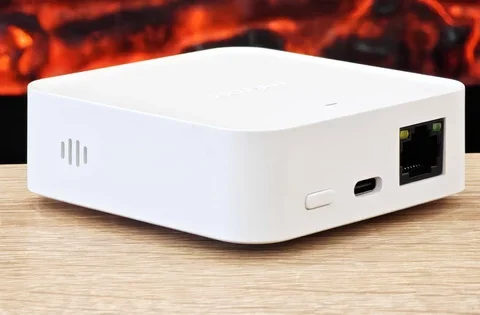
The unboxing experience is practical and product-focused rather than excessively decorative, which suits the nature of this device. HomeClaw is not a lifestyle gadget that exists mainly to look good on a shelf; it is a smart home server that needs to stay powered, connected, and reliable. The compact gateway design makes a good first impression, with a small square body, rounded corners, clean LinknLink branding, and a layout that feels closer to a mini edge-computing appliance than a traditional smart home accessory. The included Quick Start Guide is important because HomeClaw is a more advanced product than a normal plug-and-play hub. It clearly presents the physical ports, power requirements, wireless and wired connectivity, and the basic setup flow. The device supports Ethernet, 2.4GHz and 5GHz Wi-Fi, Bluetooth 5.4, HDMI output, AV output, and USB expansion, which immediately gives it more installation flexibility than a closed smart home bridge. For first setup, Ethernet is clearly the most convenient route, because it allows the user to access the gateway quickly from the local network and then configure the Wi-Fi connection afterward. During early handling, HomeClaw feels like a compact home server rather than a disposable IoT accessory. The presence of wired networking, USB ports, video output, and internal eMMC storage gives it a more appliance-like character, and that is important because smart home infrastructure should not depend on fragile storage, weak wireless-only connectivity, or unstable mobile-app-only management.
The first hands-on experience shows both the potential and the early-stage nature of HomeClaw. Once powered and connected to the network, the device exposes local access points and local dashboard routes, allowing access to the HomeClaw interface, Home Assistant, and OpenClaw Chat from a browser. In my testing, the device displayed its wired and wireless IP addresses directly on screen, making network discovery much easier. The local interface reported Ethernet and Wi-Fi information clearly, including the active IP addresses, MAC addresses, and latest update timestamp. Accessing OpenClaw Chat in the browser gives the product its most distinctive identity. This is not just a Home Assistant dashboard in a different shell; it is an AI interaction layer designed to understand requests, assist with configuration, and eventually turn natural-language instructions into useful smart home behavior. The interface feels like a smart home command center mixed with an AI assistant, and even in this pre-release stage it already demonstrates why the concept is more interesting than traditional rule-based automation. Home Assistant is also present and accessible, which is essential. The familiar Home Assistant interface shows devices, sensors, dashboards, add-ons, and integrations, giving advanced users a known environment instead of locking them into a proprietary interface. In my hands-on session, Home Assistant detected multiple devices and services, including climate, motion, illumination, display, and bridge-style entities. Some devices were immediately available, while others appeared as unavailable or duplicated, which is not unusual in a test environment with bridge discovery, MQTT services, and pre-production software. The important point is that HomeClaw does not hide Home Assistant; it exposes it as part of the full experience. The OpenClaw/Hermes concept is where HomeClaw becomes more than a mini Home Assistant box. LinknLink positions it as a proactive smart home manager capable of learning household routines, suggesting automations, coordinating energy use, supporting elderly care scenarios, and generating home reports. This is the right direction for the smart home industry, because most “smart” homes today are still reactive. They execute scenes, timers, and commands, but they rarely understand context. HomeClaw tries to create a bridge between local device control and AI reasoning.
The hardware is compact, quiet, and suitable for permanent installation near a router, TV cabinet, networking shelf, or smart home control area. The small form factor makes it easy to place without rearranging the entire home setup, while the port selection gives it a stronger foundation than many simplified hubs. Ethernet is especially welcome because smart home servers should ideally not depend only on Wi-Fi. A local AI gateway that manages devices, dashboards, MQTT communication, Home Assistant, and remote access needs stable networking, and wired Ethernet remains the best option for that role. The 4GB RAM and 64GB industrial-style internal storage are also important. Many DIY Home Assistant installations rely on microSD cards when running on single-board computers, and SD card wear has always been one of the weak points of long-term smart home reliability. HomeClaw’s internal storage makes it more appropriate for 24/7 service, while the quad-core processor gives enough headroom for Home Assistant, OpenClaw services, MQTT, bridges, and lightweight server tasks. The design is understated, which is exactly what a smart home gateway should be. It does not need a large screen, aggressive lighting, or decorative gimmicks. It needs to be reliable, accessible, and expandable. The physical layout, small footprint, and complete port selection make HomeClaw feel like a real infrastructure product rather than a toy hub.
In daily use, HomeClaw’s strongest advantage is that it brings several smart home layers into one local appliance. Home Assistant handles the broad ecosystem, integrations, devices, dashboards, and automation foundation. OpenClaw/Hermes adds the AI layer. Matter Bridge aims to make devices easier to expose to Apple Home, Alexa, Google Home, and other Matter-compatible environments. The LinknLink app provides mobile onboarding and remote access. Linux and Docker access keep the system open for advanced users. This combination matters because smart home users usually have to choose between convenience and control. Closed ecosystems are easy but limited. DIY systems are powerful but demanding. HomeClaw attempts to deliver both: an appliance-like setup for ordinary use and deeper access for users who want to customize, troubleshoot, extend, or integrate. The local-first philosophy is another major advantage. A smart home should not become useless when the internet connection is unstable. HomeClaw is designed so core control and local device logic can remain inside the home network whenever possible, while remote access and AI model usage can be added when needed. This is the right architecture for privacy, latency, and reliability. Of course, AI model usage still depends on the selected provider and plan when cloud LLMs are involved, but keeping the smart home server itself local is a strong foundation. The free P2P remote access is also a major selling point. Remote control is one of the biggest reasons users pay for cloud services or accept vendor lock-in, so having global access built into the LinknLink ecosystem makes HomeClaw more attractive for users who want to check devices, manage automations, or access the home while away without adding another recurring subscription purely for remote connectivity.
The most impressive part of HomeClaw is the ambition of integrating OpenClaw/Hermes with Home Assistant in a way that feels genuinely forward-looking. Traditional Home Assistant is incredibly powerful, but it expects the user to know what they want to build. HomeClaw tries to make the system more conversational and proactive. The idea is not only to create automations manually, but to describe what you want in natural language or allow the AI layer to suggest automation logic based on habits and detected patterns. This is a meaningful evolution. For example, instead of manually writing multiple conditions for lights, motion, time of day, temperature, and presence, a user should be able to ask the system to create a comfortable evening routine, reduce unnecessary energy use, or notify family members when an elderly relative’s routine changes unexpectedly. That kind of intelligence requires context, device awareness, and user approval, and HomeClaw is clearly designed around that direction. The presence of HACS, Add-on Manager functionality, backup options, OTA rollback, watchdog recovery, SSH, and Docker flexibility gives the platform credibility. It means HomeClaw is not only a friendly front end but also a real server environment. Advanced users can still customize, extend, and troubleshoot. Beginners can start with the app and dashboards. This layered approach is exactly what smart home hardware needs if it wants to serve both enthusiasts and normal households.
LinknLink HomeClaw True AI Gateway is one of the most interesting smart home products of the year because it does not simply add another bridge to the market; it tries to redefine what a smart home hub should be in the AI era. By combining OpenClaw/Hermes, Home Assistant, local-first operation, Matter Bridge functionality, free remote access, Linux flexibility, Docker support, HACS, add-on management, and AI automation skills, HomeClaw feels like a compact smart home server designed for the next phase of home intelligence. It is not perfect yet. The Android app still needs refinement, especially around MQTT broker onboarding, service selection, and clearer troubleshooting. Some Home Assistant entities may appear duplicated or unavailable depending on the test environment, and the full value of AI habit learning will depend on long-term software maturity. But even in its current state, the foundation is extremely promising. The device is already accessible locally, Home Assistant works, OpenClaw Chat is functional, the gateway is visible in the Android app, and the overall architecture makes sense. For smart home enthusiasts, HomeClaw offers a more integrated and appliance-like alternative to building everything manually from separate components. For regular users, it promises a path toward Home Assistant-level power without requiring deep technical knowledge from day one. For the industry, it points toward the future: a smart home that is not only connected, but observant, adaptive, local, private, and actually helpful. HomeClaw is not just a smart hub. It is a local AI gateway, a Home Assistant server, an OpenClaw/Hermes appliance, a Matter bridge, a remote-access solution, and a compact Linux machine in one box. That combination makes it one of the rare smart home devices that genuinely feels different, and if LinknLink continues polishing the software experience, HomeClaw could become a very important product for users who want their home to finally become truly smart rather than merely connected.
LinknLink Homeclaw True AI Gateway Main Features
– True AI: The Home That Understands You. Powered by OpenClaw, HomeClaw learns device states, habits, and routines over time, then helps adjust scenes or suggest smarter actions automatically.
– The Ultimate Ecosystem: Built-in Home Assistant. HomeClaw includes Home Assistant Container, connecting thousands of devices and brands into one open, unified, and expandable smart home center.
– An Optimized Experience: Beyond Native HA. Beyond standard HA, HomeClaw adds one-click HACS, Add-on Manager, backup, OTA rollback, and watchdog recovery, while keeping Linux SSH and Docker flexibility.
– Easy Device Setup by Mobile App: Seamless Sync. Add devices directly in the LinknLink App, and HomeClaw will automatically sync them without repeated setup, manual import, or computer configuration.
– Matter for Everything: Native Smart Speaker Support. Every device can generate a Matter QR code, allowing direct control through Apple Home, Alexa, or Google Home with voice and remote access.
– Zero-Code Intelligence: Automation Made Simple. Describe automations in natural language, and HomeClaw helps turn them into real smart home logic without YAML, coding, or complex debugging.
– Local Privacy: Your Data Stays at Home. Core data, habit analysis, and device control stay local whenever possible, delivering faster response, stronger privacy, and reliable offline operation.
– Free Global Remote Access: No Subscription Required. HomeClaw provides free, secure global remote access through its high-speed P2P tunnel, with no annual subscription or extra remote service fee.
– Enterprise-Grade Hardware: Built for True Stability. With a quad-core processor, 4GB RAM, and 64GB industrial eMMC, HomeClaw is built for stable 24/7 operation without SD card reliability issues.
– Specialized AI Skills: A Guardian for the Home. HomeClaw extends AI into energy optimization, security coordination, elderly care, and health monitoring, helping the home support comfort and safety.
– Complimentary Tokens and Flexible AI Plans. Each HomeClaw includes $10 worth of complimentary tokens, with flexible options to use mainstream providers or LinknLink’s smart home AI plan.
– More Than Smart Home: A Full OpenClaw Server. HomeClaw is also a compact 24/7 OpenClaw AI server for writing, research, email, content generation, and everyday productivity tasks.
Real-life scenarios where LinknLink Homeclaw True AI Gateway can be quite useful
– Intelligent Morning Routine. Instead of relying on fixed schedules, LinknLink HomeClaw learns when you normally wake up and automatically prepares the house for the day. It can gradually turn on the bedroom lights, open smart blinds, start the coffee machine, adjust the thermostat to your preferred temperature, and even provide a daily summary through its AI interface, creating a personalized morning experience without requiring manual routines.
– Automatic Energy Savings. HomeClaw continuously analyzes energy consumption, occupancy, weather conditions, and connected appliances to identify opportunities for reducing electricity usage. Rather than following simple timers, it can intelligently recommend or automatically schedule high-power devices during off-peak hours while avoiding unnecessary heating, cooling, or lighting when rooms are unoccupied.
– Elderly Care and Wellness Monitoring. For families caring for elderly relatives, HomeClaw can quietly learn normal daily habits and recognize unusual changes in routine. If expected activities such as kitchen visits, movement between rooms, or morning routines suddenly stop occurring, the system can notify family members, providing an additional layer of safety without relying on intrusive wearable devices.
– Intelligent Home Security. Rather than simply reacting to motion detection, HomeClaw combines information from multiple sensors, cameras, door contacts, lighting, and occupancy data to understand the overall situation. When suspicious activity is detected while nobody is home, it can simultaneously activate cameras, illuminate outdoor areas, lock smart doors, and immediately alert the homeowner through secure remote access.
– Realistic Vacation Mode. While the family is away, HomeClaw can recreate natural daily living patterns instead of repeatedly switching lights on and off at fixed hours. By learning normal household behavior, it varies lighting, blinds, entertainment devices, and other smart appliances to make the home appear genuinely occupied, helping discourage potential intruders.
– Natural Language Home Automation. Instead of manually creating complicated Home Assistant automations or writing YAML code, users can simply describe what they want in everyday language. A request such as “Prepare the house for movie night” allows HomeClaw to coordinate lighting, climate, entertainment equipment, window blinds, and other connected devices automatically, making advanced automation accessible to everyone.
– Adaptive Climate Control. HomeClaw constantly monitors indoor temperature, humidity, weather forecasts, and occupancy to maintain a comfortable indoor environment. Rather than relying on static thermostat schedules, it continuously adapts heating or cooling based on changing conditions, improving comfort while reducing unnecessary energy consumption.
– Family Arrival Notifications. Parents can receive intelligent notifications when children arrive home from school without requiring them to send messages. By combining smart locks, door sensors, presence detection, and other connected devices, HomeClaw can confirm arrival, switch on hallway lighting, adjust indoor comfort settings, and notify family members that everyone has returned safely.
– Fully Automated Night Mode. As the household settles for the evening, HomeClaw can automatically secure the property by locking doors, switching off unnecessary lights, adjusting the thermostat, activating security systems, checking whether windows remain open, and leaving only essential nighttime lighting active, all without requiring multiple manual commands.
– Water Leak and Emergency Response. When connected leak sensors detect water under sinks, near washing machines, or around water heaters, HomeClaw can immediately shut off compatible smart water valves, disable nearby electrical outlets if necessary, notify homeowners remotely, and record the event for later analysis, helping minimize costly property damage.
– Unified Multi-Brand Smart Home Management. Many households own devices from multiple manufacturers, each requiring separate mobile applications. HomeClaw brings together Home Assistant, Matter, MQTT, and numerous third-party integrations into a single local platform, allowing lighting, climate, security, sensors, entertainment systems, and smart appliances from different brands to work together as one cohesive ecosystem.
– AI-Powered Household Assistant. Beyond controlling devices, HomeClaw serves as a conversational AI capable of understanding questions about the home’s operation. Users can ask why energy usage increased, request reports on device activity, generate new automations, identify devices with low batteries, or receive daily summaries of household events, transforming the smart home from a collection of connected devices into an intelligent assistant that actively helps manage everyday life.
LinknLink Homeclaw True AI Gateway Highlights
– Local-first AI smart home server powered by OpenClaw/Hermes and Home Assistant
– Proactive AI that learns habits and suggests intelligent automations
– Natural language automation creation with zero coding or YAML
– Built-in Home Assistant Container with support for thousands of smart devices
– One-click HACS, Add-on Manager, backup, OTA rollback, and watchdog recovery
– Native Matter Bridge for seamless integration with Apple Home, Alexa, and Google Home
– Free, secure global remote access with built-in P2P connectivity
– Full Linux, Docker, and SSH access for advanced customization
– Compact, always-on 24/7 smart home server with quad-core CPU, 4GB RAM, and 64GB eMMC storage
– Reliable wired Ethernet, dual-band Wi-Fi, Bluetooth 5.4, HDMI, AV output, and USB expansion
– Local data processing for improved privacy, lower latency, and offline functionality
– AI-powered energy optimization and smart resource management
– Intelligent security coordination across sensors, cameras, and smart devices
– Elderly care monitoring with routine learning and anomaly detection
– Unified control of multiple smart home ecosystems from a single platform
– Automatic device onboarding through the LinknLink mobile app
– Matter QR code generation for simplified device sharing and voice assistant integration
– AI-generated home insights, reports, and automation recommendations
– Industrial-grade storage that eliminates the reliability issues associated with microSD cards
– Flexible AI provider support, including complimentary AI tokens for getting started
– Functions as both a smart home hub and a full-featured OpenClaw AI server for productivity, writing, research, and everyday AI tasks
– Designed for both beginners seeking plug-and-play simplicity and enthusiasts requiring full Home Assistant flexibility and extensibility.
LinknLink Homeclaw True AI Gateway Specs
Brand: LinknLink
Product: HomeClaw True AI Gateway
Product Model: H96Max M1Plus
Operating System: Linux
AI Platform: OpenClaw / Hermes
Smart Home Platform: Home Assistant Container (pre-installed)
Processor: Quad-core CPU, up to 2.0 GHz
Memory (RAM): 4 GB
Internal Storage: 64 GB industrial-grade eMMC
Network: 10/100 Mbps Ethernet (RJ45)
Wireless Connectivity: Dual-band Wi-Fi (2.4 GHz / 5 GHz)
Bluetooth: Bluetooth 5.4
Matter Support: Matter Bridge
MQTT Support: Yes
Docker Support: Yes
SSH Access: Yes (Full Linux access)
HACS Support: Yes (One-click installation)
Home Assistant Add-on Manager: Yes
OTA Rollback: Supported
Automatic Watchdog Recovery: Supported
Backup & Restore: Supported
Remote Access: Built-in secure P2P remote access (subscription-free)
Voice Ecosystem Compatibility: Apple Home, Amazon Alexa, Google Home (via Matter)
Automation Engine: AI-powered natural language automation (Zero-Code)
AI Functions: Habit learning, automation suggestions, home insights, energy optimization, elderly care, security coordination, content generation
AI Providers: OpenAI, Claude, Qwen, MiniMax, and other compatible LLM providers
Video Output: HDMI
Additional Video Output: AV
USB Ports: 2 × USB-A
Power Input: 5V DC / 2A (10 W)
Power Adapter Input: 100–240 V AC, 50/60 Hz, 0.3 A
Power Adapter Output: 5V DC / 2A (10 W)
Recommended Installation: 24/7 always-on operation
LinknLink mobile application
The LinknLink Android app is an essential part of the HomeClaw experience, because it handles account connection, gateway access, service discovery, and remote control. In testing, the app successfully detected the HomeClaw Gateway and confirmed that the gateway responded correctly, with account information read successfully. The saved configuration showed the service name as HomeClawBox and the gateway host as 192.168.31.203, which matched the Wi-Fi IP displayed by the device. The app interface is clean and modern, with a clear HomeClaw Gateway card, connection status, edit connection option, and account refresh. It feels more approachable than a pure Home Assistant setup flow, and this is important for mainstream users. The Add Device screen also discovered MQTT Broker services automatically, including entries on the local network, which shows that the discovery layer is working. However, this is also where the pre-release software character becomes visible. When manually editing the MQTT Broker configuration with IP 192.168.31.203 and port 1883, the app displayed a “Failed to connect to MQTT Broker, please check the configuration” message. In the same environment, the device itself was active, HomeClaw was reachable through the browser, and Home Assistant was accessible, so the issue appeared to be related to MQTT credentials, service selection, broker configuration, or duplicate discovered brokers rather than the gateway being offline. This is the kind of setup friction that LinknLink should smooth before final release, because mainstream users will expect the app to know which broker is the correct one and whether authentication is required. Even with that limitation, the Android app shows strong potential. It already provides gateway discovery, remote access structure, account binding, and service discovery. Once the MQTT setup flow is more polished and error messages become more instructive, the app can become a major advantage for HomeClaw because it gives non-technical users a much easier entry point into a very advanced local smart home system.
Package Content
1 x LinknLink Homeclaw True AI Gateway
1 x Power adapter model MR-AA0150500200EU
1 x USB Cable
1 x Quick Setup Guide
1 x Packaging Box
Photo gallery full album here. Read more about LinknLink here.


About LinknLink. LinknLink delivers AI-driven low-carbon solutions for smart buildings. Using “Cloud-Edge-End” tech and the OpenClaw AI engine, we provide IoT hardware and SaaS for energy saving in villas and commercial towers. We optimize HVAC and lighting to help global clients reach ESG goals and carbon neutrality. Now available in the United States, Canada, Mexico, Brazil, the United Kingdom, Germany, France, Italy, Spain, the Netherlands, Sweden, Norway, Japan, South Korea, Singapore, Thailand, Indonesia, Malaysia, Australia, New Zealand, and many more countries worldwide.
Did this article help you? If so, please tell me in a comment what do you think about it.
Don’t miss any of our future video tutorials, follow us on Youtube. Like us on Facebook. Join our Best Deals Telegram Channel. Join our Android TV Box Firmware Updates Telegram Channel. Subscribe now to our newsletter. If you need Tech Reviewer or Youtube Influencer read this. Donate now here to support CGR Team!