Best Deal Alert! You can now buy YOTSUBA 3 Piece Japanese Damascus Knife Set with Rosewood Handle from Amazon.com for a very good price. Hurry up, limited time offer!
Meet YOTSUBA 3 Knife Set – Damascus Steel Meets Traditional Japanese Design
There are kitchen tools that are purchased purely for functionality, and there are others that manage to combine everyday practicality with craftsmanship, materials and a visual identity strong enough to make them genuinely enjoyable to use. After spending some hands-on time with the YOTSUBA 3 Pieces Japanese Style Knife Set, I would place it firmly in the second category. This is a compact three-knife collection built around 67-layer Damascus steel, a hard 9Cr18CoMoV steel core, a distinctive hammered Tsuchime-style surface and traditional octagonal wooden handles, bringing together several characteristics normally associated with Japanese-inspired professional kitchen knives. The philosophy behind the YOTSUBA name is also appropriate for a product intended to become part of an everyday cooking routine. According to the company, YOTSUBA represents the four seasons — spring, summer, autumn and winter — and, more broadly, the cycle of life itself. Rather than producing knives that are simply decorative interpretations of Japanese design, the brand positions them as practical cooking companions intended for both enthusiastic home cooks and more demanding kitchen environments.
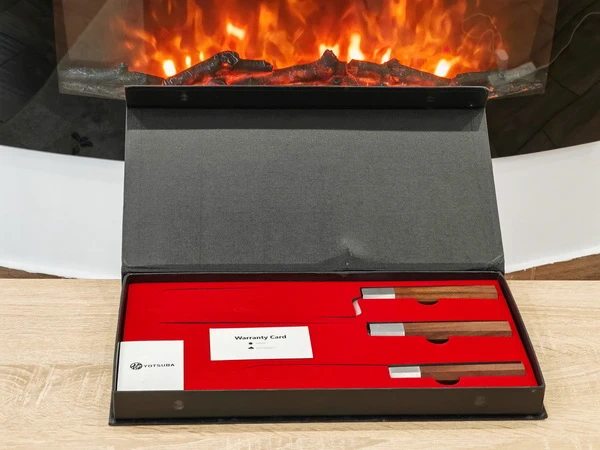
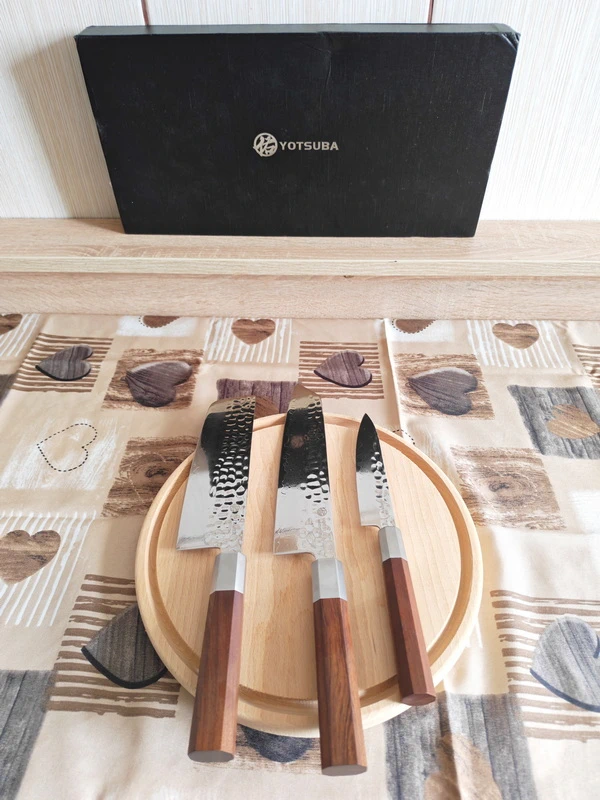
The presentation immediately establishes that YOTSUBA intends this to feel like something considerably more special than an ordinary collection of kitchen utensils. The three knives arrive together inside an elegant black presentation box, with the blades and handles individually positioned against a contrasting interior that gives the set an appropriately premium appearance as soon as the lid is opened. I particularly appreciate this approach because sharp kitchen knives need proper packaging for practical reasons, but the presentation also matters when a set is likely to be purchased as a wedding, housewarming, Christmas or birthday gift. YOTSUBA has managed to satisfy both requirements without making the packaging unnecessarily elaborate.
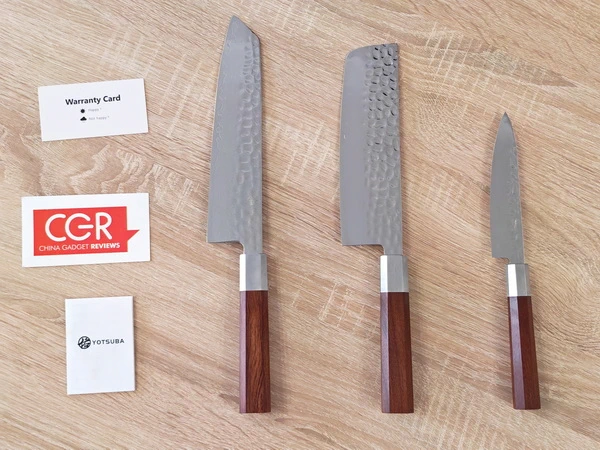
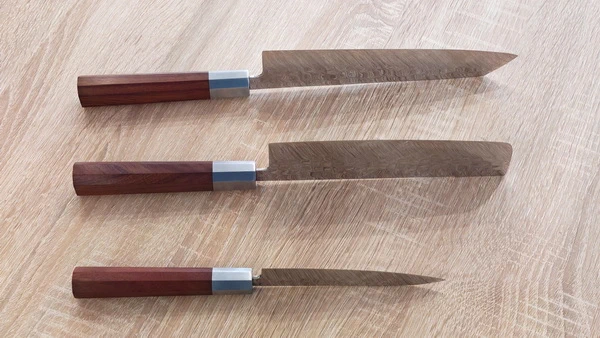
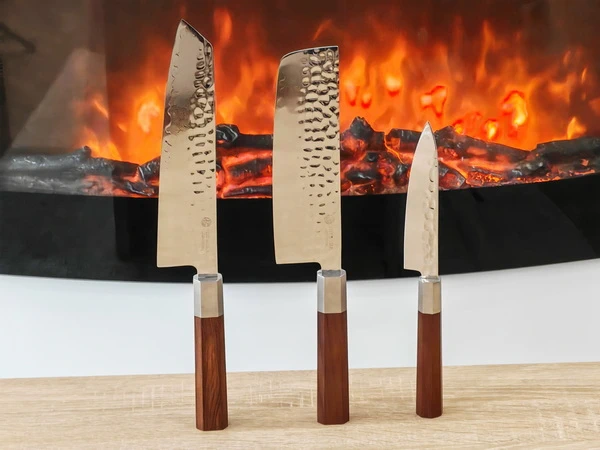
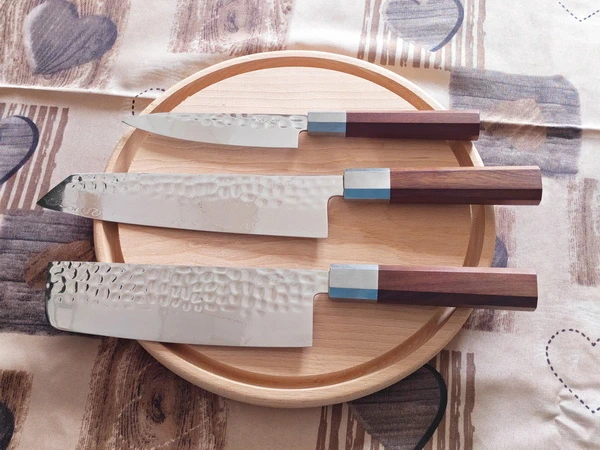
Inside are three distinctly different knives rather than three minor variations of essentially the same design: an 8-inch chef’s knife, a 7-inch Nakiri-style vegetable knife and a smaller 5-inch utility knife. Together they cover most of the cutting work I would expect to encounter during everyday food preparation, from larger portions of meat and fish to vegetables, herbs, fruit and more delicate precision work. The first impression after removing them from the packaging is dominated by the blades. Their combination of Damascus-style layering and the deeply hammered upper surface catches light from almost every angle, while the warm wooden handles provide an effective visual contrast to the polished steel. It is an unusually photogenic knife set, but importantly, several of those visual details also have a practical purpose.
The central technical feature of the YOTSUBA set is its blade construction. Each knife uses a 67-layer Damascus high-carbon steel structure surrounding a 9Cr18CoMoV core, with YOTSUBA specifying a hardness of approximately 62 HRC. That is a relatively high hardness for a kitchen knife and is particularly relevant because edge retention depends not simply on how sharp a blade is when it leaves the factory, but on how effectively the steel can maintain that edge through repeated use.
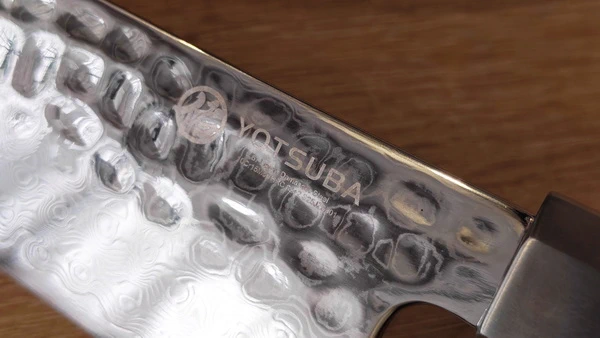
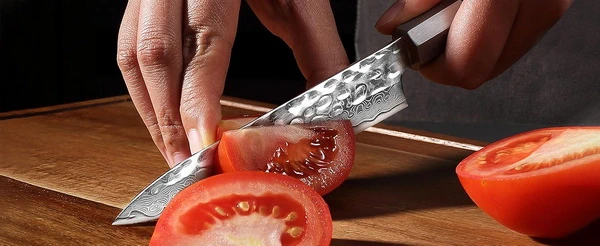
The layered construction produces the characteristic flowing Damascus pattern visible across the lower portion of each blade. Rather than looking like a conventional polished stainless-steel knife with some decorative detailing added afterward, the complex pattern becomes one of the defining elements of the entire design. Above it is an equally distinctive hammered surface, generally associated with the Japanese Tsuchime aesthetic. The irregular depressions create an intentionally handcrafted appearance and prevent the large, flat sides of the chef and Nakiri blades from looking excessively industrial. More importantly, the textured surface is designed to reduce the amount of direct contact between food and steel, helping ingredients release from the blade rather than adhering as readily during repetitive slicing.
The blades are approximately 2 mm thin, which gives the knives a noticeably different character from heavy Western-style kitchen knives designed primarily around mass and robustness. Here the emphasis is on controlled slicing and efficient penetration through ingredients without unnecessarily crushing or deforming them. YOTSUBA specifies a 14-degree double-bevel cutting edge, another important part of the overall cutting geometry. A relatively acute edge combined with the thin blade profile and hard steel core provides the foundation for the sharp, low-resistance cutting behaviour expected from this style of knife.
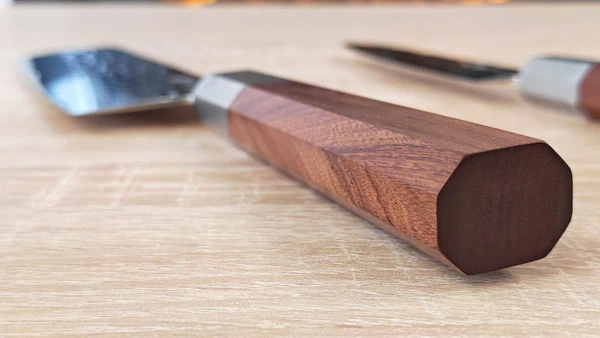
The handles are almost as important to the character of this set as the Damascus blades themselves. YOTSUBA uses a solid natural wood construction with a traditional Japanese-inspired octagonal profile, connected to the blade through a clean metallic transition section. The geometry initially looks rather angular compared with the heavily contoured polymer handles found on many mainstream kitchen knives, but once I started handling the knives, the reasoning became clearer. An octagonal handle provides multiple defined surfaces for the fingers and makes it easy to adjust the orientation of the knife without completely changing the grip.
This is particularly useful when moving between straight downward cuts, slicing movements and more precise work requiring slightly different wrist positions. The flat surfaces also provide tactile information about blade orientation, something that becomes increasingly intuitive after using the knife for a while. The wood adds considerable warmth to the overall appearance, particularly against the highly textured steel. Natural grain also means the handles do not have the sterile character sometimes associated with completely metal kitchen tools. As with most quality knives incorporating natural wood, however, I would treat these as hand-wash-only utensils. Extended soaking, aggressive dishwasher detergents and repeated high-temperature dishwasher cycles are unnecessary risks for both the wooden handles and the carefully finished blades. Washing immediately after use and drying thoroughly is the much more appropriate maintenance routine.
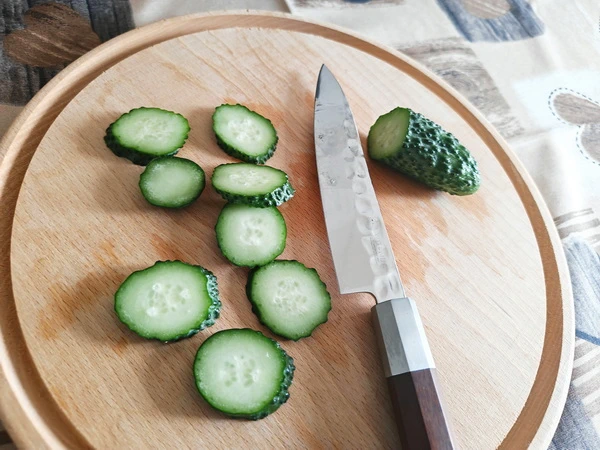
Sharpness is where specifications ultimately have to translate into something tangible, and my initial hands-on impression is that the YOTSUBA set delivers the kind of precise cutting behaviour its construction suggests. The thin blade geometry makes a particularly noticeable difference with ingredients where a thick blade can wedge material apart rather than cleanly slice through it. Tomatoes, onions, herbs and other vegetables are obvious examples, but the same characteristic is valuable when portioning meat or working with fish.
There is also a satisfying sense of control. These are not knives that rely on excessive weight to push through ingredients; instead, their sharp edges and relatively thin profiles allow the blade itself to perform most of the work. With an appropriate cutting technique, relatively little downward pressure is required. The hammered surface becomes especially relevant when working through larger quantities of vegetables. No knife can completely eliminate food adhesion under every circumstance — moisture, ingredient composition and cutting technique all influence it — but reducing the uninterrupted contact area between blade and ingredient can help food release more readily. I also like the balance created by combining the steel blades with the elongated wooden handles. The knives feel substantial enough to inspire confidence without becoming cumbersome, while the octagonal geometry gives them a distinctly different tactile personality from conventional European-style chef knives.
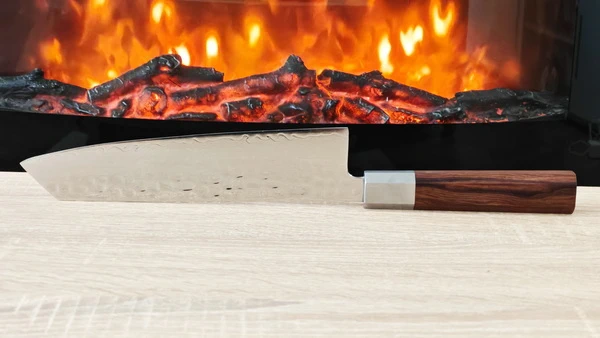
The 8-inch chef’s knife is naturally the centerpiece of the collection and the one I would expect to use most frequently. Its pointed profile and generous cutting edge make it the most versatile option for meat, fish, larger vegetables, slicing, dicing and general preparation. With an approximately 8-inch blade combined with a 5-inch handle, it provides sufficient reach for larger ingredients while remaining manageable for normal domestic cooking.
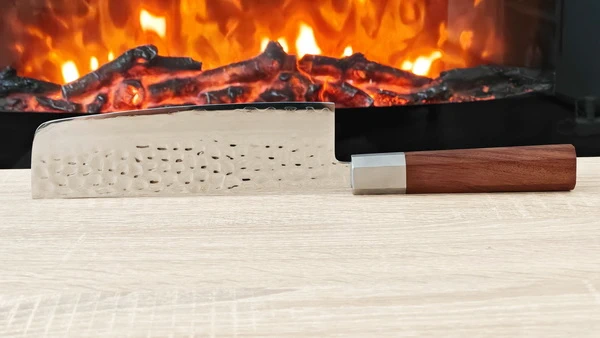
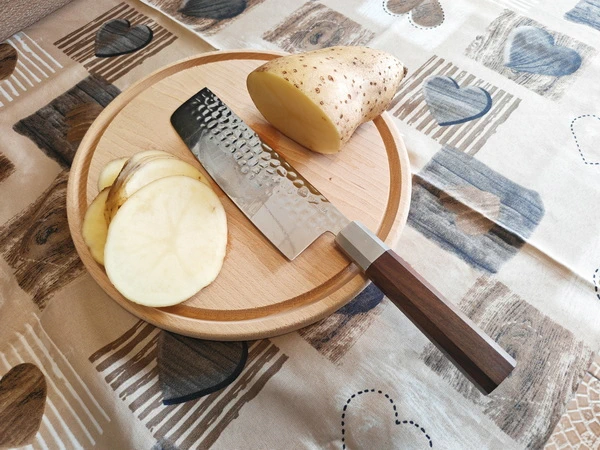
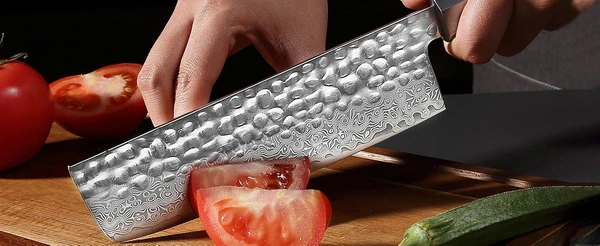
The 7-inch Nakiri is considerably more specialized. Its broad, almost rectangular blade and comparatively straight cutting edge are particularly well suited to vegetables, herbs and repetitive chopping. The additional blade height is useful for guiding the knife with the opposite hand and also makes transferring chopped ingredients from the board easier. Its 7-inch blade is paired with an approximately 4-inch handle, producing a compact but capable vegetable preparation tool.
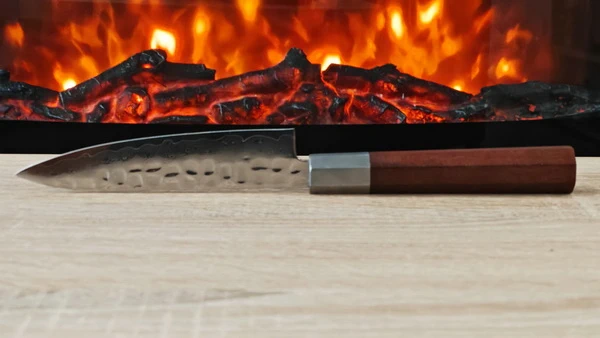
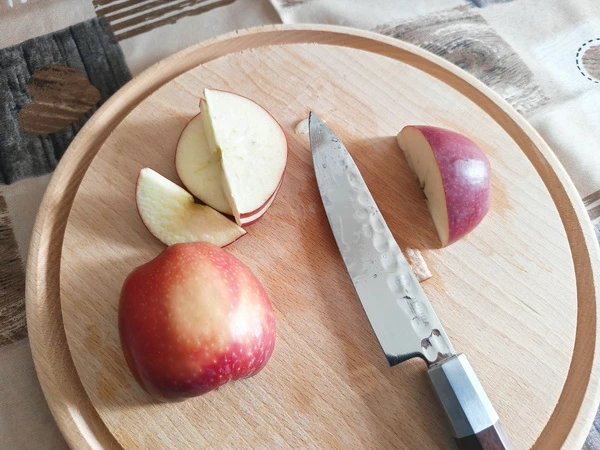
Finally, the 5-inch utility knife fills the gap between a large chef’s knife and a small paring knife. I found this format particularly appealing for fruit, smaller vegetables, trimming and other precision tasks where bringing out the full-size chef’s knife would simply be unnecessary. Its approximately 4-inch handle maintains the same visual and ergonomic language as the larger knives, so the entire collection feels coherent rather than assembled from unrelated pieces.
This three-knife configuration is one of the set’s strengths. Instead of filling the box with numerous specialized blades that may rarely leave the knife block, YOTSUBA has concentrated on three formats with genuinely complementary purposes.
The combination of a 9Cr18CoMoV core, approximately 62 HRC hardness, 2 mm blade construction and acute double-bevel edge creates a technically interesting balance between sharpness and edge retention. In practice, the advantage of the thin blade is immediately understandable. When cutting vegetables, for example, there is less material behind the cutting edge forcing the ingredient apart. This makes clean, controlled slices easier and helps preserve the structure of softer foods rather than crushing them. For meat and fish, the 8-inch chef’s knife offers enough blade length to perform smooth slicing movements rather than relying exclusively on short sawing motions. Meanwhile, the smaller utility knife provides considerably better control around compact ingredients and detailed trimming work.
The 62 HRC specification also deserves some context. Harder steel can provide excellent edge retention, but it should be treated differently from the softer steel found in inexpensive general-purpose kitchen knives. I would avoid twisting the blade inside hard ingredients, striking bones, cutting frozen food or using the edge to pry objects apart. A high-performance kitchen knife is fundamentally a precision cutting instrument rather than a miniature cleaver or general-purpose workshop tool.
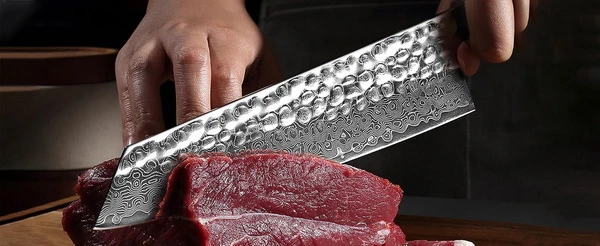
Visually, the most immediately recognizable element is the transition between the flowing Damascus pattern and the hammered upper portion of each blade. The Damascus pattern gives every knife an almost organic appearance, with numerous fine lines running across the steel rather than the uniform surface associated with mass-market blades. The hammered section introduces a second texture and makes the knives considerably more dramatic when viewed under direct kitchen lighting.
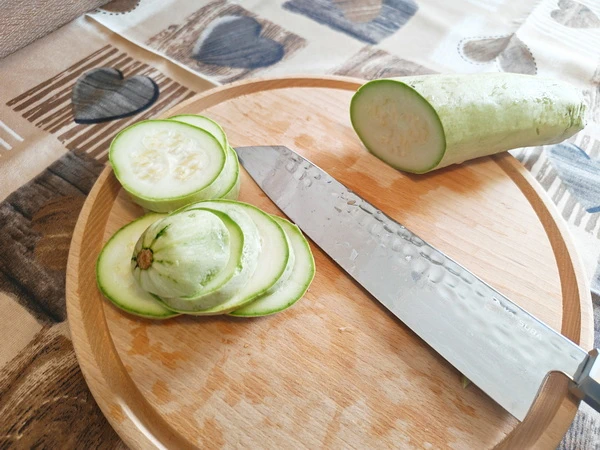
YOTSUBA describes these depressions as an anti-stick design intended to reduce the contact surface between food and blade. I would keep expectations realistic — wet potato, cucumber and other moisture-rich foods can still adhere to virtually any broad kitchen knife — but the principle is useful, and the texture can reduce the continuous surface area available for suction and friction. It is a good example of a design detail that contributes simultaneously to appearance and functionality rather than existing solely for decoration.
One aspect I appreciate about the YOTSUBA set is that despite its elaborate appearance, it does not demand an elaborate kitchen environment to justify its existence. The chef’s knife can handle the majority of everyday preparation. The Nakiri becomes the natural choice when vegetables dominate the recipe, while the utility knife is immediately available for smaller ingredients and precision work. Between those three blades, I could comfortably complete most normal meal preparation without reaching for another knife. That makes the collection equally relevant as a substantial upgrade for someone moving away from inexpensive supermarket knives or as a deliberately compact set for an experienced cook who would rather own several useful knives than a large block containing numerous redundant blades.
The premium presentation deserves another mention because it changes the way the product can be considered. A kitchen knife is fundamentally a tool, but a carefully presented Damascus knife set also has the visual presence required for gifting. The black presentation box, bright patterned steel and warm wooden handles create an immediate sense of occasion when the package is opened. It looks considerably more distinctive than a conventional stainless-steel knife set and should appeal particularly to someone who enjoys cooking equipment with a visible craftsmanship-inspired aesthetic. I would therefore consider it a credible option for weddings, housewarmings, Christmas, birthdays or as an upgrade for someone becoming more serious about cooking.
A knife set of this type deserves slightly more considered maintenance than inexpensive stainless-steel utensils, but the requirements are straightforward. I would wash the blades manually after use with mild detergent, avoid prolonged soaking and dry both blade and handle immediately. A quality wooden or appropriate synthetic cutting board is also preferable to glass, ceramic or stone surfaces, which can rapidly degrade even a very good cutting edge. Eventually every knife requires sharpening. Given the relatively acute edge geometry, maintaining the original angle as closely as practical will help preserve the cutting characteristics that make these knives appealing in the first place. Regular light maintenance is generally preferable to waiting until the blade becomes severely dull and then attempting aggressive sharpening.
After handling and using the YOTSUBA 3 Pieces Japanese Style Knife Set, what stands out most to me is how effectively it combines three different priorities: cutting performance, useful specialization and visual character. The 67-layer Damascus construction, 9Cr18CoMoV steel core, approximately 62 HRC hardness, thin 2 mm blades and 14-degree double-bevel edges provide a serious technical foundation, while the hammered Tsuchime-inspired surfaces and octagonal natural wood handles give the set an identity that is immediately distinguishable from conventional mass-market kitchen knives.
More importantly, the three-piece configuration makes sense. The 8-inch chef’s knife provides the everyday versatility I expect from the principal blade, the 7-inch Nakiri offers a genuinely useful tool for vegetable preparation, and the 5-inch utility knife handles smaller and more precise tasks without unnecessary bulk. There is very little redundancy between them. I also appreciate that YOTSUBA has resisted turning the set into an oversized collection simply to increase the number printed on the box. Three carefully selected knives can cover an enormous proportion of normal kitchen work, and that focused approach fits particularly well with the Japanese-inspired design philosophy.
The wooden handles require sensible care, the hard and finely sharpened blades should not be abused on bones, frozen ingredients or unsuitable cutting surfaces, and the anti-stick hammered finish should be regarded as a way of reducing adhesion rather than magically eliminating it. Those considerations, however, are consistent with owning almost any high-performance kitchen knife.
Overall, the YOTSUBA 3 Pieces Japanese Style Knife Set makes a convincing impression as a refined upgrade from ordinary kitchen cutlery, combining genuinely useful blade formats with hard steel, thin cutting geometry, distinctive Damascus patterns and comfortable octagonal wooden handles. For home cooks who appreciate the tactile and visual qualities of Japanese-inspired knives as much as their cutting ability, it is an attractive, thoughtfully assembled collection that looks equally appropriate in daily service or presented in its elegant box as a premium cooking gift.
CGR Rating: 9.3/10 – Highly Recommended
YOTSUBA 3 Knife Set Main Features
– DAMASCUS SUPER STEEL CORE – 3-PCS Set Includes: 1PC 8″ Japanese Chef’s Knife, 1PC 7″ Japanese Nakiri Vegetable Knife, 1PC 5″ Japanese Utility Knife, Damascus knives made from 67 layers of damascus high carbon steel, which is hammered by vacuum heat treatment. During folding and forging process, it will form very dense fine metal grains, making knives with high hardness (62HRC) and wear resistance.Ultra-thin blade ensures optimal ripeness and flavor when cutting food.
– GREAT HELPER FOR KITCHEN – 2mm ultra-thin sharp blade can keep the ideal ripeness of fruits, vegetables in the optimal condition and meat in the most delicious moment when cutting. Damascus kitchen knives set is suitable for home and professional use, chopping, slicing, dicing, and is also suitable for cutting fruits, bread, vegetables, fillets or meats etc, easily do your daily kitchen tasks
– SOLID WOOD KNIFE HANDLE – Japanese chef knives handle adopts nature olive wood which is much more durable and solider.And features an ergonomically designed octagonal balanced wood handle; minimizing wrist tension and different aspects giving you great flexibility to adjust your cutting angle; while providing a comfortable grip
– UNIQUE ANTI-STICK GROOVES DESIGN – Japanese kitchen knife set with a rectangular blade and a razor-sharp edge, the special grooves design reduces the contact surface between food and blade, minimizes friction, preventing food from sticking to the blade
– IDEAL COOKING COOKWARE GIFT CHOICE – YOTSUBA Gyutou chef knives set packaged with a luxurious gift box. It is perfect for home cooks and professional chefs alike, is perfect gift for any cook or knife enthusiast as a wedding gift, housewarming gift, christmas present.
YOTSUBA 3 Knife Set best-use scenarios
– Everyday Meal Preparation. The three-piece YOTSUBA configuration is compact, but the combination of an 8-inch chef’s knife, 7-inch Nakiri and 5-inch utility knife covers an impressively broad range of routine kitchen work without filling the countertop with rarely used specialty blades. Perfect for: Chopping vegetables, slicing meat, preparing fruit, cutting herbs, portioning ingredients and completing general food preparation throughout the week. Bonus: The three knives have clearly differentiated roles, allowing the cook to select an appropriately sized blade rather than relying on one oversized knife for every task.
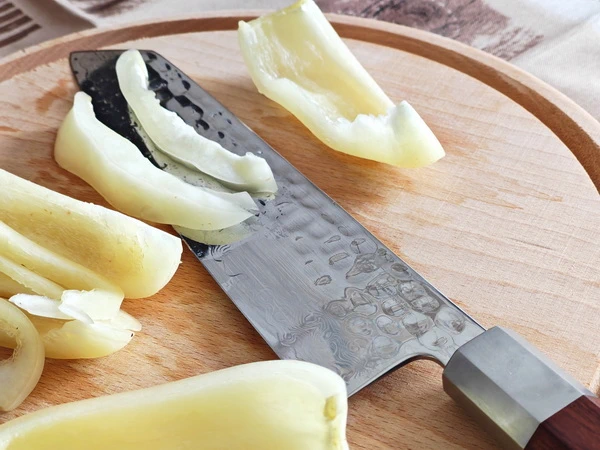
– Chopping and Dicing Vegetables. The 7-inch Nakiri is the natural choice when vegetables make up a large part of the recipe, combining a broad, almost rectangular blade with a comparatively straight cutting edge that works particularly well for repeated downward cutting motions. Perfect for: Dicing onions, chopping peppers, slicing carrots, preparing zucchini, cabbage, mushrooms and other everyday vegetables. Bonus: The additional blade height provides useful knuckle clearance and also makes it easier to guide the knife with the opposite hand during repetitive preparation.
– Preparing Fresh Salads and Delicate Vegetables. The approximately 2 mm blade construction and acute 14-degree double-bevel edge are especially useful with ingredients that can easily be crushed or damaged by a thicker, less refined blade. Perfect for: Slicing tomatoes, cucumbers, radishes, peppers, leafy vegetables and other fresh salad ingredients where clean, controlled cuts help preserve texture and presentation. Bonus: The thin geometry allows the blade to pass through softer ingredients with less wedging and deformation, while the hammered surface can help reduce continuous contact between moist food and steel.
– Fruit Preparation and Healthy Snacks. The compact 5-inch utility knife provides considerably more control than a full-size chef’s knife when working with smaller produce, making it particularly convenient for quick preparation jobs where maneuverability matters more than blade length. Perfect for: Slicing apples, pears, citrus fruit, strawberries, kiwi and other fruit for snacks, desserts, breakfast bowls or lunch boxes. Bonus: Its smaller format makes precise cuts easier while retaining the same sharp blade construction and Japanese-inspired handle design as the larger knives.
– Slicing and Portioning Meat. The 8-inch chef’s knife offers enough cutting length for smooth slicing movements across larger portions of meat, while its thin profile reduces the need to force the blade through the ingredient with excessive downward pressure. Perfect for: Portioning boneless beef, pork, poultry and prepared meats, trimming larger cuts and producing even slices before or after cooking. Bonus: The longer edge allows cleaner continuous strokes instead of relying on repeated short sawing movements, helping create more consistent portions.
– Fish and Fillet Preparation. Fish benefits from a sharp, relatively thin blade because delicate flesh can easily tear when too much pressure is applied, and the YOTSUBA chef’s knife provides the reach needed for controlled slicing while the utility knife is useful for smaller detail work. Perfect for: Portioning fish fillets, cutting boneless seafood portions, removing small sections of skin or tissue and preparing fish for pan-frying, baking or grilling. Bonus: The sharp edge allows the knife to perform much of the work with comparatively little pressure, helping maintain cleaner surfaces on softer ingredients.
– Chopping Herbs and Aromatics. The Nakiri’s broad blade and relatively straight edge make it particularly effective for repetitive chopping, while the chef’s knife provides additional versatility when a rocking or slicing motion is preferred. Perfect for: Preparing parsley, coriander, basil, spring onions, garlic, ginger and other herbs or aromatics used throughout everyday cooking. Bonus: The broad blade surface is also convenient for gathering and transferring freshly chopped ingredients from the cutting board directly into a pan or mixing bowl.
– Precision Trimming and Detailed Preparation. Not every kitchen task requires a large blade, and this is where the 5-inch utility knife becomes especially valuable, offering improved control around smaller ingredients and areas where a full-size chef’s knife would feel unnecessarily cumbersome. Perfect for: Trimming vegetables, removing blemishes, cutting smaller pieces of meat, cleaning fruit, portioning compact ingredients and making controlled decorative cuts. Bonus: The shorter blade provides better maneuverability while maintaining the same octagonal handle geometry, which makes it easy to adjust blade orientation during more detailed work.
– Large-Volume Vegetable Preparation. When preparing several servings at once, the Nakiri becomes particularly useful because its broad profile, straight cutting section and generous blade height are designed around efficient vegetable work rather than general-purpose compromise. Perfect for: Preparing vegetables for soups, stews, stir-fries, casseroles, salads or large family meals where onions, carrots, peppers, cabbage and similar ingredients need to be processed in quantity. Bonus: The hammered Tsuchime-inspired surface reduces the uninterrupted contact area between blade and ingredient, which can help food release more easily during repetitive slicing.
– Quick Weekday Dinners. Because the set concentrates on three genuinely complementary knives rather than numerous highly specialized blades, it is particularly practical when dinner needs to move quickly from ingredients to pan without unnecessary tool changes. Perfect for: Preparing stir-fries, pasta dishes, salads, soups, sandwiches and simple combinations of meat, fish and vegetables after work. Bonus: The chef’s knife can handle the majority of general preparation, the Nakiri can take over when vegetables dominate the recipe, and the utility knife remains immediately available for smaller ingredients and finishing work.
– Weekend Cooking and Multi-Stage Recipes. More elaborate meals often require switching between larger ingredients, vegetable preparation and smaller precision tasks, which is exactly where the three different blade formats begin to justify themselves as a coordinated set. Perfect for: Preparing roasts, side dishes, vegetable-heavy recipes, fish dishes, salads, fruit and multiple-course family meals or special-occasion cooking. Bonus: Each blade can remain dedicated to a particular stage of preparation, reducing unnecessary washing and allowing the cook to move efficiently between meat, vegetables and smaller ingredients.
– Premium First Knife Set, Kitchen Upgrade or Gift. YOTSUBA’s combination of patterned 67-layer Damascus steel, hammered blade surfaces, natural wooden octagonal handles and a coordinated black presentation box makes the set suitable not only as an everyday cooking tool but also as a more substantial upgrade from inexpensive supermarket knives. Perfect for: A first serious kitchen setup, replacing a mismatched collection of worn knives, upgrading everyday cookware, or gifting for weddings, housewarmings, birthdays and Christmas. Bonus: The three-piece format remains practical rather than excessive, while the presentation box and distinctive Damascus-style finish give the set enough visual presence to feel like a premium gift rather than simply another kitchen utensil.
Package Contents
1 × 8-inch YOTSUBA Chef’s Knife
1 × 7-inch YOTSUBA Nakiri Vegetable Knife
1 × 5-inch YOTSUBA Utility Knife
1 × YOTSUBA User / Product Guide
1 × Warranty Card
1 × Premium Black Presentation / Gift Box with fitted red interior
Unboxing Photo Album with Hi-Rez images here.

About Yotsuba. Yotsuba is a relatively young kitchen-cutlery brand owned by Shenzhen Feichu Technology, offering Japanese-inspired chef knives and kitchen knife sets, with an emphasis on sharpness, ergonomic design and accessible professional-style construction.
Did this article help you? If so, please tell me in a comment what do you think about it.
Don’t miss any of our future video tutorials, follow us on Youtube. Like us on Facebook. Join our Best Deals Telegram Channel. Join our Android TV Box Firmware Updates Telegram Channel. Subscribe now to our newsletter. If you need Tech Reviewer or Youtube Influencer read this. Donate now here to support CGR Team!